
The 2026 Toyota bZ EV Was Redesigned and Now Costs Less, But It’s the Premium Woodland Model We Fell For
Still, the Woodland edition commands a premium for all its zippy backcountry capabilities


In case you didn’t catch the memo, the Toyota bZ4X, which was code for “beyond zero forever,” was renamed the bZ for the 2026 model to simplify the branding and make Toyota’s first all-electric model’s redesign much more noticeable. Now it’s bigger, has a friendlier face like the C-HR and RAV4, has an improved driving range and, for the first time, there’s a rugged, beefy-looking Toyota bZ Woodland to fit in with the company’s growing number of “off-road-ready” SUVs.
Toyota has slashed the bZ’s entry price by $3,620, bringing the XLE FWD down to $34,900. While the new model is larger and better equipped, there are trade-offs under the frunk-less hood: a smaller 57.7 kWh battery delivers 236 miles of range and 168 HP, a notable decrease from the outgoing model’s 201 HP. This puts the Toyota bZ in the ring with entry-level trims of the Chevy Equinox EV, the Hyundai IONIQ 5 and the Kia Niro.
The Woodland edition, however, increases all the offerings: a dual-motor, all-wheel drive setup that produces a combined 375 horsepower with a maximum range of about 260 miles. And it does what matters off-road: it generates enough instant torque to get you where you need to go at lower speeds. Priced at nearly $49,000, it had me considering both sides of the equation: Could I drive this car every day? And, is it worth the price?
This story is 100% human-researched and written based on actual first-person knowledge, extensive experience and expertise on the subject of cars and trucks. Additionally, I was Toyota’s guest for this first drive event, but all impressions and opinions are my own.
Here’s the Biggest Shocker: The Redesign Didn’t Mean a Higher Price
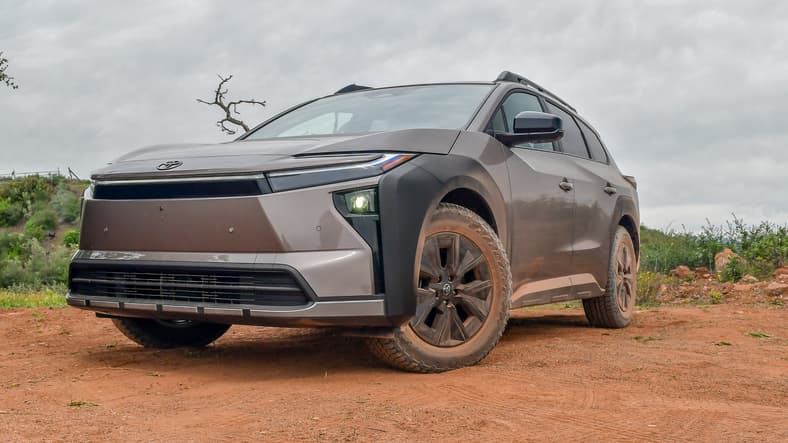
The most surprising part of the 2026 Toyota bZ redesign might actually be the sticker price. Then again, maybe it isn’t; Toyota has spent the last few years aggressively recalibrating its EV pricing to account for stiff competition, buyer pushback, and the loss of federal tax credits. But here’s the kicker: while the prices shifted, the value increased. Toyota packed the standard and Woodland trims with more features, more comfort and—in the Woodland’s case—significantly more capability.
The Woodland shares power output and all-wheel drive capability with the dual motor versions of the bZ’s XLE and Limited editions. The net is more power over the outgoing 2025 bZ4x, more torque, and increased range. But the Woodland edition adds more features, from optional all-terrain tires, a surround view monitor so you can see around the car when driving on a trail and even more power, at 375 HP. With a starting price of just over $46,000 and all in at $48,850 with packages and add-ons, this is not a car for the budget-driven buyer. However, you do get a lot of car for the money.
I Was Immediately Charmed By Changes to the Exterior
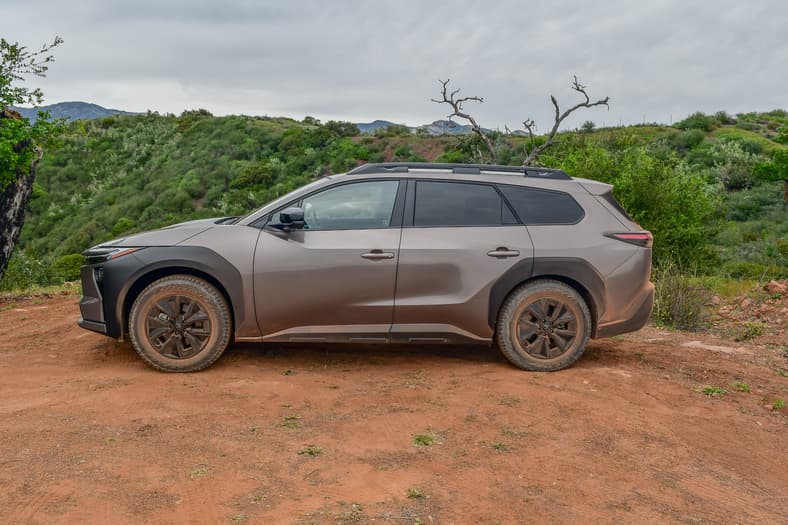
The Toyota bZ’s redesign was revealed a while ago, and we loved it then—the Hammerhead headlight design fits within the company’s growing lineup of either partially electrified (RAV4) or fully-electric (Highlander and C-HR) SUVs. It’s sleek and modern, without taking away from a familiar design, so it doesn’t feel too far away. For 2026, the Toyota bZ and bZ Woodland are longer, with more cargo space and rear legroom, which makes them much more family-friendly. The rear hatch’s design and function remind me a lot of a Subaru Outback pre-redesign, if I’m honest, which added to its charm (for me, at least). A portion of the roof is painted matte black, too, to reduce the sun’s glare into the cabin.
The bZ Woodland’s exterior changes aren’t radically different from the standard bZ’s design. The most significant physical change is that the Woodland is roughly 6 inches longer and about 1 inch taller in the rear, translating to over 30 cubic feet of trunk space. This gives it a more traditional, upright SUV silhouette compared to the standard bZ’s “raked” crossover profile.
While the standard bZ finally ditched the polarizing black plastic wheel arches in favor of body-colored panels for a premium look, the Woodland doubles down on the black overfenders to emphasize its trail-ready, soft-roader aesthetic. The bZ Woodland comes standard with roof rails, too, with the option to get cross bars added on, so you can add a rooftop tent, cargo basket, or box to add more storage.
The Interior Saw Important Updates, Too

The outside wasn’t the only thing refreshed (and thank goodness). The interior layout is pretty much the same as the 2025 interior. It still has the dual wireless charging station, a driver display behind the steering wheel, and now a larger 14-inch multimedia screen. The Woodland trim comes with all-weather floor mats in the front and rear, as well as a cargo area cover, so you can set wet or muddy boots in the trunk without worrying about ruining the carpet. Plus, it comes with Toyota’s SofTex upholstery, which is easier to clean than leather or cloth.
The dashboard is textured (to me it looks a lot like it was 3D printed) to give it an edgy look, and it comes with different camera angles to use in tandem with X-Mode—the company’s off-road-oriented software that gives you crawl control (where you adjust speed and “Grip”), select your terrain mode, and look at off-road information like pitch and roll, tire placement prediction, and obstacle detection. Otherwise, the interior was fairly identical to the more premium trims of the bZ.
All-Terrain Tires Are Optional, and INCLUDED!

Now I’m circling back to the tire bit I mentioned earlier. The bZ Woodland comes standard with all-season tires, but if you want all-terrain tires, you can have them added on at no additional cost. Yes, you read that right. Toyota says that with all-terrain tires, it adds capability (and a more handsome look), but at the cost of overall range, additional road noise, and a squishier ride. Because it’s technically a sacrifice, Toyota says the all-terrain tire option is free.
I did notice that the all-terrain tires made the ride a bit noisier, but not by too much—and though our model was at 100% charge by the time we set out to test its off-road capabilities, the range was about 238 miles. Once we started up the hill to head to the checkpoint (which happened to be Paul Walker’s old ranch), we were very thankful for the all-terrain tires. It gives the bZ Woodland a small lift, too, going from 8.2 inches of ground clearance to 8.3. That’s not Jeep Wrangler height, but every little bit helps.
It Was Great to Drive On the Road, but it Truly Shines Off-Road
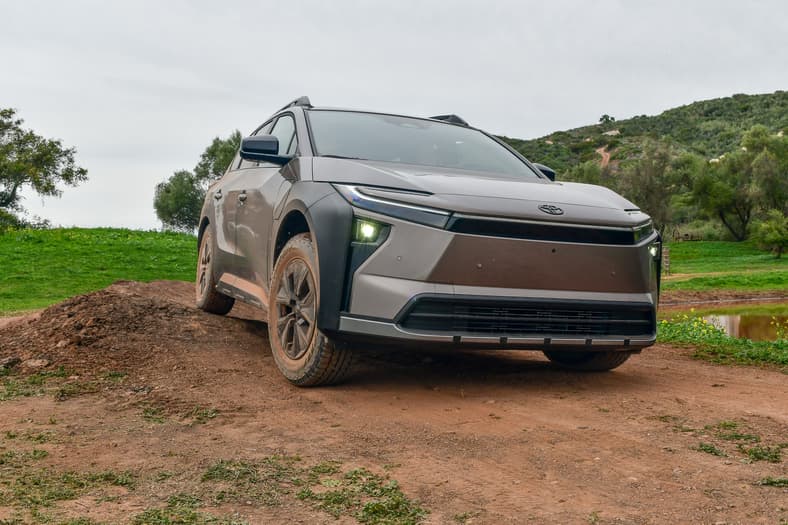
When it was our turn to test the bZ Woodland off-road, Shannon and I just so happened to ride with a man named Les, who spent many years of his life as an off-road driving instructor. He started the conversation with, “I’ve done some crazy wheeling in my day, and I have to say, this car truly impressed me.” He taught us about the crawl control (veiled under the Grip Control setting), the terrain modes, and how to use the off-road cameras.
The Grip control made off-roading easy and stress-free. You adjust the grip control, ranging from low—which keeps the speeds low, but the grip high—to high, which keeps speeds higher, but maintains grip. We saw this in action when the bZ Woodland was placed over a steep incline. Les set the grip to the lowest setting, and the bZ used the EV motors’ instant torque to crawl slowly up the hill while the electronic all-wheel drive immediately reacted to any wheel slip by allocating power to the wheel that didn’t lose grip.
Within seconds, the bZ Woodland drove itself up the hill, while all I did was steer it. I didn’t have to brake or accelerate. It handled itself off-road with grace and tact, but I wouldn’t call it an off-roader. Putting all-terrain tires on a car doesn’t make it an off-roader. But I would call this a very effective soft roader.
I could see this coming especially in handy during the colder season, which it’s prepared for with more effective battery preconditioning and fast charging capabilities. And, since it comes from the factory with an NACS port, it can be charged at your local (and more plentiful) Tesla Supercharging network. Just make sure you swap out those all-terrain tires for a better, proper winter-rated tire if you’re buying one to handle snow and ice.
Overall, the bZ Woodland Impressed Me, but I have a Hard Time with the Price
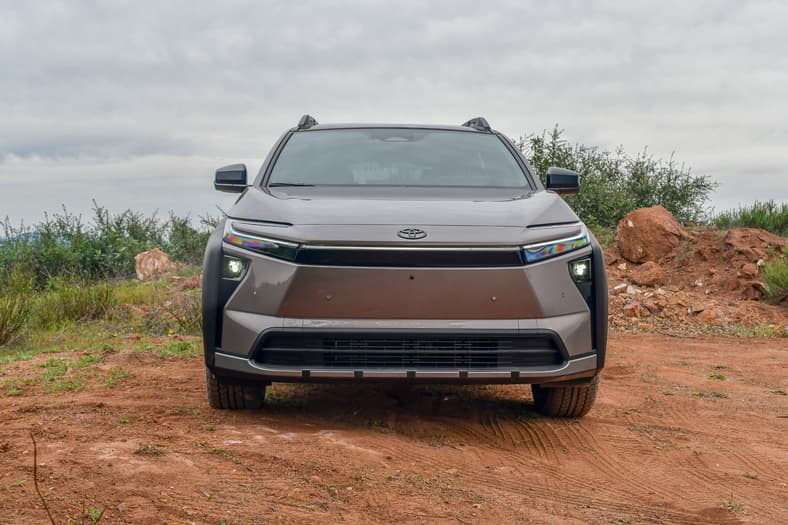
I fell in love with the bZ Woodland. It was much more capable off-road than I thought it would be, but I have a difficult time rationalizing the $48,850 price tag. For that price, you can buy something a lot more off-road ready, like a fully-loaded Forester or Outback Wilderness, or Bronco Sport Badlands, or Bronco. But, if you want an EV specifically that’s made to handle a little more than your run-of-the-mill gravel road, the bZ Woodland makes an argument that’s pretty hard to lose. It’s sleeker, it’s roomier, and it’s definitely a lot more capable with all-wheel drive and X-Mode. And, it’s completely quiet off-road; no big rumbling engine to frighten off the wildlife or leave a fumy trail behind you.
There isn’t much like the bZ Woodland out there at that price range, and that’s what makes the Woodland so compelling. It’s a great way to get eco-conscious people off-road and outdoors, and it looks good while doing it, too. I can’t wait to see them with rooftop tents and kids running around them at my local campsites. I’m sure there will be lots of them.

More About:Car Reviews Electric Cars