
The All-New 2027 Toyota Highlander is … Electric? This Could Be the Fam-Fave 3-Row SUV of the Future
The 2027 Toyota Highlander EV is bidding farewell to gas-only and hybrid setups, favoring an all-electric stance and we got a sneak peek

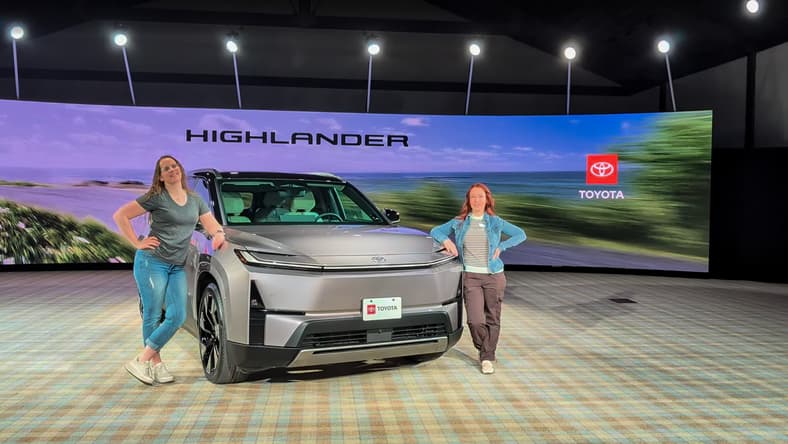
When I found out that finally—finally!—Toyota was redesigning the Highlander, a 3-row SUV that’s been a staple in the driveways of families for a couple of decades now, I was anxious to be on hand. The Toyota Highlander was the first to go hybrid, delivering 35 MPG in a 3-row SUV. An AWD SUV that’s known for reliability and to be able to go hundreds of thousands of miles in a lifetime, it’s earned its fan base.
And then I learned the new Toyota Highlander will be all electric. Whaaatttt???
But, I’m willing to listen. And to give it a shot. The Toyota Highlander is one of the company’s best-selling SUVs because it adapted and changed with the market’s demands. First, it was gas-only, then it became a three-row, and then a hybrid—and it sold incredibly well. Now the Highlander’s changed again, waving goodbye to the past and hello to the future with an all-electric powertrain.
Packed with a Tesla-style NACS charging port, two battery sizes to choose from that let you pick between a 270, 287, or a 320-mile range, or all-wheel drive, the Highlander is still the versatile, adaptive SUV we know and love. It’s just an EV this time around. Pricing is coming later, but we were told it’s “competitive” to the Hyundai IONIQ 9.
This story is 100% human-researched and written based on actual first-person knowledge, extensive experience and expertise on the subject of cars and trucks. Additionally, I was Toyota’s guest for this test drive but all opinions are my own.
Yes, It’s All-Electric for 2027—Goodbye Gas-Only and Hybrid Highlander
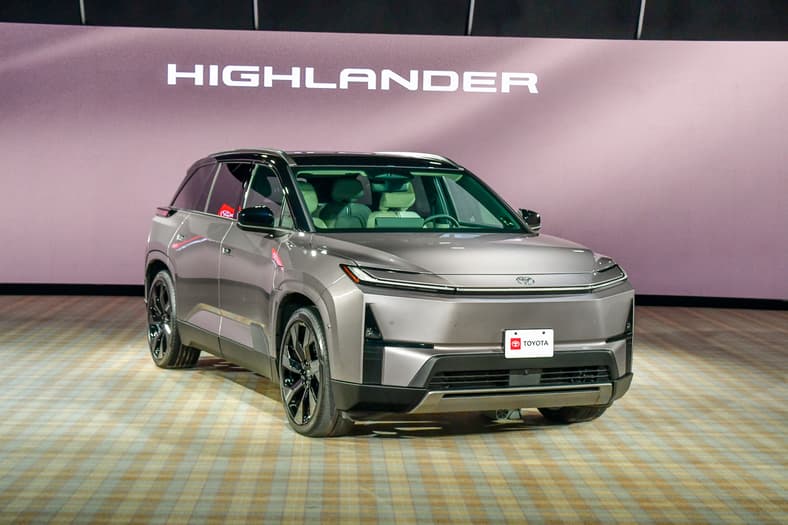
I was a bit surprised by this announcement. So much so that I asked the PR team multiple times: “Really? No more gas-only or hybrid versions of the Toyota Highlander?” To watch them nod and tell me that customers, if they want a mild-hybrid or a Hybrid Max, will have to go to the Toyota Grand Highlander. If they want a PHEV, they’ll have to buy a RAV4. I questioned it, saying that the Highlander is a great middle ground for families who don’t want something as small as a RAV4 or something as large as a Grand Highlander.
Maybe Toyota knows something we don’t. Maybe they’re pulling a Dodge and will later release a mild-hybrid or PHEV version. Who knows—but I felt a bit sad to see such a strong-selling hybrid be tossed to the wayside. For fun, I’ll be watching the market for used Highlander hybrids closely. I’d wager it’ll follow the same path as the market for the 4Runner with the V6 engine.
That aside, I did very much appreciate that customers could choose between two battery sizes, which adjust the range to 270, 287, or 320 miles depending on whether or not it’s front or all-wheel drive and that no battery size is limited to either of the two trims (XLE and Limited). So, if a buyer wanted to, they could configure an XLE to have the larger battery, so they’re not forced to buy a top-tier model. So, at least the Highlander EV is giving customers the power of choice.
The Toyota Highlander EV Speaks The Company’s Modern Design Language
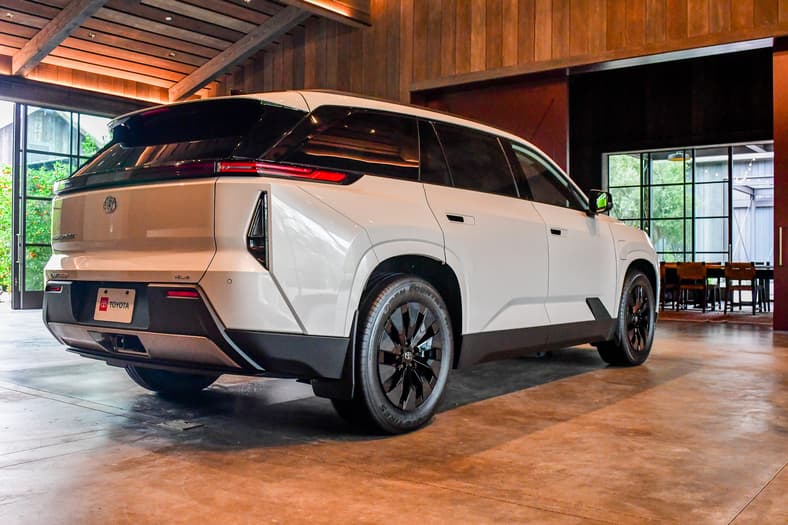
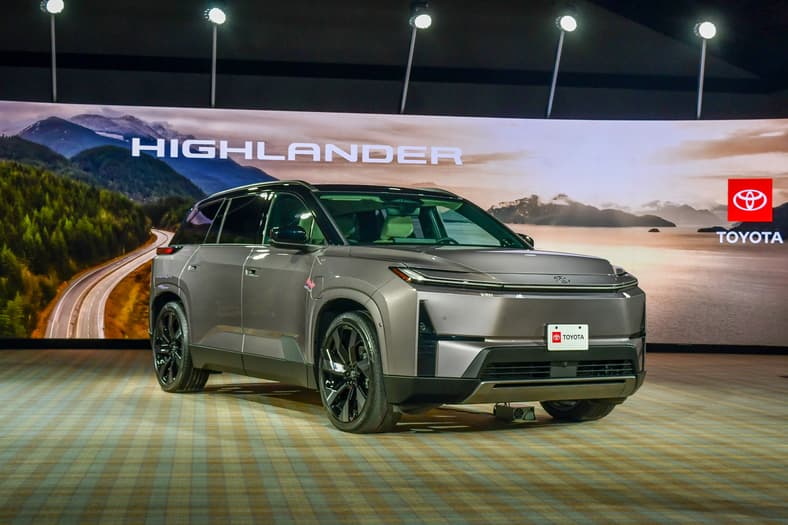
Taking a look at the exterior design, I immediately noticed that it spoke the same design dialect as the C-HR, bZ, and RAV4. Toyota calls it the “hammerhead” headlight design, and it lends the Toyota Highlander EV a modern, polished, and very refined look. I liked it on the Highlander a lot, probably more than I do the RAV4 or bZ. The front face is still very friendly, but it’s mature—making it feel appropriate for the Highlander’s demographic.
The rear is the same way, with a large taillight bar that extends over the rear gate and connects the rear brake lights. Overall, the body is curvy and angular, but familiar with the company’s other designs. If you took a Crown SUV and stuck the cladding and angles of the bZ onto a larger SUV, that’s the Highlander EV. Quite handsome, if you ask me. The XLE can have 18-inch black, glossy wheels, while the Limited has 22-inch wheels, and I’m partial to the 18-inch wheels. I was already imagining it with all-terrain tires (Toyota, if you’re reading this… I’m swinging a pocket watch and repetively whispering, ‘Woodland…’).
You Can Choose Between Front-Wheel and All-Wheel Drive
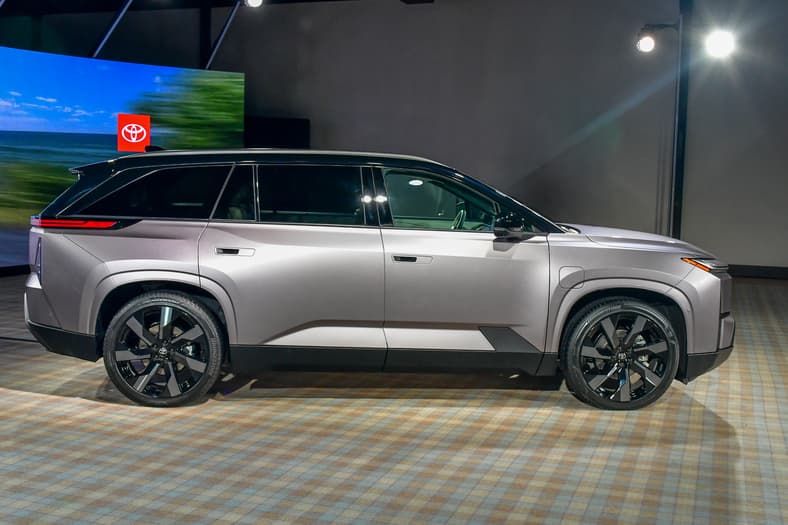
Unlike the C-HR EV, which comes with standard all-wheel drive and no option for front-wheel drive, the Toyota Highlander EV will let customers choose between front-wheel and all-wheel drive. My first thought was, “Oh, okay, so if you want the higher range, you have to pick front-wheel drive.” That’s not true.
Toyota’s fact sheet says that the Limited AWD, when fitted with the largest battery, can still get 320 miles of range—the same as the XLE with all-wheel drive. The only other EV AWD SUV that gets a similar range is the Hyundai IONIQ 9 or the Lucid Gravity, so Toyota will be throwing heavy punches at both with this new EV.
Like the bZ and C-HR, though, maximum horsepower is about 338—so she’s no slouch, Toyota says. But we’ll be the judge of that when we finally get a hold of one once they hit the press fleet.
The Beautiful Interior is Still Family-Forward
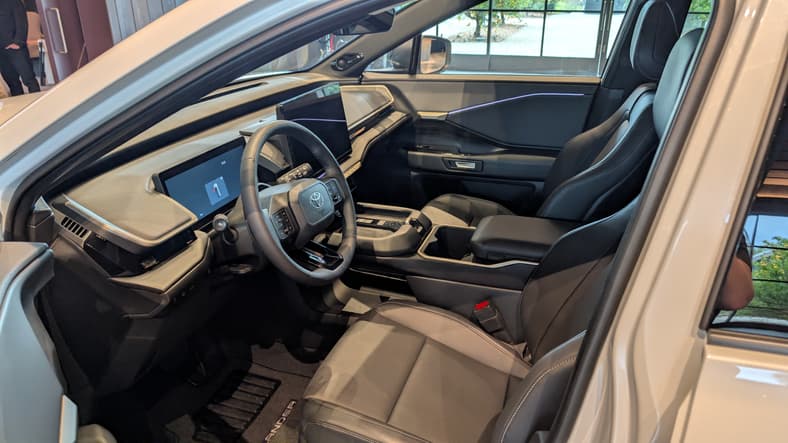
The interior is very Toyota-y, with a larger 12.3-inch digital gauge cluster behind the steering wheel and a large, very prominent 14-inch central media screen. I didn’t see any buttons for the A/C system near it, so I assume it’s similar to the company’s other EVs, where those controls are on the screen, but easily accessible because they’re always on display under the phone mirroring.
I saw what looks to be the dual wireless phone charging station near the center console, but it was lined with soft material. I couldn’t turn on the car, so I’m not totally sure if it’s meant to charge phones or just have a pretty place to put them. Still, I’d be shocked if they didn’t charge phones—especially since the Highlander EV can be used to power a home in the event of an emergency (as long as you buy one with the bi-directional accessories package). The Limited we saw had a gorgeous, creamy white leather interior, but it can come in brown or black, too.
Get Ready for A Quiet(er) Ride

The windows are made with acoustic glass to reduce road noise and keep the interior quiet. There were built-in sunshades for the tots in the rear seats. Passengers that aren’t bound to a car seat get to enjoy overhead A/C vents, climate control settings, USB-C charging ports on the backs of the front seats, a large, tinted, and fixed sunroof and about an acre of legroom when they’re pushed further back. Thankfully, buyers still have the option of a bench seat if they go with an XLE over the Limited.
Of course, it wouldn’t compete with the Hyundai IONIQ 9 or Kia EV9 if it didn’t have a third row. The third row, not unlike the outgoing hybrid model, was a bit tight for me at 5’8”. The second row seat can be manually—not electronically—moved forward to increase the legroom for the third row passenger at the expense of legroom for the second row passenger. But, thankfully, not by too much. Once seated, I enjoyed a large dedicated window, a nice view from the sunroof, A/C vents, my own cupholders, and, naturally, a USB-C charging port. It wouldn’t be a bad place to be, but I wouldn’t be too happy about being stuck back there for a longer drive. It’s best suited for older kids and teens.
Oh, and it’s worth noting that there’s no way to close that gargantuan sunroof. You’d have to buy a flexible cover for it and manually install it and remove it, similar to the Cadillac Escalade IQ. I wasn’t the biggest fan of this concept, but I’m sure with ownership, you’d get used to it and carry it in the same place you keep the tonaeu cover—under a cover in the very rear.
It’ll Come Packed With the Usual Technology, Too
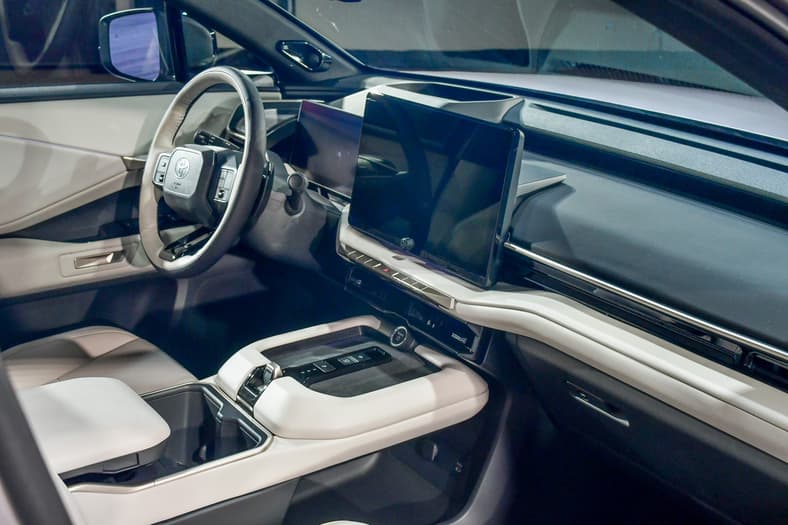
Unsurprisingly, the Toyota Highlander EV will come with a long list of standard technology features and driver assistance. Like the other EVs Toyota offers, here’s what you can expect from the new Highlander:
- Customizable heads-up display
- Optional 11-speaker JBL audio system, with amplifier and subwoofer
- Advanced parking assistance, with a 360-degree view
- Traffic jam assist (though a subscription after a trial period is required)
- Lane change assist
- Adaptive cruise control
- Front cross traffic alert
- Safe exit warning
- Adjustable regen braking via paddle shifters on the steering wheel
- 64-color customizable ambient lighting
- NACS charging port for DC fast charging (more on that to come; no charging speeds were revealed just yet)
- Drive recorder
Cargo Space Isn’t Half Bad, Either
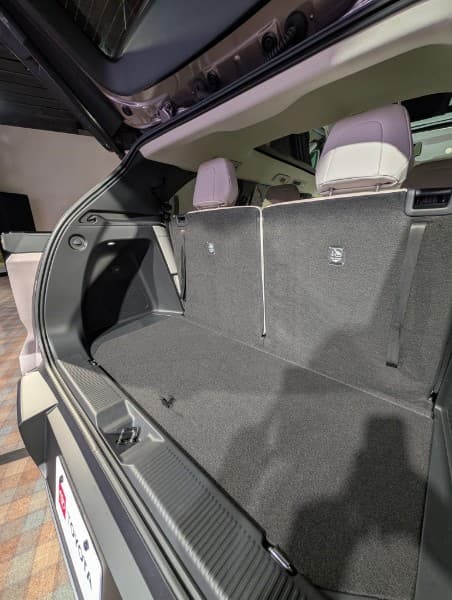
We only had about 30 minutes with the Toyota Highlander EV, but I was very impressed with the cargo space with the third row in use. Toyota couldn’t give me exact figures, but I’d bet you could fit a stroller back there, or maybe a few suitcases, but not much else. When the third row is down, though, there’s more cargo space than I think I’d know what to do with. I noticed right away that the cupholders were nicely integrated into the side of the car, not sticking out, which maximized the space available. If it were used primarily as a two-row SUV, the cargo space would be more than enough for a weekly Costco haul or a camping trip.
Because it doesn’t have traditional drive train parts, that means more legroom all-around, and tons of clever storage spaces, like a pass-through in the front that’s large enough for a purse, water bottle, snacks—you name it. The passenger doors for the second row have large water bottle holders with a large pocket on the backs of the seats, too. Every time I thought, “This would be a great place for a storage cubby or compartment,” there was one. Nicely done, Toyota.
Pricing Hasn’t Been Announced, But It’ll Be Available Later This Year
As I mentioned before, Toyota didn’t give me exact figures on the pricing. All they told me was that it competed directly with the IONIQ 9 in that regard—so I’m guessing a range between $52,000 and $69,000 at the top of the line. As far as availability goes, we do know that they’ll hit dealer lots later this year as a 2027 model. The EVs and their batteries will be produced in Toyota’s American facilities, so shipments should be fairly quick.
Like I said, I’m a bit skeptical about axing the hybrid models in favor of an all-electric model—especially after Toyota’s statement about keeping hybrids alive since the market is still in favor of them—but I’m hoping they’re following Dodge’s strategy. Many families are still shopping for hybrids and PHEVs over EVs, so I’ll be paying very close attention to them as they become available following a pricing announcement.

More About:Electric Cars