


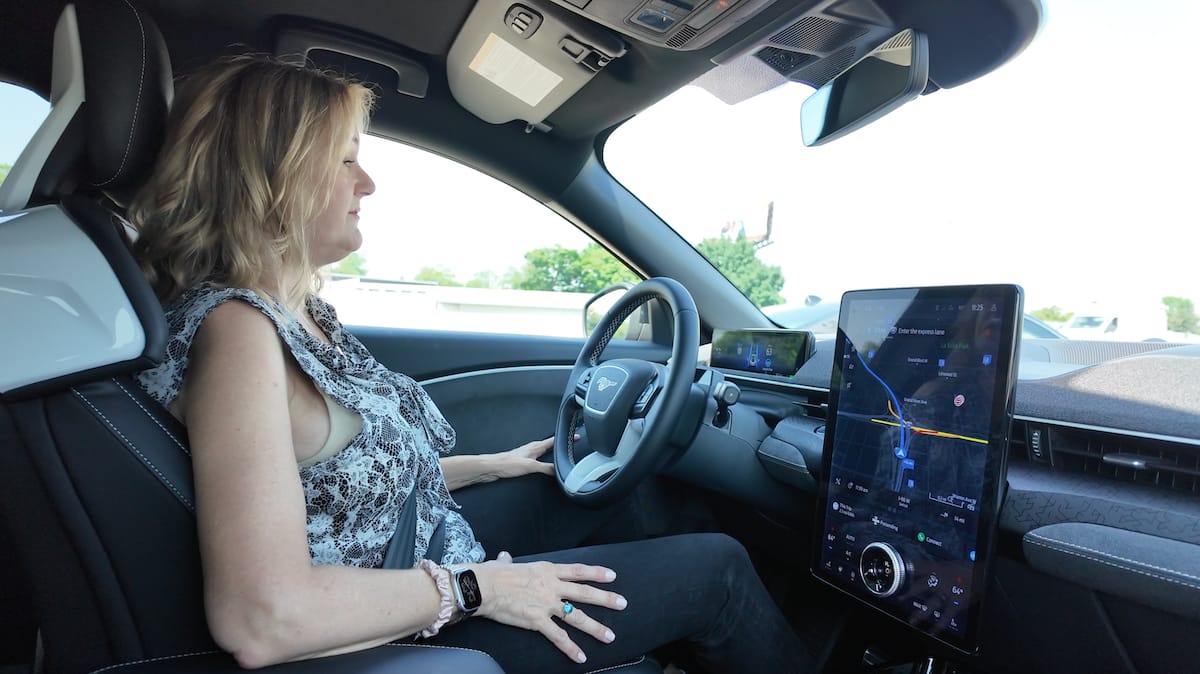
New cars are incredibly smart. They can see way down the road and through traffic ahead. They can see the driver next to you and tell what he’s going to do even before he realizes he’s drifted from his lane into yours. New technology in cars, such as hands-free driving, adaptive cruise control and park assist can see the lines of the road, often through heavy rain or snow.
Other systems can deliver turn-by-turn navigation, take you around traffic jams and they can tell if you’re not looking at the road. They can tell if you’re talking to the car or to someone else.
If it feels like your car has become your co-pilot, it has.
But which systems are most helpful? And which should you be sure are included in your new car purchase? These are our favorites.
This story is 100% human researched and written based on actual first-person knowledge, extensive experience and expertise on the subject of cars and trucks.
Head Up display Systems Are Great—and Plentiful


Pilots use this projection display to put key information such as speed, direction and active systems on the windshield in front of them. Many luxury and performance cars have them, and more and more automakers are adding this as an option, even affordable cars like Mazda 3 and family cars like the Kia Carnival offer it. Our favorite is the Lexus system that also uses touch-sensitive pads on the steering wheel to control what you see in the HUD; just swipe your finger around the control pad to highlight and select the systems you want active.
Read: I Took a Tesla Robotaxi Around Austin and This is What It’s Like—And Why I Feel Safe
Just Ask For What You Need With Voice Assistance


We’ve gotten to know Alexa and Google at home, but many new cars also have a “Hey [insert name of car] feature that allows you to ask for what you want, hands free. Once the wake word is activated on the vehicle settings screen, just say “Hey, Toyota” and your assistant is at your command to set the radio station, cabin temperature and more.
Many cars also have Alexa. Once you’ve set up your Alexa account, again, log in on the touch screen, you can play your Alexa playlists, turn on the lights at home or order toilet paper.
Related: 12 Car Tech Features that Blew My Mind at CES 2025
One Pedal Driving: The Best New Technology In Cars


This is one of the more magical features in electric cars: regulate your speed only with the accelerator and rarely touch the brake. One pedal driving also helps to regenerate the battery, so there’s a double benefit. Cars such as the Hyundai Ioniq 5 and Ioniq 6, Kia EV6, Mustang Mach-E, Tesla and BMW have one-pedal driving systems; others may have a “B” mode or a regeneration level that also acts as one-pedal driving. This is a game changer that we can’t wait for everyone to try.
Read More: Meeting the Quadriplegic Racer Torsten Gross from ‘Just Hands’ Changed How I See Driving
Facial and Fingerprint Recognition: The New Car Tech We’ve Been Waiting For

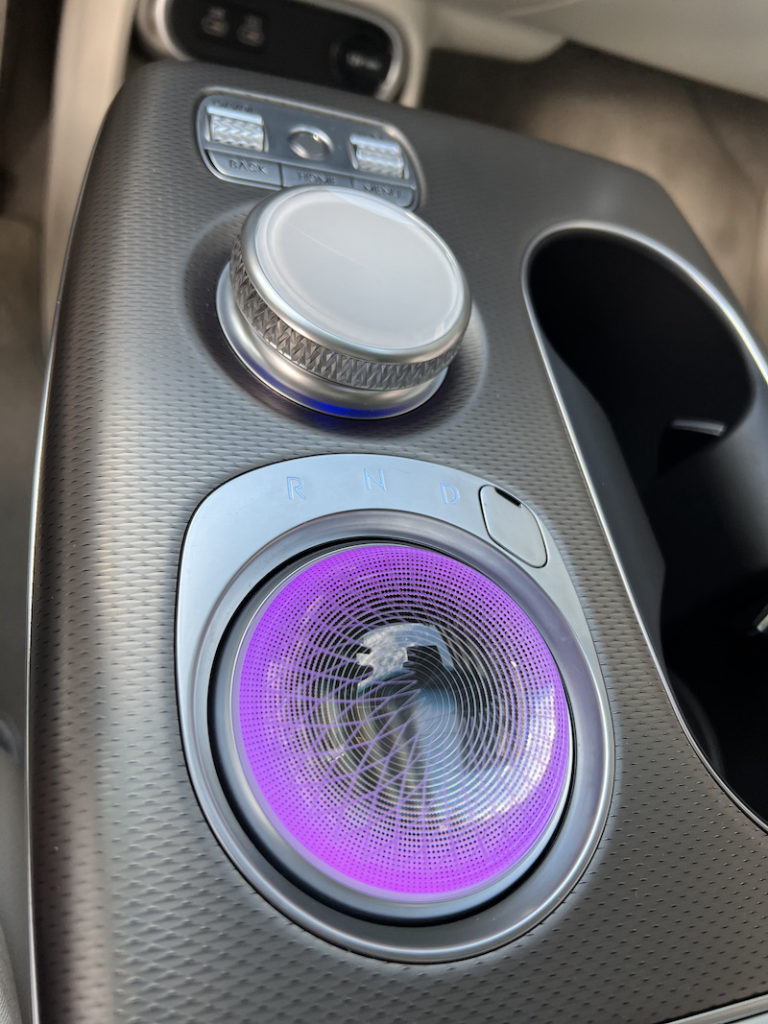
We’re seeing biometric controls in more cars: You can set up the fingerprint recognition system to simply hover your finger over a tiny dot on the console to start and drive the car. Use your phone to lock and unlock and you’ll never need a key. Genesis GV60 takes it a step further with a camera built into the outside of the car that recognizes your face and allow you access to the car; once in the driver’s seat, use the fingerprint recognition to start and drive the car. Then, use your face to lock the car again. Never, ever worry about losing a key.
Read: Super Cruise, Blue Cruise and More: Hands-Free Driving Systems Mean More Safety, Less Stress On the Road
A Larger, Easier to See, Less Distracting Screen


When Lincoln rolled out the 2024 Nautilus we were stunned, and mesmerized, by a multimedia screen that spans the entire cabin of the car. From one door to the other and beyond. And it’s brilliant. It cascades key information across the screen, allows customization and you can even turn it off if you’d like. It’s more than entertaining, it’s innovative and it —or some form of it —will become a standard.
Screens For Everyone Let Everyone Co-Pilot the Ride

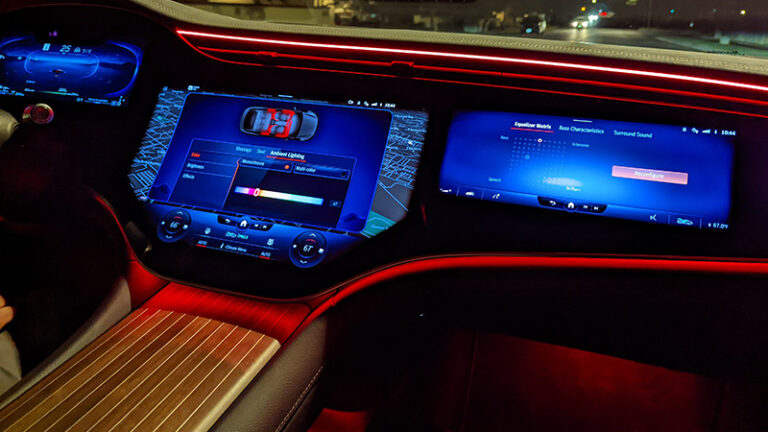
Another play on the all-encompassing screen is the Hyper Screen from Mercedes Benz in the top of the line electric EQS. This screen spans the dashboard, ballooning in the center to accommodate all the functions you can think of. On the passenger’s side the screen is available for passenger scrolling or viewing, though it’s dimmed to the driver so as not to (further) distract. More and more cars are adding screens to the passenger’s side, to the rear and additional screens for climate or other functions. These include Jeep, Jeep Wagoneer, Ram and Porsche … so far.
Hands Free Driving Might Be The Most Amazing New Technology in Cars


GM rolled out Super Cruise in its top Cadillac models and won the raves of critics who were skeptical of Tesla’s “self-driving” claims. Now, GM includes the tech in many of its cars and SUVs such as the Hummer EV, Chevrolet Tahoe, Equinox EV and others.
Other carmakers that offer level 2 autonomy, as the industry calls is, include Ford’s Blue Cruise and systems from Mercedes-Benz, BMW, Hyundai and Genesis. When road conditions allow, these systems allow you to take your hands off the wheel on the highway and some of them will change lanes for you, just tap the turn signal. They all still require the driver to pay attention, monitoring your eyes and canceling the system if you’re not paying attention.
Adaptive Cruise and Lane Keep Assist Watch the Traffic Around You

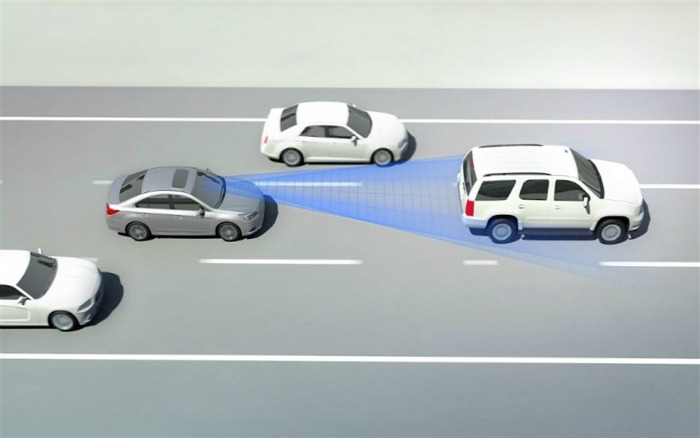
This may be the best feature and the most common; it’s also the one that continues to advance quickly. Systems like Nissan’s CoPilot 360 and Kia’s DriveWise sync the suite of driver assist and safety features so you can turn on cruise control and the car monitors traffic for dozens of yards ahead, on either side and behind you to ensure you stay in your lane, keep a safe speed and that you’re protected from hazards around you.
Apple CarPlay/Android Auto Remain A Must-Have
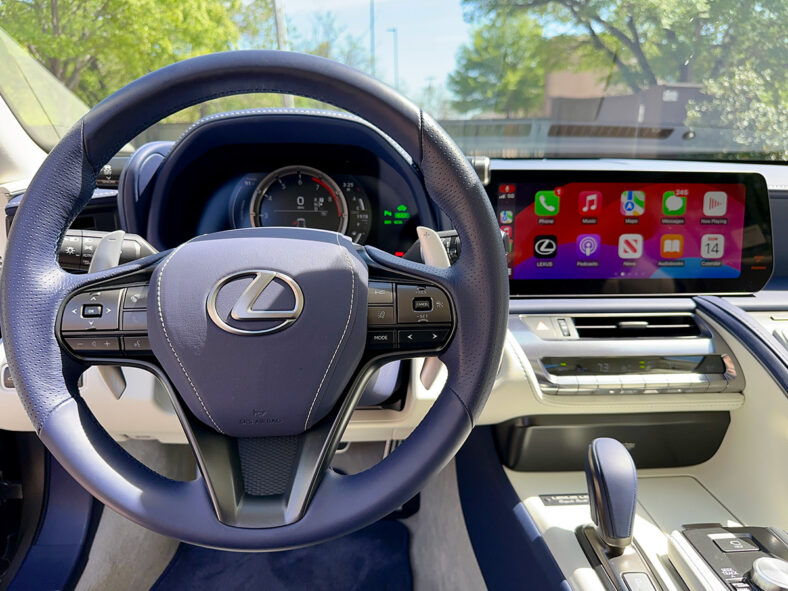
Sometimes called Projection Phone or Connected Phone, this feature isn’t new, but it’s great: Connect your phone and your messages, your maps, apps and more are displayed on the center screen. You’ll find Apple CarPlay and Android Autos in most cars built after 2016 and now, most cars offer it as a wireless feature; you don’t need to plug your phone in to have it pop up on the screen.
The best part of these wireless systems is that your phone connects instantly when you get into the car. Also, it’s typical that if a car has a wireless phone charge pad, it has wireless Apple CarPlay/Android Auto too.
A Rear Seat Monitors That Can Hear the Baby Breathe

This one, too, has become commonplace and we’re grateful: The standard system is simply a memory reminder: If you’ve opened the rear door, started the car, driven then turned the car off, a message in the driver display reminds you that you left something in the back seat. New systems detect motion and some are so sensitive they can even pick up a breathing baby.
Intended to keep babies and pets safe, it’s no doubt rescued gallons of ice cream from ruining the upholstery and restaurant leftovers from twice baking in the summer sun (and leaving an indelible fragrance behind).
Don’t Turn Off Park Assist —It Might Just Save Your Bumper

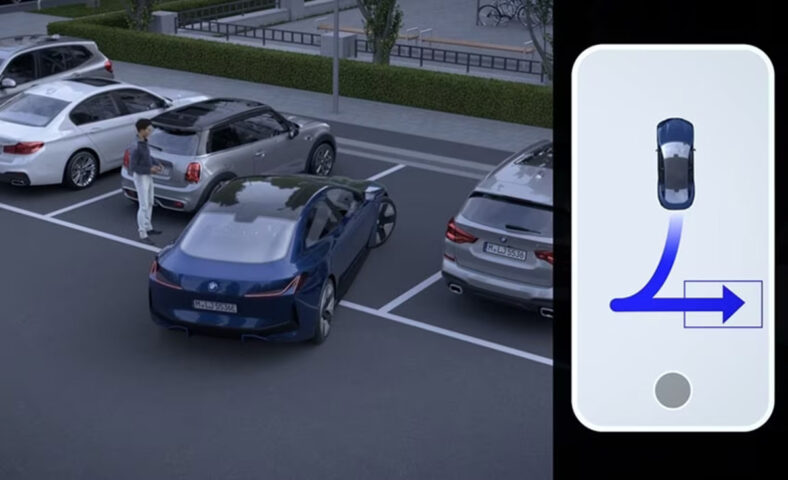
This might be the most novel of all the got-your-back technologies in cars, unless you are someone who can really use this. We learned this first hand in the Chevrolet Equinox as Tiffany Yu used park assist to parallel park on her way to a summer hike.
Park assist, or auto park, not just shows us how smart cars are at driving themselves, but they can pull into a tight space, parallel park or best, pull OUT of a tight space, a great feature when the car next to you parked so close you can’t open the door. Some brands, like Hyundai, Genesis and Kia allow you to use the feature remotely with a button on the key fob.
New car technology has gotten incredibly smart and intuitive. And, not all that expensive. Many of the features that will save your bumper, save your sanity or save your life are standard, though the more sophisticated features might be part of an option package. Either way, be sure that when you buy your next car, you get one with a co-pilot, too.

