


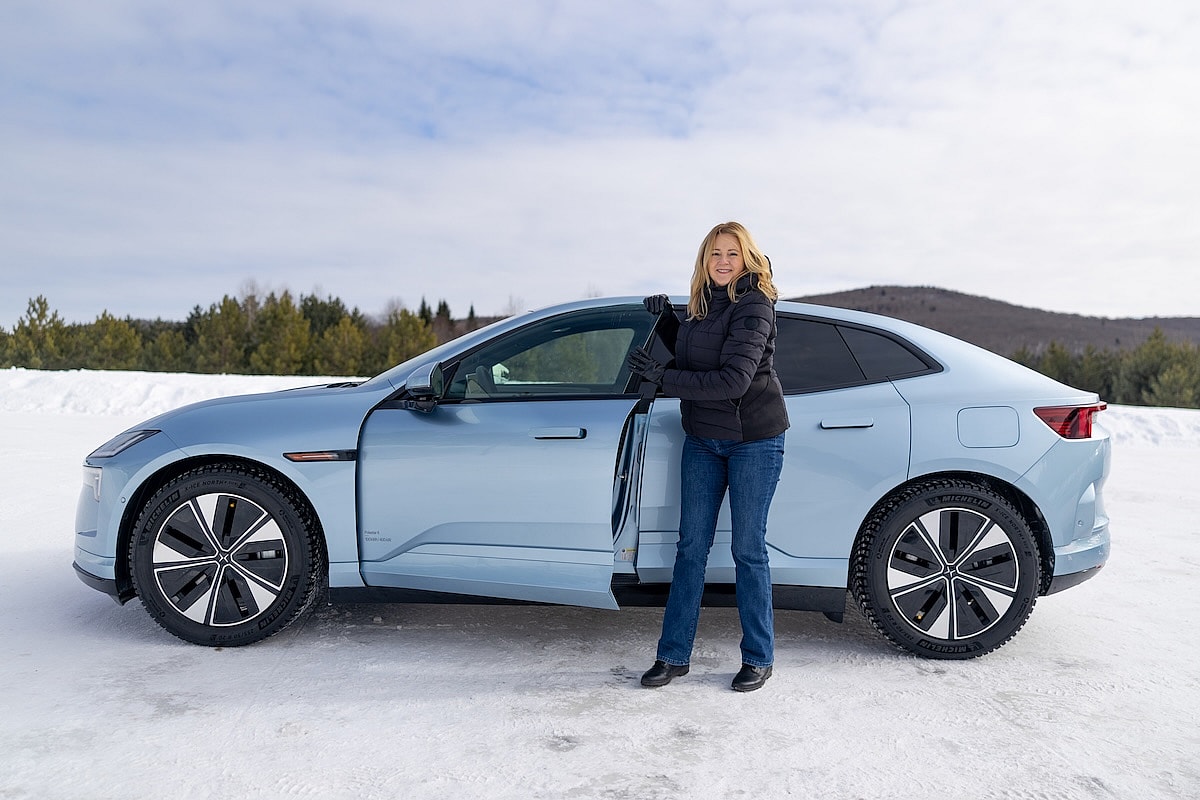
As a teen growing up in North Carolina, we didn’t see a lot of snow. So the first time we had more than a few inches on the ground, my dad hustled me in to the family minivan and we made our way to a church parking lot not far away. There, I climbed into the driver’s seat and he coached me as I drove around the empty lot. The objective wasn’t just to learn to drive in the snow, but to learn how to control the car, maintain a safe speed and recover from a slide without hitting anything in the process. And that’s the real goal of learning winter driving: maintaining control when things go awry.
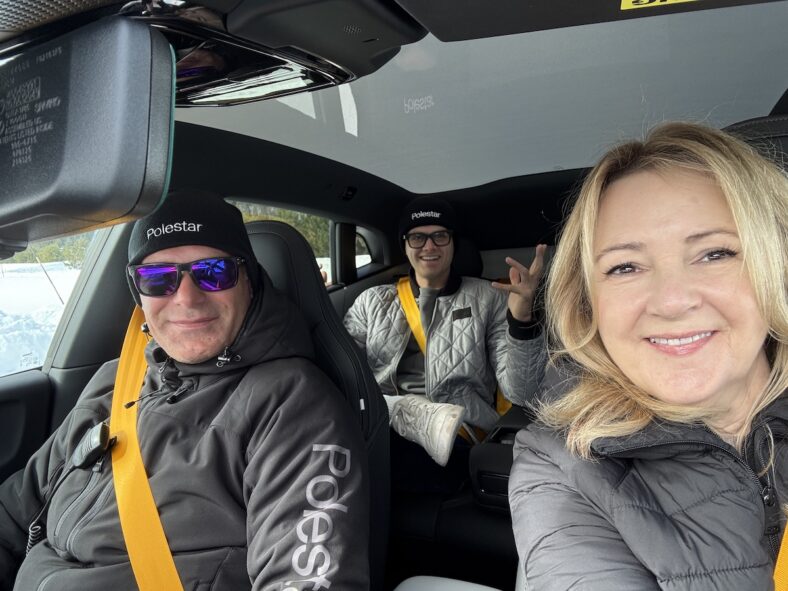
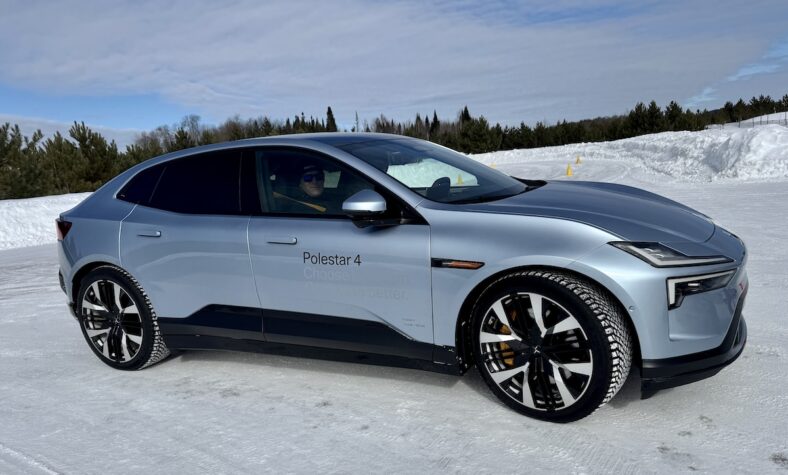
To get a refresher on winter driving skills, Polestar invited us to a track outside Montreal, Canada where we put a fleet of Polestar 4s to the test, coached by a team of driving pros.
Just trying to remember what I was taught as a teen and the rules for winter driving was a challenge. But muscle memory is forever; once you learn something it’s hard to forget it. Thankfully.
This story is 100% human-researched and written based on actual first-person knowledge, extensive experience and expertise on the subject of cars and trucks. Additionally, I was Polestar’s guest for this drive but all opinions are my own.
The Rules of Winter Driving Aren’t Actually All That Different

The first thing about winter driving, and not surprisingly, is that safe driving rules are mostly universal: Ensure your car is road-worthy and that your tires are in good shape. Don’t let your speed outpace the capability of your car or your skills; keep your focus on the road and where you want to go; if you look off into a snow bank—or a concrete wall—guess what? That’s where your hands will point the car. Stay calm, go easy on braking and accelerating and keep a safe distance between you and other cars on the road.
On snowy or icy roads you need less acceleration, less braking and less steering. Over-accelerating can lead to spinout; over braking can lead to sliding; oversteering, or understeering, can lead you right off the road.
Read: What Your Car’s Snow Mode Is, What It Does, and Why It’s Essential for Winter Driving
First Rule for Success: Find Your Drive Line

Probably the most important factor is to know where you’re going: Find your driveline, or the part of the road where your tires will get the best traction—which sometimes can be hard to see but other times is pretty obvious. Our winter driving track was a bed of ice covered by a thin layer of snow. As cars drove on the track all day the ice was exposed, a common hazard in wintry conditions.
Untreated roads, or roads that take on freezing rain or sleet overnight and snow in the morning (you’d be surprised how common this sequence is) often have a layer of ice under the snow, or salt or sand, making ice a more prevalent issue than you might think.
If you can see the ice clearly and distinguish it from snow or clean pavement, that’s a bonus; keep at least two wheels on the snow and you’re less likely to lose traction on the ice.
Read: The 2026 Polestar 4 Follows Sage Advice: Perfect Your Look By Removing One Thing
Use Your Car’s Power to Guide You


On regular roads we’re used to accelerating to gain power and braking to slow down and the feeling is pretty instantaneous. On snow or ice you want to use that power a bit more intentionally: let the car glide into a turn or a curve rather than braking as you head into a turn. Accelerate gently out of a turn.
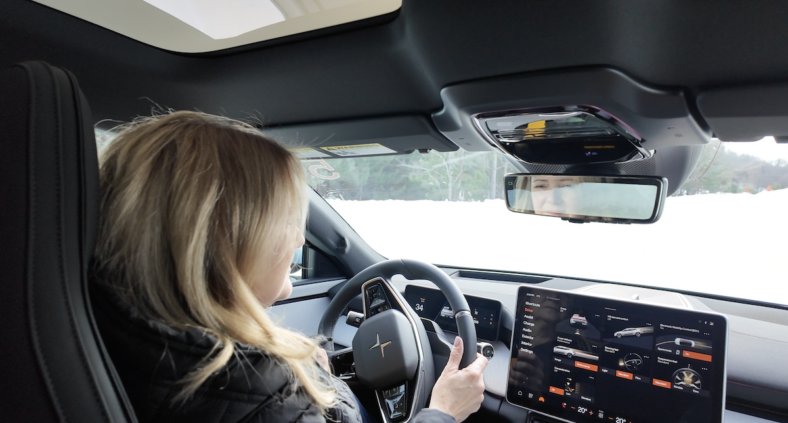
On the ice track in Montreal I learned to actually avoid the brake until I felt traction under the wheels; instead, I eased off the accelerator when it was clear that the car was slipping on ice. Then, I steered toward the drive line where I could see snow (versus ice). Once I felt traction clearly under the wheels, I could accelerate or brake as necessary—accelerate to get going again or brake to further slow down before a turn.
I found it surprisingly intuitive to just let off the accelerator and let the car go where it was headed, coaxing it along the way to steer where I wanted it to go, and in the all-electric Polestar 4, it felt even more so. But maybe it’s that muscle memory coming back to life.
Oversteering, Understeering and Letting the Car Steer Itself

Sometimes, though, muscle memories can conflict: modern muscle memory tells me to steer the car where I want it to go, and to keep turning until the car turns, too. That simply doesn’t work on ice, established muscle memory tells me. On the ice lessons I learned from my dad came flooding back: ease off the accelerator to slow down, ease off the steering to let the car find traction. Release my grip on the steering wheel to let it unwind and find traction.
Oversteering, or steering too much, is a huge factor in winter driving accidents. You feel like you need to keep turning the wheel until the car reacts, but instead, it slides off the road, or worse. Understeering, or not steering enough, has the same but opposite effect.
Letting the car find its own path really helped me regain control. In concert with easing off the accelerator, loosening my grip on the steering wheel and feeling when the steering wheel stopped unwinding because it caught traction was the moment I regained control.
Only Brake On Straight Stretch

Our drive pro Dany had one great piece of advice: Never break on a curve in the snow or ice. A curve, by definition, demands steering to get through it. But braking on a slick surface, also by definition, cancels out steering; it doesn’t matter which way your wheels are pointed, you’ll slide in the direction of your car’s momentum.
Dany pointed this out as I rounded a curve on the track and he was right; I didn’t brake, but instead, eased off the accelerator and let the Polestar 4 find traction on the track.
React Calmly and Recover To Pull Out of a Slide

I must admit, it’s a bit scary to feel the loss of control on a slippery road, even when it’s a closed track and you have a drive instructor sitting next to you. But the real goal is to learn where that loss of control happens and then, how to get it back. That’s muscle memory being built.
Putting together all the things we’d learned through the day—to look where you want the car to go, to find your drive line, to ease off the accelerator and brake lightly, to steer lightly and let the car find traction, and then to retake control once there’s solid traction underneath the tires, is the true win of winter driving.
The Fun Part: Practice When You Can

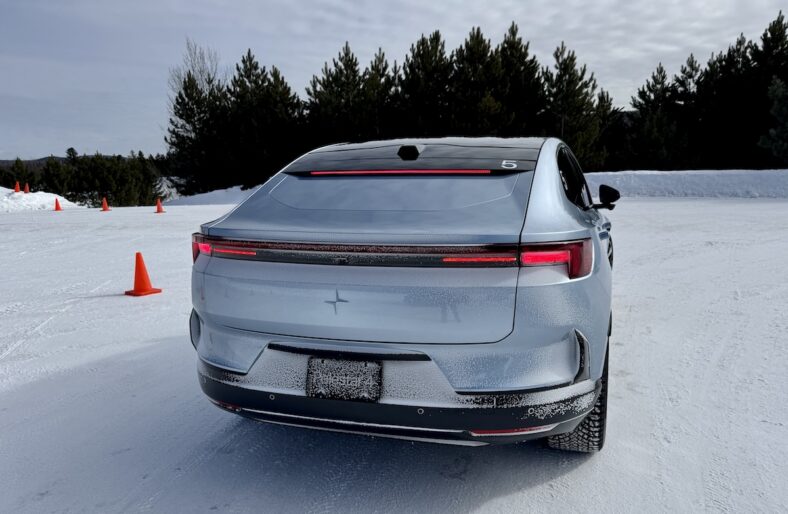
Polestar wanted us to spend time in the Polestar 4 to experience how expertly this car handles snow and ice on the road. In fact, we were able to turn off traction control and one-pedal driving and really put these cars to the test. Even without traction control we were easily able to regain control on the ice.
And while I appreciated getting that muscle memory back in shape, there was a bit of fun on the ice, too: Drifting.
That may seem like a contradiction, purposely letting the tires spin while the car slides on the ice, but actually, drifting is that perfect balance between controlling just the right amount of power and slide and knowing how and when to add power, braking and steering. It’s a skill, and not one of mine, but when you start to practice your snow and ice driving, it’s something that you’ll feel, too. Embrace it. The more you practice, the more you feel the shift of power and traction between control and lack of control, the better you’ll get at driving in slippery conditions.
Pick The Right Car

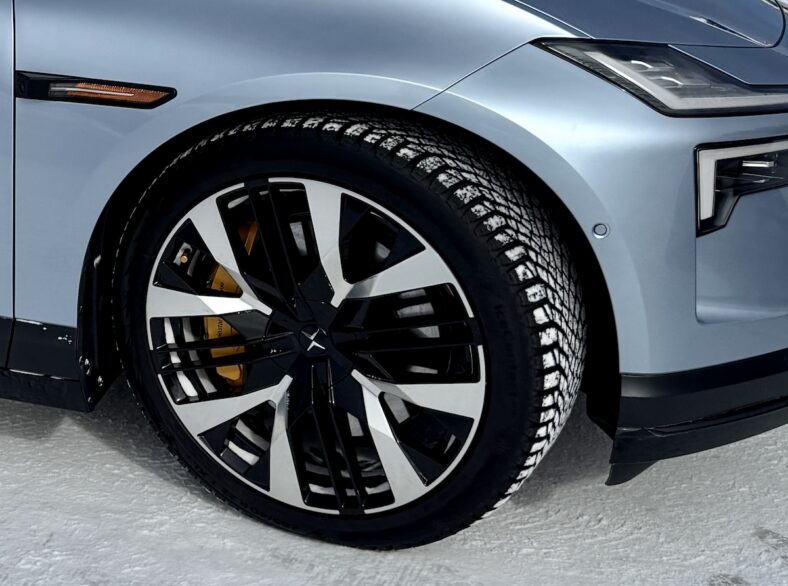
If you ask me, every car on the road should have all wheel drive—even if you don’t live in a snowy climate. That’s because we all have something that makes the road challenging: rain, oil-slick roads, fallen tree branches, mud and even occasionally for most of us, snow and ice.
But the Polestar 4 adds another factor: EV driving. The dual motors add AWD; the instant acceleration and faster deceleration thanks the regenerative brake system allows you to better control power. And an AWD system that’s tuned for winter driving will anticipate your needs and deliver before you even know you need them.
The Polestar 4 Completely Bested the Minivan for Snow Driving
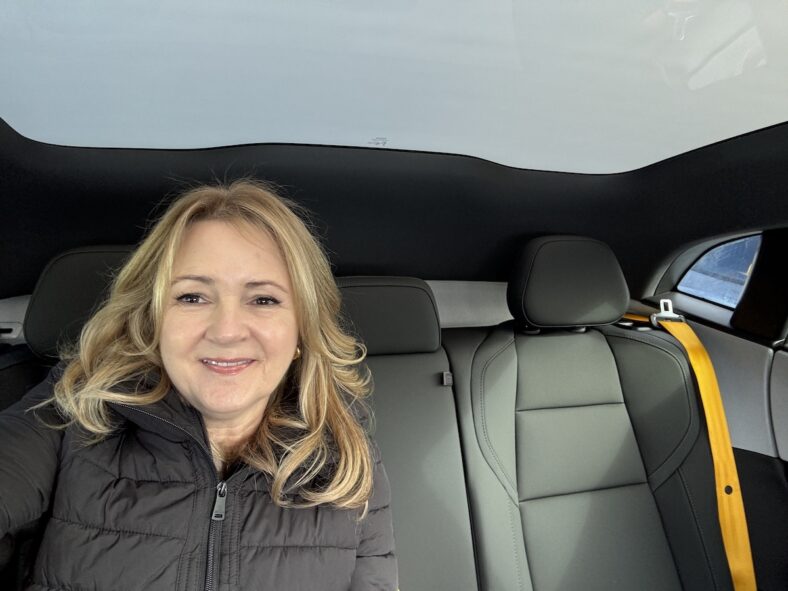
The Polestar brand is Swedish, after all, so I wasn’t very surprised that the Polestar 4 performed well on the snow and ice.
But it was the comfort in the rear seat, a panoramic sunroof overhead and tons of leg room in front of me, that made this so much more comfortable than my dad’s minivan. Even with all the sliding and turning, I didn’t feel tossed around at all, nor did I feel as if my drive partner might plow us into a snow bank. Some of that certainly is due to driver skill, but the Polestar 4 takes a lot of the credit too. Thankfully.

