
Are EVs Ideal for Winter Driving? The Polestar 4 Says Yes!
After spending a day behind the wheel of the Polestar 4 in snow and ice, I'm convinced: This one is bred for winter

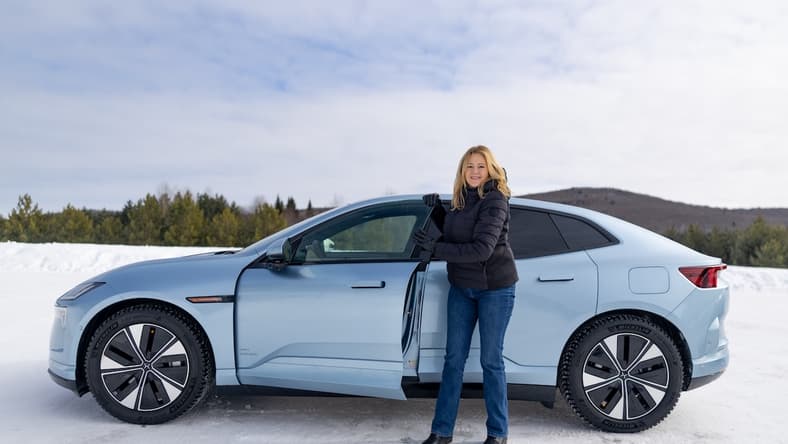
Many of us think of EVs like the Polestar 4 as fair-weather cars; perfect for flat, sunny places where cold temps and messy weather aren’t a thing.
Being able to avoid standing in sub-freezing temperatures to pump gas is certainly an advantage. And for people who can charge at home, the ability to charge an EV in your own garage out of the cold and wind is a definite advantage—as it would be in hot climates, too. But there are challenges to driving EVs in the winter that make people think twice about the idea.
After driving a Polestar 4, a powerful luxury EV that generates 544 HP, has a range of about 280 miles and a price that starts at about $56,400, on the ice, that opinion isn’t so simple. Yes, range is an issue, but performance, driving and managing an EV in cold weather matter just as much or more.
This story is 100% human-researched and written based on actual first-person knowledge, extensive experience and expertise on the subject of cars and trucks. Additionally, I was Polestar’s guest for this drive but all opinions are my own.
Are EVs Even a Good Idea in Winter ?

I wouldn’t have thought so. I’ve driven EVs in cold temps and watched the range drop like a rock. (I’ve driven them on road trips in warm weather and experienced the same thing).
But when I went to Canada it seemed every other car on the road was an EV. They’re much cheaper to operate—electricity is clean and cheap in many parts of Canada—and brands like Polestar have worked to make EVs more efficient in cold weather.
Among the efficiency features include a heat pump that warms the cabin and reduces battery drain; a battery pre-conditioning system that ensures the battery is warmed and ready to roll when you are. A cold start can really reduce any EV’s driving range. You can even use the pre-conditioning system to warm up the battery as you approach a charge station so the car charges faster.
Then, the dual motor setup provides all wheel drive and the Polestar 4‘s lower center of gravity, thanks to the battery pack that sits between the wheels, makes the car easier to handle in challenging road conditions.
Read: The Volvo EX30 Proves You Don’t Need to Be Big to Stand Out
The Real Magic is In the Smart All Wheel Drive System

One of the real advantages, though, is Polestar’s all wheel drive system that lends to better performance on snow and ice. The system is designed to provide traction to all wheels and electronic stability control to keep the rear end from slipping if the driver oversteers or understeers on a curve or turn. These are things that all AWD cars and SUVs share, though Polestar is known to think carefully about how these functions perform and ensure they really do the job.
Then, the system can be customized a bit with adjustments to steering, suspension and ‘creep,’ which lets the car creep forward, or not, as you slow to a stop.
Read: Putting Michelin X-Ice Winter Tires to the Ultimate Test: Driving in Quebec
The Right Tires Are Key

Of course, our test model was outfitted with Continental IceContact winter tires for maximum capability and safety; winter tires are required in much of Canada in the winter. And these are a great idea for anyone who lives with freezing temperatures and snow or ice more than a a few months of the year.
If you live in a fair-weather climate where ice and snow are a once or twice-a-year occurrence, all season tires are probably sufficient when paired with all wheel drive. They won’t have the grip on the snow and ice that winter tires do, but they the AWD system will be able to find those spots on the road with more traction.
Read: Oh, the Joy of New Tires. Seriously. All Season Continental Tire Review
What the Polestar 4 Was Like on the Ice

This one actually surprised me. I’ve driven on snow and ice a bit in my life—first as a teen when my dad taught me, then as an adult living north of New York City where significant snow and ice can derail life several times each winter. And, the occasional winter drive event that reminds us of good and bad habits to put to use on icy roads.
But this is the first time I’ve driven an EV on the snow and it was a surprise. First, there’s more instant torque, or instant power, when you tap the accelerator. We turned off one-pedal driving, which at first disappointed me but l got used to it (I would learn to use one-pedal driving if this were my daily routine), though I could feel the regenerative braking system at work, slowing the car more quickly even when I used the brake. I appreciated, though, having an instant response of accelerating and braking.
And then, I could really feel the wheels under the car turning and feel it when they caught traction. This was not just while accelerating or braking, but in turning the wheel and finding my way across the more slippery surfaces to find packed snow on the ice; that’s where the Polestar 4’s AWD system would catch and again, I could feel I was regaining control: the power response was solid with good traction, letting me again accelerate—or brake. The whole process felt really natural and came to me quickly.
What I didn’t have was the delayed rev up/accelerating/braking/lost power feeling of a gas-powered car. The Polestar 4 let me effortlessly maintain or regain control through every curve.
Developing a Car Designed For Snow Driving May Be Key, Too
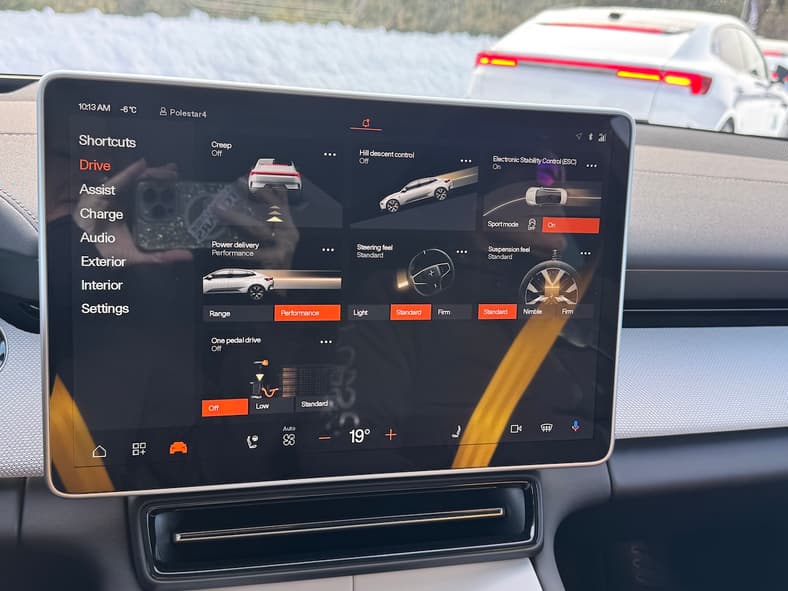
The Polestar brand is Swedish, so I wasn’t very surprised that the Polestar 4 performed well on the snow and ice. I was surprised, however that after driving all day, with lots of acceleration and having the heat cranking all day, that we still had nearly 70% of the car’s charge left (we started with 100%).
Some Polestar drivers reported driving 200 miles to get to Montreal without stopping to charge—an impressive feat when it’s -15 C outside (or 5 degrees Fahrenheit) and people drive 110 KMH (or about 70 MPH). Both of these factors can seriously ding an EV’s range.
But a good, efficient system helps to make an EV perform well in cold temperatures. A responsive and smart AWD system, one that gives feedback to the driver quickly and helps you to react quickly to road conditions is also ideal. Now I see why so many Canadians, and Swedes, drive EVs in the winter. The experience really was ideal.

More About:Car Reviews