
Google Gemini—and Chat GPT and Other AI Systems—Is Now Making Your Car Smarter
If you have a new car, then it might already have Artificial Intelligence (AI) functions that are making it more efficient and safer.


Technology moves so fast that it can feel impossible to keep up. It seems like we all just figured out how to update our dashboard clocks, and suddenly it’s time to learn how to talk to artificial intelligence (AI). From your phone to your fridge, AI is everywhere—and now, it’s officially moved into the driver’s seat with tools like ChatGPT and Google Gemini.
If that sounds overwhelming, you aren’t alone. Especially for those of us who prioritize keeping things green, it’s completely normal to feel some hesitation about the massive data centers and energy footprints behind big tech.
But here is the good news: using AI in your car doesn’t mean you’re contributing to a sci-fi takeover. In fact, your vehicle is likely already using it behind the scenes to optimize safety features like automatic braking. On the consumer side, it’s really just acting as a highly efficient, voice-activated personal assistant. Instead of stressing over complex tech, dipping a toe into in-car AI can be as simple as asking for a great restaurant recommendation or an easier route home. It’s here to stay, and it’s surprisingly ready to make your daily drive a whole lot easier.
This story is 100% human-researched and written based on actual first-person knowledge, extensive experience and expertise on the subject of cars and trucks.
Which Cars Currently Use Artificial Intelligence?
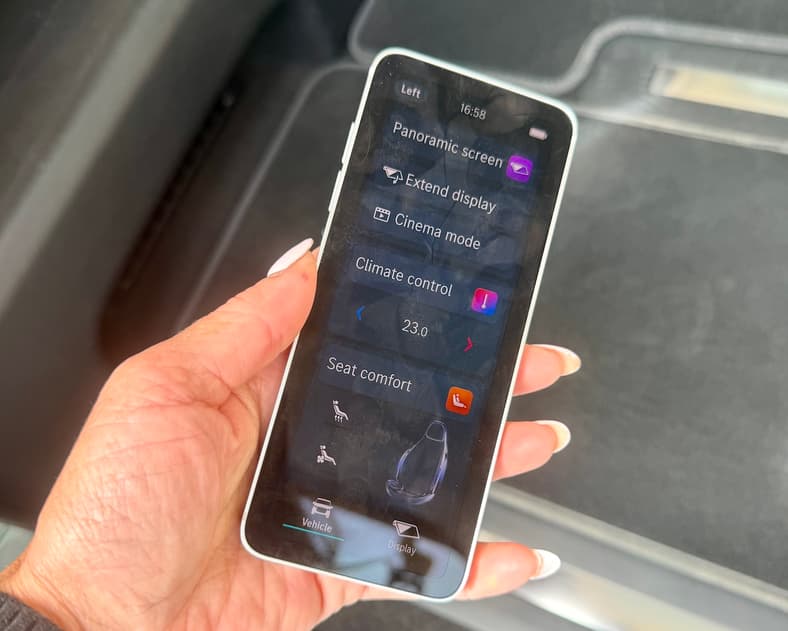
As generative AI becomes standard in new vehicles, its main job is to streamline voice assistants—meaning you can speak naturally instead of memorizing rigid command phrases. Beyond just chatting, this tech works behind the scenes to track maintenance, ensuring you never miss an oil change, tire rotation, or brake check. It even powers the advanced driver-assist systems in brands like Tesla and Rivian.
Automakers are eager to show off what these brains can do:
- General Motors: Partnered with Google to bring Google Gemini AI into GMC, Cadillac, and Chevrolet voice systems.
- Mercedes-Benz: Uses AI to manage complex city driving scenarios and handle cabin comfort. You can use natural speech to adjust your heated seats, turn on the defroster, or activate the seat massagers.
- Volkswagen: Has jumped ahead with over 1,200 AI applications company-wide. Crucially, VW uses it to maximize electric vehicle energy efficiency, helping to put range anxiety at bay.
- Stellantis: Brands like Jeep, Dodge, and Ram are leveraging AI to deeply personalize the ownership and cabin experience.
- BMW: Uses AI built on Amazon Alexa’s platform so you can use natural speech to adjust cabin comfort features like temperature and seat heaters.
- Porsche: ChatGPT is built into the multimedia displays. You can use it to activate in-car features, but can also use it for road trip games like trivia, tell stories to your kids, or tell jokes.
- Audi: ChatGPT is used to handle complex, open-ended questions, navigational tasks, and more.
- Hyundai: Hyundai uses “context-aware” AI to learn your routines, suggest faster routes, manage temperature and seating position preference, and to help predict and avoid crashes.
- Kia: ChatGPT is being built into the new Seltos to improve navigation, but it can also be used conversationally. Kia’s example included a driver asking to be hyped up before an interview, finding the closest beach with a waterfall, and the smartest way to break into running a marathon.
- Rivian: Wanting a version of AI that would more quickly connect information and systems and pass along system updates, Rivian created their own AI. AI will not only assist with voice controls in the car, but it’ll also help their cars to share data it collects with a wider digital information grid.
- Volvo: Volvo is one of the first to introduce Google Gemini integration in the voice system, allowing conversation like discussions with the virtual assistant; it can look at your calendar, text a question to a colleague and integrate the discussion into your routing.
- Toyota & Lexus: These companies use a “Guardian” AI system in features like Predictive Driving Assist to help monitor driving and help prevent collisions by maintaining a safe following distance, braking gradually as the lead car slows, without taking over for the driver completely. It’s also what helps keep the adaptive cruise control with curve slow so seamless.
Here’s How To Use AI In Your Car

If you drive a car like the Chevy Traverse, you can immediately get started with AI by communicating with the Google Gemini voice assistant. A lot of times, you have to prompt it by saying, “Hey, [Brand],” and just ask simple questions like, “How do I get to the park without going through downtown?” Plus, you can tell it that you have a craving for authentic NYC pizza and ask for the closest location that serves up pies.
AI can go beyond being a voice assistant by being utilized as your personal assistant. You can ask it to summarize your emails or to send a meeting invite to your boss at a particular date or time. Some people are using AI to reorder their favorite meals for pickup on food service apps.
Simple commands can be used to adjust your car’s settings as well. You can ask it to change the ambient lighting from a vibrant shade of orange to a relaxing blue. It can quickly create the perfect road trip playlist, or find the best podcast, even if you only want it to include songs from the 1980s. Enjoy that glam rock, we don’t judge. Also, you can entertain your passengers by asking for educational facts related to where you’re traveling.
Another beneficial use of your car involves troubleshooting problems. You can ask it to explain the best way to check your tire pressure and if a warning light on your dashboard means that you need to immediately visit a mechanic. It might provide beneficial information about problems, such as why your fuel economy has been dropping, too.
Is AI Built-In To My Car Bad for the Environment?

If you follow tech news, it’s completely natural to worry about the environmental impact of AI. Massive global data centers consume huge amounts of electricity and water just to keep their servers cool. But if you’re trying to live a green lifestyle, you can breathe a sigh of relief: there is a huge difference between the power-hungry AI running on a tech company’s servers and the smart technology inside your vehicle.
Most of your car’s AI features—like automatic braking, lane-keep assist, and driver monitoring—rely on what engineers call Edge AI. This just means the technology is fully localized. Instead of sending your driving data across the internet to a sprawling server farm, all the computing happens instantly on a tiny, highly efficient microchip built right into your dashboard. These chips are optimized to use minimal power, drawing just a fraction of energy from your car’s battery.
Even when you use a cloud-based feature, like asking an integrated ChatGPT or Google Gemini assistant for a restaurant recommendation, the environmental footprint is incredibly small—virtually identical to a standard smartphone search. In fact, many automakers are actually using AI to help the planet by calculating the absolute most efficient way for electric vehicles to manage battery power. Far from harming the environment, your car’s AI is built to be lean, green, and highly efficient.
How Does Google Gemini, Chat GPT and Other AI Make Cars Safer?
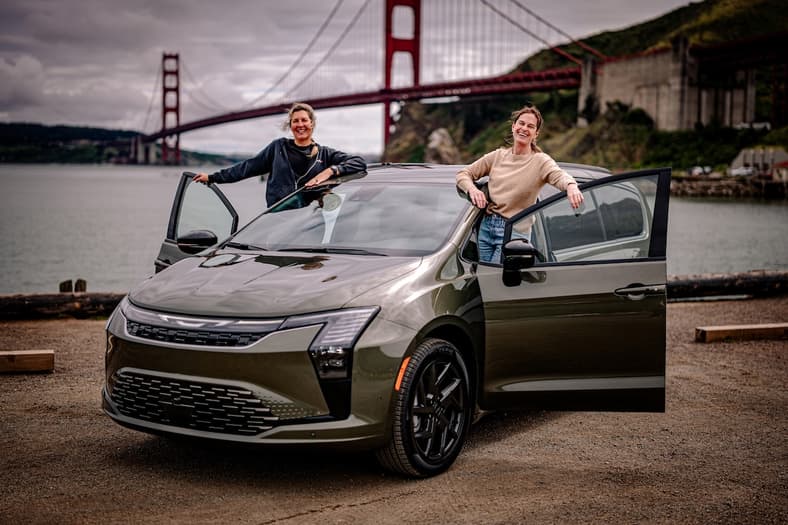
Artificial Intelligence has a remarkable knack for preventing accidents before they even happen. By constantly analyzing data from LiDAR, radar, and cameras, AI can detect hidden road hazards—like sudden debris, a pedestrian stepping off a curb, or a car slamming on its brakes ahead. If it senses an impending collision, it reacts and applies the brakes with a response time that far outpaces human reflexes.
If you’ve ever used a hands-free or semi-autonomous driving system, you know you can’t just take a nap. This is where driver monitoring systems come into play. To ensure you’re driving safely, AI uses in-cabin cameras to track facial expressions, eye alignment, and posture.
If the system detects that you are distracted, drowsy, or impaired, it steps in. It will issue audible warnings and flashing lights to get your attention. If you don’t respond—like in a medical emergency—advanced systems (such as Ford’s BlueCruise) will automatically activate the hazard lights, slow the vehicle down, and bring it to a safe, controlled stop right in your lane.
Beyond safety, AI acts as an early-warning system for your wallet. By tracking real-time sensor data, it can spot tiny mechanical abnormalities. If a part starts behaving erratically, the tech can predict an upcoming failure and warn you in advance—allowing you to make a proactive repair before a dreaded breakdown leaves you stranded on the highway.
From keeping you safe and preventing expensive breakdowns to predicting the fastest route and adjusting your heated seats, AI is completely transforming what our vehicles can do. The next time you get behind the wheel, take a second to explore your dashboard—go out there and give it a try!

More About:Car Technology