
I Drove the 2026 Toyota RAV4 GR Sport PHEV During Chicago Design Week. It Felt Like Kismet.
Gather a bunch of creative minds together with the 2026 Toyota RAV4 GR Sport PHEV, and you get a load of "oohs" and "ahhs" over the company's darling compact SUV.

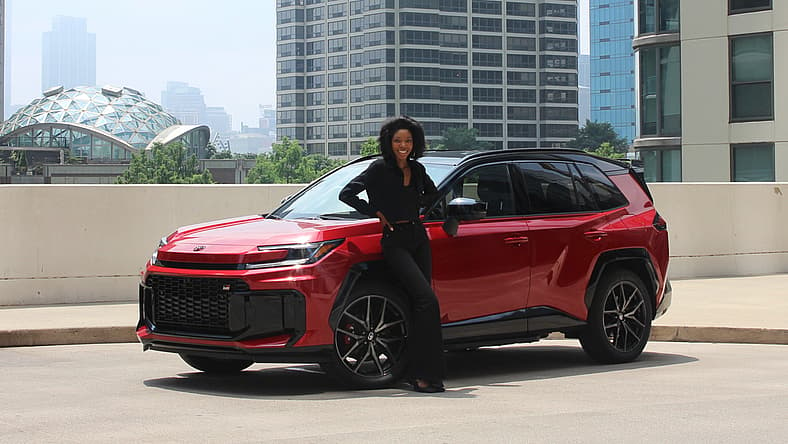
It was kismet that my week with the all-new 2026 Toyota RAV4 GR Sport PHEV coincided with Chicago Design Week, where thousands of interior designers, architects, and creative directors swarmed the Windy City to learn, network, and be inspired. My muse for the week was the GR Sport PHEV trim of Toyota’s best-selling SUV, which is all-new for 2026.
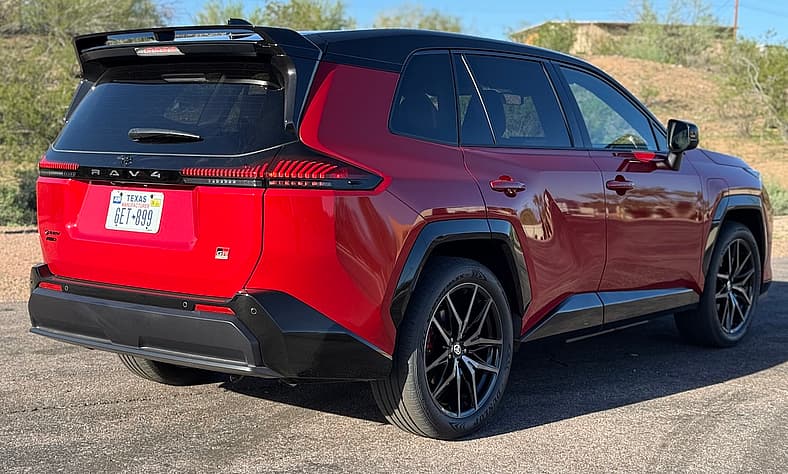
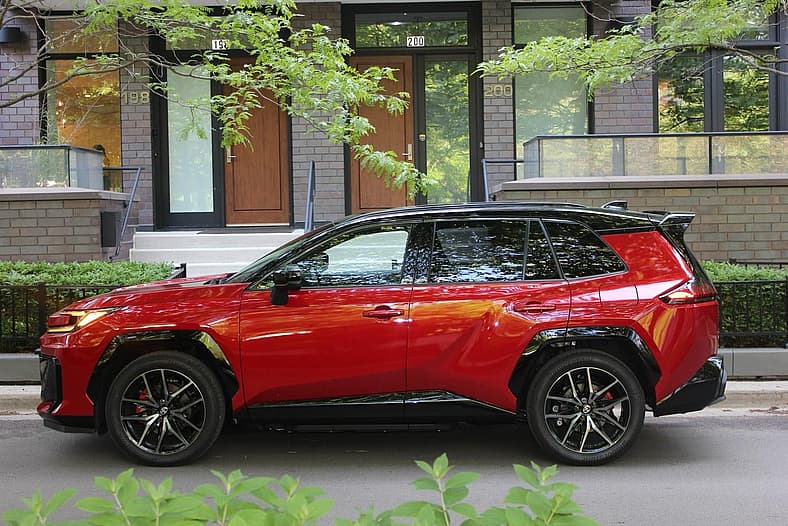
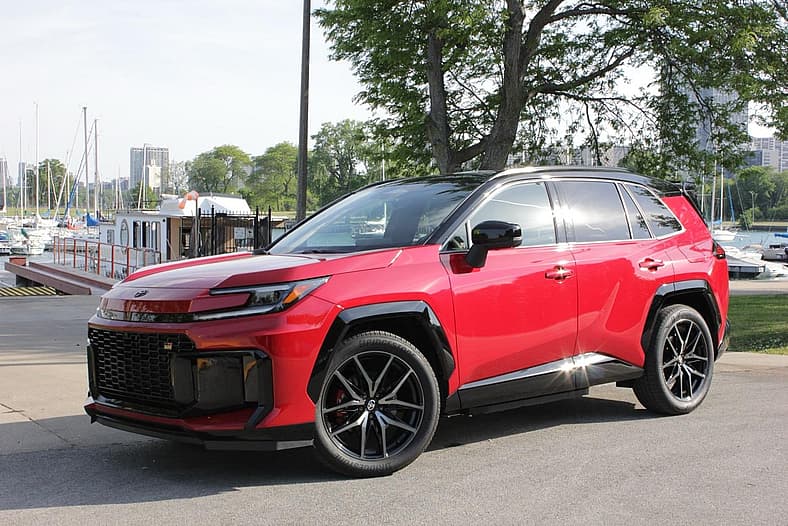
Driving it through the city, I received nothing but compliments about the RAV4’s new look. Photos of the Supersonic red-on-black coordination don’t do it justice. In person, it’s truly a showstopper. It also packs cutting-edge tech, stellar fuel economy and 324 horsepower; the most the RAV4’s ever had. 324 HP is just start of what makes this SUV fun to drive; GR stands for Gazoo Racing, Toyota’s racing arm. Gazoo partnered to make this SUV not only more powerful, but give it a sportier look and performance with red brake calipers, a slightly lower ground clearance, stiffer suspension for more precise cornering and steering that’s more responsive.
But there’s more to the Toyota RAV4 PHEV, which stands for plug-in hybrid EV, than meets the eye. Here’s what else impressed me about it.
This story is 100% human-researched and written based on actual first-person knowledge, extensive experience and expertise on the subject of cars and trucks.
What’s So Special About the Toyota RAV4 GR Sport PHEV, Anyway?
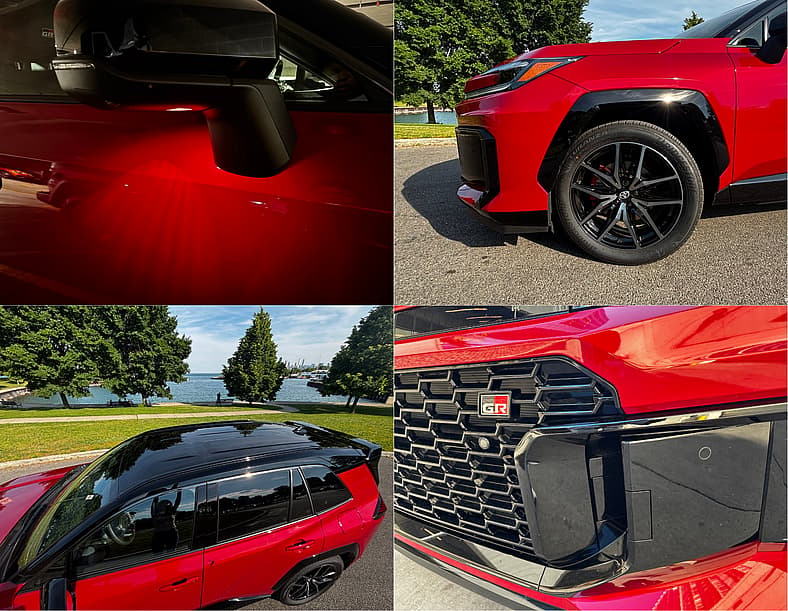
Toyota’s new “hammerhead” exterior design was the star. The blacked-out grille, badges, wheels, side mirrors, roof, and logos were each coated in a high-gloss piano black. The lustrous black glistening against Toyota’s Supersonic Red created a striking contrast, adding to the sportiness. With Supersonic Red being reserved for the RAV4 GR Sport PHEV trim, the vibrant red inherently carries some exclusivity to it. This model year is the first to wear the motorsports-inspired GR badge.
Speaking of exclusivity, the GR Sport is also PHEV-only. It increases the price, yes, but it also increases the horsepower. Instead of 226 combined horsepower in the FWD hybrid or 236 in the AWD hybrid, the PHEV (thanks to two electric motors) brings the horsepower up to 324. It shares the same gas engine as the other RAV4 trims, but the larger, more powerful battery pack, plus the dedicated electric motor in the rear, significantly boost the power.
There are other noteworthy style changes for the RAV4 GR Sport, too, like:
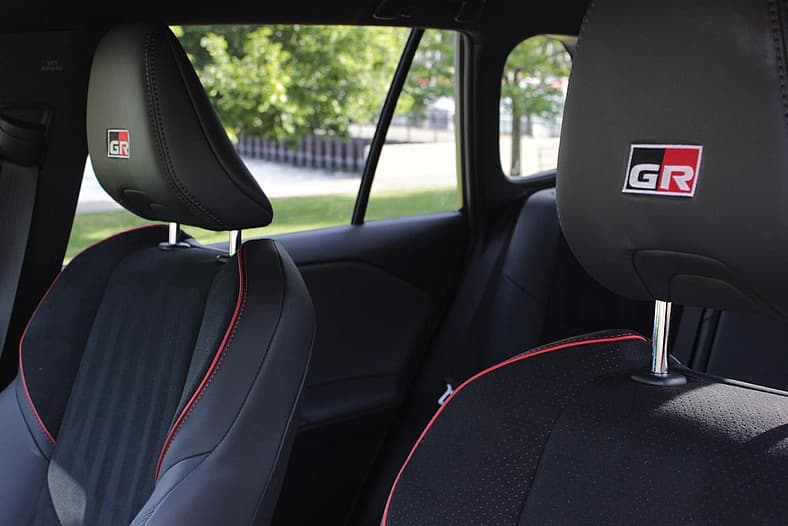
- Black and RED TONE perforated seats with GR Logo Headrests
- Leather wrapped heated steering wheel with the GR Logo
- Red stitching interior accents
- Piano black power and heated side mirrors with puddle lamp, camera, turn signal and blind spot indicators
- Red painted brake calipers with GR logo
- 2-tone exterior with black roof (optional)
- Aluminum sport pedals
- GR branded front door scuff plates
How Much Does the Toyota RAV4 GR Sport Cost?
The Toyota RAV4 has been available as a PHEV for quite some time, but for 2026, the plug-in comes in four distinct trims, with the GR Sport being the highest-reaching. All PHEV models are AWD-only, too, and all trims include a $1,450 delivery fee:
- SE—$41,500
- Woodland—$45,300
- XSE—$47,200
- GR Sport—$48,500
As a First-Time PHEV Driver, the GR Sport Was an Experience
This was my first time driving a hybrid or any form of electric vehicle. While it was exciting, I had two very real concerns. First, what would happen when the battery runs out? Would it switch over to gas automatically? When the battery was around 17%, my friend and I pulled out the manual and we were relieved to learn that the car would automatically switch over from EV mode to Hybrid mode. I received the car with 21% charge and by the time the battery fell to 0%, I had been driving for over three days.
On day four, when pulling out of the parking lot, it happened, I felt a noticeable but subtle transition over to Hybrid mode. From that point on, I expected the car to function as a gas car would, but it didn’t. At startup, the PHEV maintained its futuristic electric ‘hum’ opposed to the gas engine ‘crank’. Even after the transition, the hybrid maintained its electric character. The sound was noticeably louder, but barely, still much quieter than a gas engine.
Charging It Wasn’t Quick, And That’s By Design
And then there was my second concern: charging it using a public charger. After running the battery down, I recharged at a shopping center; it was convenient, but not so quick for a first timer. After downloading the charging app and taking another look at the manual, I successfully charged the car for about an hour and fifteen minutes, bringing the battery from 0% to 42% for $2.61.
And, since the GR Sport is one of two trims that aren’t optimized for Level 3 DC charging (the other being the SE), the charging time was on par. At home with a 240V outlet, it can take up to 3.5 hours to charge using the 7kW onboard charger. On a 120V home outlet, Toyota says it can take 10 to 12 hours to fully charge, ideal for those who can charge their PHEVs overnight before commuting.
I drove 25 highway miles in EV mode at 42% and arrived home with 17% remaining. As a first timer, I was stunned to see the battery percentage drop so quickly. Considering that the RAV4 GR Sport PHEV has a range of 48 miles on EV mode, it actually performed better than expected. If you were able to charge it regularly, you could go quite a way before worrying about gas.
Toyota’s Plug-In Hybrid Management System is Excellent
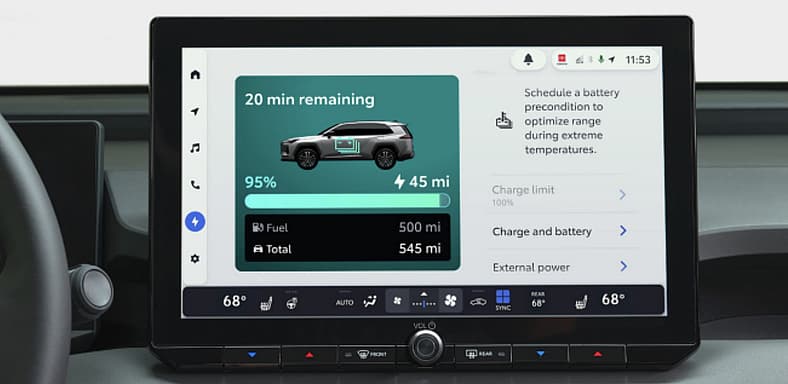
The GR Sport and XSE trims come equipped with a 12.9-inch infotainment display, while the SE and Woodland trims feature a 10.5-inch screen. Either way, the screen is clear and easy to read. If you are familiar with Apple CarPlay or Android Auto, navigating the system should feel natural.
One feature worth noting within the infotainment system is the EV Charge Management. From there you can monitor your battery levels and check remaining minutes or miles of EV range you have remaining. For those who take longer road trips, the navigation system can map a route that guides you along paths with EV charging stations. I didn’t use that feature, but for anyone with concerns about range, knowing that exists could add an extra layer of confidence.
I did notice a slight lag when changing songs when connected to Apple CarPlay, but if I were buying this car, that would not be a deal-breaker. For the most part, the Apple CarPlay portion of the infotainment system is pretty standard. What is not so standard is the ability to control much of it without ever touching the screen, using the “Hey, Toyota” voice command feature.
Kudos to the 360-Degree Overhead View, Too
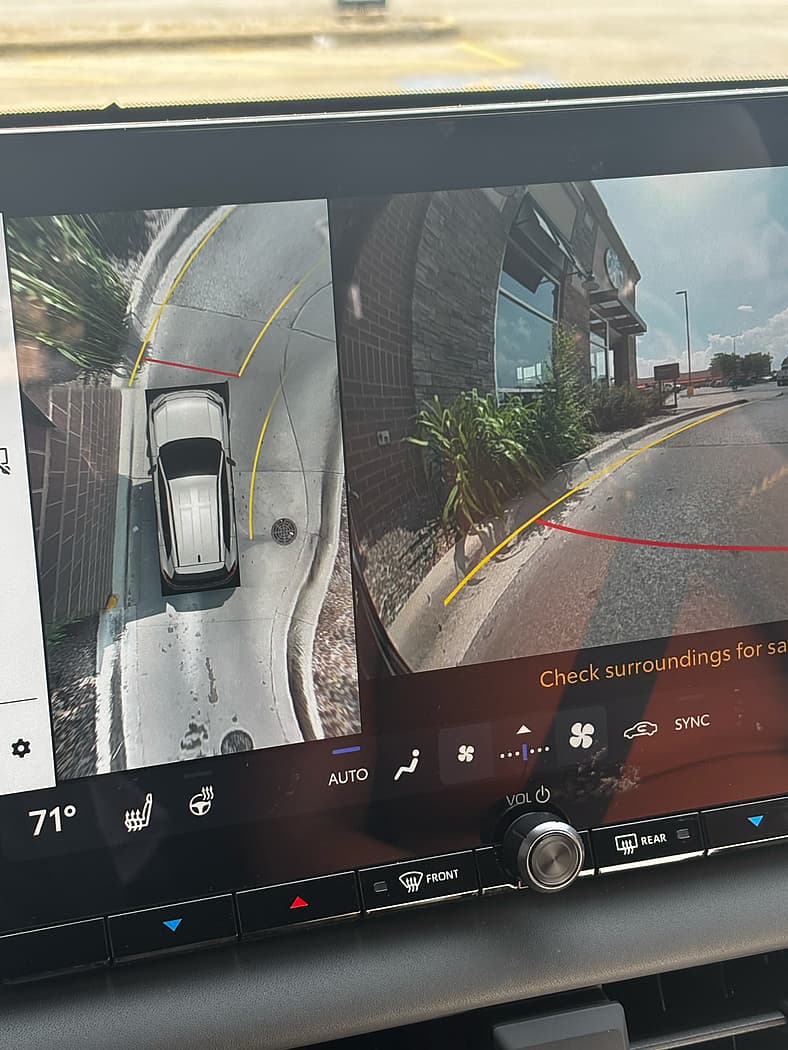
Adding to the safety and tech repertoire was the 3D 360 Degree Overhead view. My car has a reverse camera, but seeing the car from a bird’s eye view made parking easy. Even though I avoided tight parking spots and parallel parking during my week with the car, this feature gives you an overhead perspective that would make any tricky parking situation a breeze. This feature comes standard on the Woodland, GR Sport, and XSE trims.
The Voice Assistant is Actually Helpful… For a Price
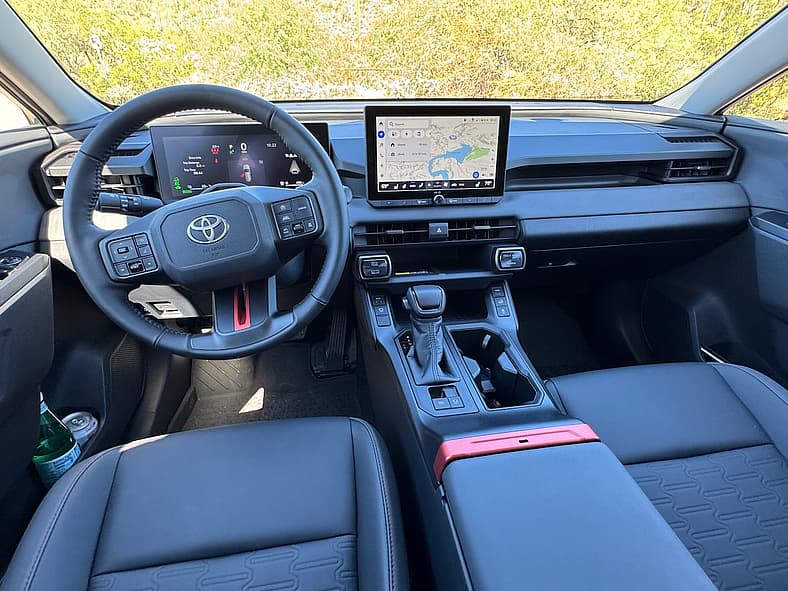
I never thought I’d see the day when I’d no longer have to reach for the windshield wiper lever, with the “Hey, Toyota” voice command feature that comes with the company’s new Arene software. All I had to do was simply say “Hey, Toyota, turn down my air conditioning.” Using the “Hey, Toyota” feature, I was able to adjust the music and activate navigation to the nearest coffee shop. A perfect illustration of how Toyota is leveraging technology to enhance safe driving.
All trim levels are equipped with this feature as part of the Drive Connect subscription service; the XSE and GR Sport come with a one-year complimentary trial. After the trial ends, the cost per month ranges from $15 to $25, depending on whether or not you want access to the “Go Anywhere” or “Premium” bundle alongside Drive Connect. Drive Connect, which is just the voice assistant and a 24/7 live agent destination assist (concierge service), is the least expensive option. You can also choose a “Music Lover” bundle, which just packages the Drive Connect with streaming from Apple or Amazon for $15 per month.
The Go Anywhere bundle grants access to Remote Connect, which allows drivers to remote start the car, lock the doors, or track their car from the Toyota app, while the Premium bundle adds access to streaming services like Apple or Amazon Music using Toyota’s native software.
Is 48 Miles of EV Driving Enough? For Most, Absolutely
Being from the largest city in the continental U.S., I could easily drive 60-plus miles in a day, so my initial thought was, “Why buy a plug-in hybrid when EV mode won’t last a full day?” I thought about my family and friends back home who easily drive 30 miles one way to work, thinking this would be pointless for them, but my perspective changed after my week with the RAV4 GR Sport ended.
For those with longer daily commutes, a daily full charge would significantly reduce trips to the gas station and money at the pump. With a daily commute between 50-60 miles, you could mostly rely on your battery, come home, charge and repeat all while having the gas option as a safety net. With residential charging rates, a full charge could cost you about $3.00 a day for a full charge.
For someone living in a city with a short daily commute, the plug-in hybrid is even more appealing and cost-effective, allowing for everyday EV driving with just a weekly charge, with gas option as a safety net. And, fun fact: only a handful of PHEV SUVs offer an EV range of that have an EV range of over 48 miles, including Land Rover and Mercedes-Benz. The only other competitor (in the Toyota’s price range) is the Kia Sportage PHEV, but it has a much lower range. And it costs more.
The Interior is as Clever as It Is Attractive
The RAV4 GR Sport comes equipped with a wireless charging pad for the driver and a USB-C port for the passenger; initially, my friend and I wondered why there wasn’t a charging pad for both sides, since other Toyota models like the bZ, CH-R and new Highlander EV offer that. After giving it some thought, a driver’s side charging pad seems logical. While charging via USB-C, the passenger can use their device while riding; a charging pad-only option for the passenger wouldn’t allow that.
This seems like a thoughtful way to keep the driver’s cell phone out of their hands, encouraging them to use the ‘Hey Toyota’ feature and Apple CarPlay or Android Auto.
Subtle (But Immensely Helpful) Design Features That Solve Real Problems
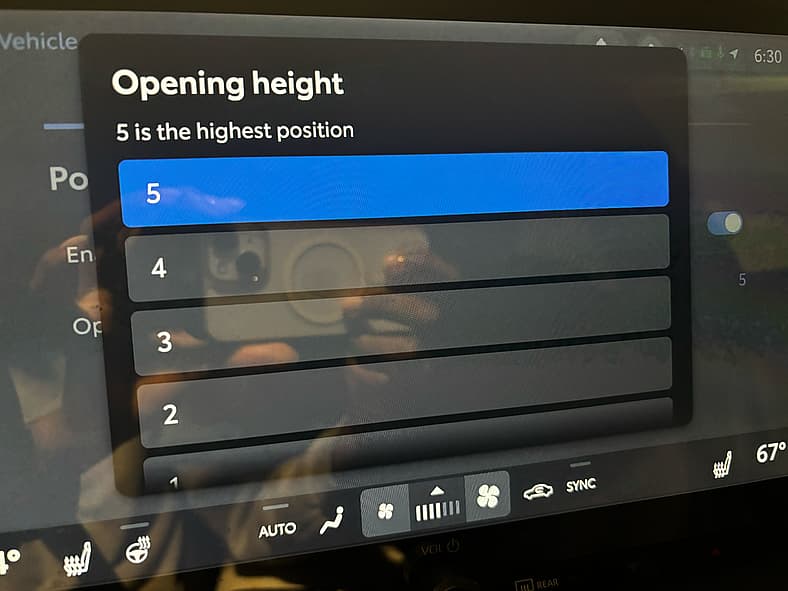
One theme that stood out at Chicago Design Week was that the hallmark of good design isn’t solely about appearance but functionality. A prime example of this is the RAV4’s height-adjustable powerlift gate, a design solution that allows you to select between five opening height levels.
I was pleased to discover this feature while exploring the infotainment system and immediately recalled a time when a friend opened their trunk and it hit the low clearance garage ceiling. The Trunk Opening Height feature comes standard on the Woodland, GR Sport, and SE trims.
Top Knot Approved. Tall Passengers, Take Note
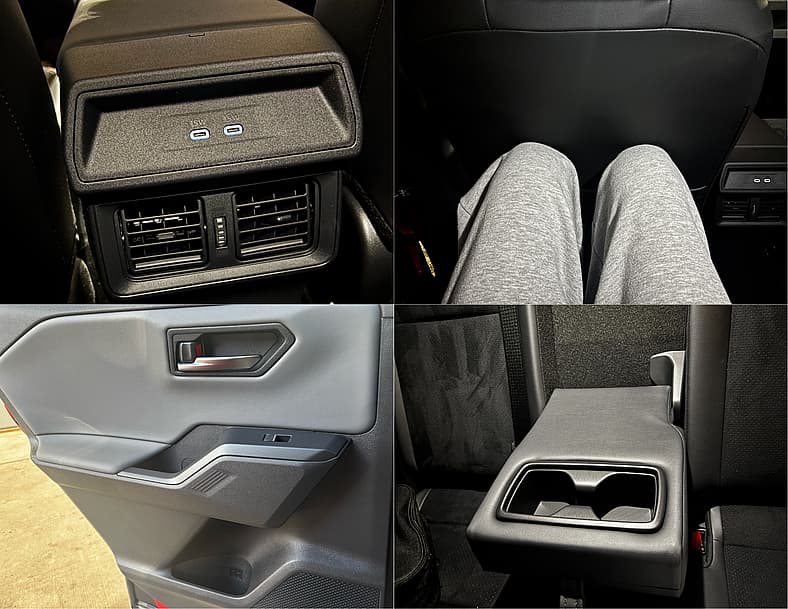
Standing at 5’11, headroom, legroom, and ease of getting in and out of a car are top concerns for me. For headroom, even with a top knot, my hair barely grazed the roof of the car. Legroom was fine when the driver’s seat was fully pushed back. If you’re planning on having a long-legged passenger in the backseat, it will be a tight squeeze.
For folks with a shorter stature, though, the rear legroom will be plenty. Numerically, the RAV4 GR Sport offers 37.8 inches of space, which, when compared to the Hyundai Tucson PHEV’s 39.5 inches or the Outlander PHEV‘s 38.1 inches, feels a bit strange. But that’s not to say that the rear passengers wouldn’t be comfortable. Not at all. The rear passengers have access to two USB-C charging ports, a fold-down armrest with two cupholders, and rear-facing A/C vents. Funnily enough, the rear passengers don’t have heated seats (none of the PHEVs do), but the RAV4 Limited Hybrid offers them for about $2,000 less.
The GR Sport’s Ideal Buyer is Not a Shy One
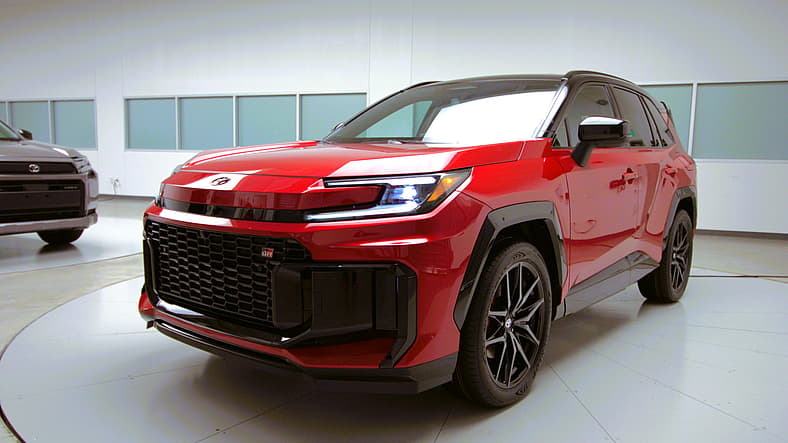
The RAV4 GR Sport PHEV was a head turner and received compliments daily, so it is not for the person who doesn’t like attention. It’s for someone who wants to save on gas, whether their commute is long or short. It is for someone who isn’t ready to fully transition to EV and wants to keep gas as a backup, someone who likes a sporty look and wants that legendary Toyota reliability.
I was indifferent about the RAV4 until I saw this version. My week with it completely changed my perspective. At Chicago Design Week, one key takeaway was that the best designs balance aesthetics with functionality. After my time with the RAV4, I can say that even though this is a striking vehicle, it’s also about how the car works for me, balancing form and function—and sporty driving—so nicely.

More About:Car Reviews