
10 Ways Your Car Can Prevent Distracted Driving, and the Cars That Do This Best
To curb distracted driving, it's important to understand the safety features your car is equipped with. Here are 7 key features that keep you alert.

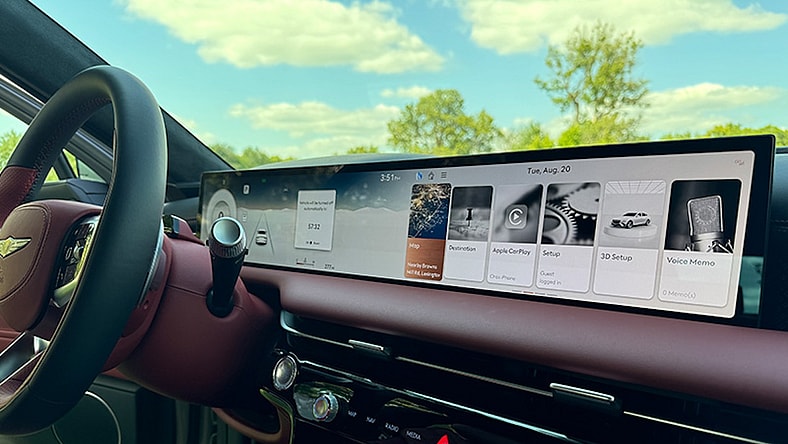
In the last decade, technology in modern cars has exploded. Nowadays, cars can park themselves utilizing a myriad of cameras, sensors, and radar devices. Some can come to you when you summon them, and some can drive themselves and switch lanes for you. For features like that, you used to have to prepare to drain your bank account dry to have one of those features.
Now, many come with one, two, or all of those features for much less than you’d assume. And while some features may be gimmicky to help separate brands from the competition, the real magic is that some of these can prevent distracted driving.
However, not all cars are created equal. Some exhibit our favorite distracted driving deterrents better than others. Here are the best features and the cars that do it best.
This story is 100% human-researched and written based on actual first-person knowledge, extensive experience, and expertise on the subject of cars and trucks.
1. Lane Departure Warning Helps Keep You in Your Lane… Literally
Whether you’re glancing at your GPS screen to check for the upcoming exit, trying to answer a phone call, handing your child a snack, or reaching for a dropped toy to squelch the screaming, wandering out of your lane happens to the best of us. Lane Departure Warning helps give you a gentle reminder, or correct the action in general, to get you back into your lane.
All new cars have this feature. Some will pulsate to warn you, others will have the steering wheel vibrate, while others may just have an alarm beep on the driver information screen. Many cars, if the action isn’t corrected, will automatically steer you back into your lane. Most will let you turn that feature off; others don’t.
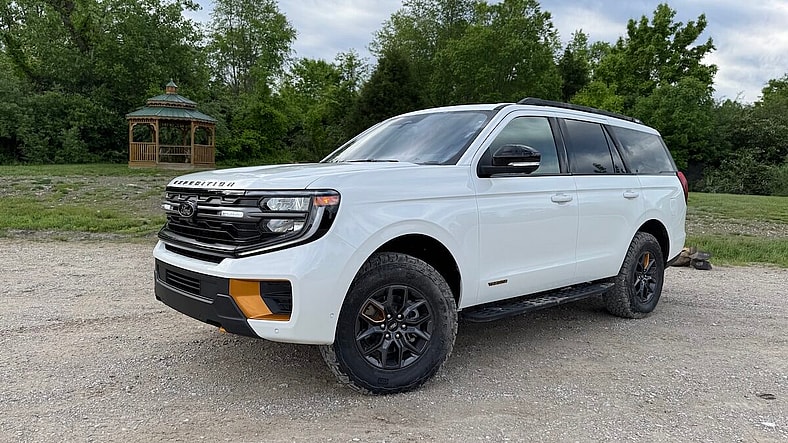
Ford’s Lane Departure system is regarded as one of the best systems, as it’s paired with a camera that faces the driver to determine whether or not the vehicle needs to intervene. If the driver isn’t looking at the road, the car will automatically move itself. If the driver is looking, a simple warning will suffice. Our favorites were the Ford Expedition, Ford Mach-E, and Ford Explorer Tremor.
READ MORE: Ford Bronco Goes Beachy, Breezy and Bold in This Brilliant Collab with Alice + Olivia
2. Automatic Emergency Braking Will Help You Avoid Accidents of All Sorts
Automatic Emergency Braking, or AEB, is your insurance company’s favorite feature. Just like the name implies, cars can use a radar, camera, or lidar system to calculate whether or not you’re about to crash into the object in front of you, whether it’s a pedestrian, building, trash can, or another car. If the car’s wheel speed is fast enough to trigger the system’s detectors into thinking you won’t stop, first, it will warn you. Then, if you don’t heed the warning, the car’s brakes will automatically apply.
Unlike the Lane Departure Assist, this feature can’t be turned off. But why would you want to anyway? AEB isn’t just for the front, either. The name also implies for accidents the system can predict accidents when the car is in reverse, making a turn, or parking. Or, of course, if you’re participating in distracted driving.
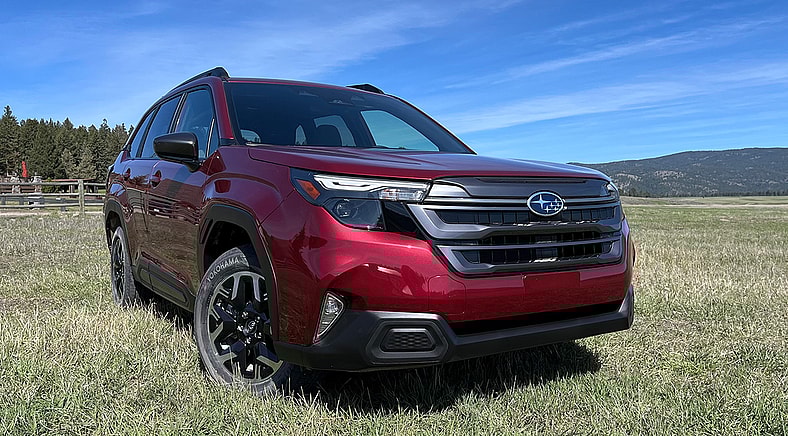
The Subaru Forester with its tri-camera EyeSight suite is widely regarded as the best AEB system on the market, and it’s currently the only system that can detect pedestrians at night, regardless of what they’re wearing. The Mercedes-Benz A-Class, Volvo XC40, Toyota RAV4, and Ford Explorer also have award-winning AEB systems.
3. Blind Spot Detection Has Your Back. Or, Side

It’s happened to all of us. We’re talking on the phone (over Bluetooth, of course, because we’re safe), we’re explaining to our children why it’s not safe to dangle toys from the window, or we’re looking at our GPS when we realize we have to make a lane change. Then, seemingly out of nowhere, we hear a honk. Blind Spot Detection helps prevent distracted driving, with sensors, usually radars or cameras, that sense when another car is in a hard-to-see spot.
Most systems will have a light come on in the corner of the mirror to alert the driver that a car is in their blind spot. Then, if you activate the signal, an alarm can turn on. If you start to actually make the turn, some cars will have an alarm turn on and prevent you from making the turn. It prevents lane change accidents, which is crucial.
The car with the best blind spot detection system is any car from Mercedes-Benz’s E-Class. They have an Active Blind Spot Assist that works by braking on the opposite side of the car to prevent collisions when a lane change is attempted into a vehicle in the car’s blind spot. Other cars with great Blind Spot systems are the Subaru Impreza, Toyota Camry, and Kia Sorento. Hyundai and Kia actually have cameras in the side mirrors that turn on when the signal is activated, allowing the driver to see if anything is in the blind spot before merging.
READ MORE: Driver Assist and Safety Features, or ADAS, Detailed By the Most Popular Car Brands
4. Driver Attention Monitors Can Keep You From Getting Honked At

Some cars will have cameras or sensors that watch you as you watch the road. In other words, your car is making sure your eyes are on the road. Some are easily visible behind the steering wheel, some cameras or sensors are on top of the media screen, and others are installed on the roof. With my two kids in their car seats, it came in handy at stop lights when my children were screaming for snacks, a sip of my water, or demanding I play a certain song.
When the light turned green and the car ahead of me started moving, I’d hear an alarm chime, and I’d see a warning on the dash saying, “The lead car is departing.” Then I knew when to move, and people wouldn’t honk at me. It’s also incredibly helpful in traffic, when you’re tending to kids, dogs, fishing around in your purse for sunnies or chapstick, you name it.
I loved the feature in the Subaru Outback, Hyundai Santa Fe, and Kia Carnival.
5. Adaptive Cruise Control Makes Long Distance Drives a Breeze

Adaptive Cruise Control is a great feature for commuters, as it’s a semi-autonomous feature that helps adjust your car’s speed when activated to keep a safe distance between your car and the car in front of you. If the car in front slows down, the system will force your car to slow, or even stop. In stop-and-go traffic, it’ll keep your car in pace with the one in front, though most will turn off or can only be activated at certain speeds.
We loved that anti-distracted driving feature in all of the GM cars equipped with SuperCruise, like the Cadillac Lyriq. Fords are known for the adaptive cruise control that’s part of BlueCruise, too.
6. Rear or Cross Traffic Alerts Will Alert You to Red Light Runners
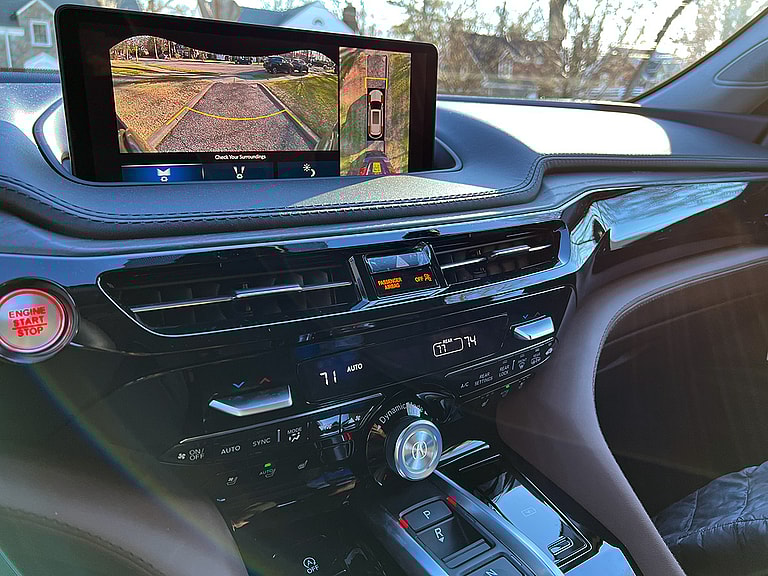
I can say from first-hand experience that rear and/or cross traffic alerts are a lifesaver. I have an anecdote for that claim: I was testing the Hyundai IONIQ 5 XRT a few months back, and I was beginning to make a left turn after my light turned green. All of a sudden, the car started beeping, and then the brakes slammed. Then a man in a Toyota Prius, who ran his light, nearly missed the front of the EV.
If it weren’t for the outward-facing sensors and cameras, it wouldn’t have detected that distracted driver, and I would have been T-boned. There was no way I would have seen him, as his lane was obstructed by a big truck, but the Hyundai sensed it and stopped me. And I’m very grateful it did. Many cars come with this feature, and it’s been a lifesaver in parking lots, when backing out of my driveway, and as you read, at stoplights.
I obviously loved that feature in the Hyundai IONIQ 5, the Subaru Forester, the Toyota 4Runner, and the Lexus UX 300h.
7. Adaptive Bright Lights Help You Stay Considerate
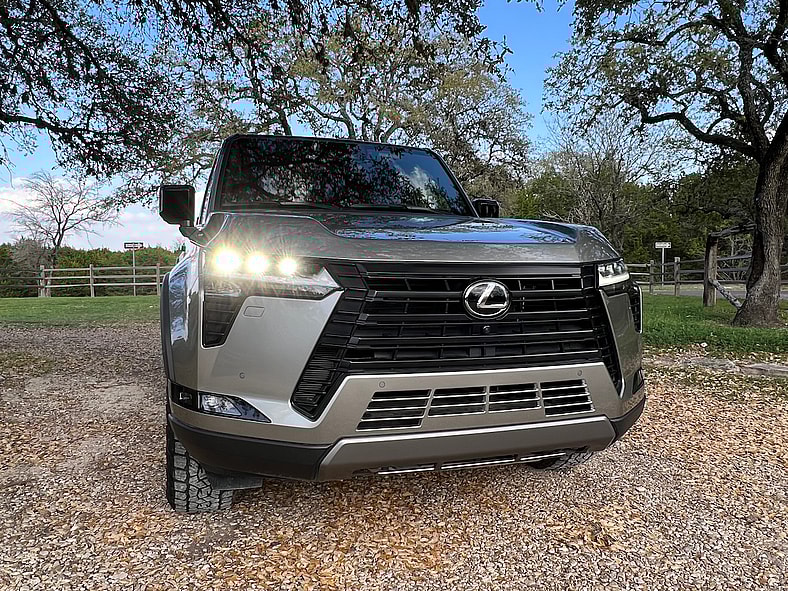
I can’t tell you how many times I’ve driven my 2011 Forester at night, used the brights on a dimly lit road, saw a car coming, and then became riddled with guilt after realizing I didn’t switch my brights off for the oncoming car. I’ve complained about people not turning the brights off when they saw me coming. It’s not distracted driving per se, more like absent-minded driving, but still.
Now, most cars won’t let you forget. New cars will automatically turn on the brights and turn them off if another car’s headlights are detected. After reviewing new cars and going back into my old Subaru, I have to remind myself that I’m responsible for turning the brights off when driving at night.
I’ve loved the feature in every Subaru I’ve driven, the Toyota 4Runner, Mazda CX-70, Lexus RX 450h, Hyundai Santa Fe, and the Genesis GV80.
READ MORE: The 2024 Lexus GX 550: Polished and Posh With a Rugged Old Soul
8. Voice Assistants Keep Your Eyes on the Road

Nearly every automaker has its own voice assistant software that allows drivers to control certain functions, like climate control, media volume, song selection, you can make phone calls, set destinations for the GPS, and so much more, depending on the manufacturer. If your car is connected to Alexa, like some Acura vehicles, the voice assistance software can turn on certain lights, open garage doors, and set the thermostat if your house is packed to the gills with smart home items.
The best-rated voice assistance programs are from the Europeans, in BMW and Mercedes-Benz. Toyota is reportedly improving its voice assistance with its new “Arene” software, so we’re eager to test that when it rolls out with the new RAV4.
9. Phone Mirroring Keeps Your Phone Out of Your Hands
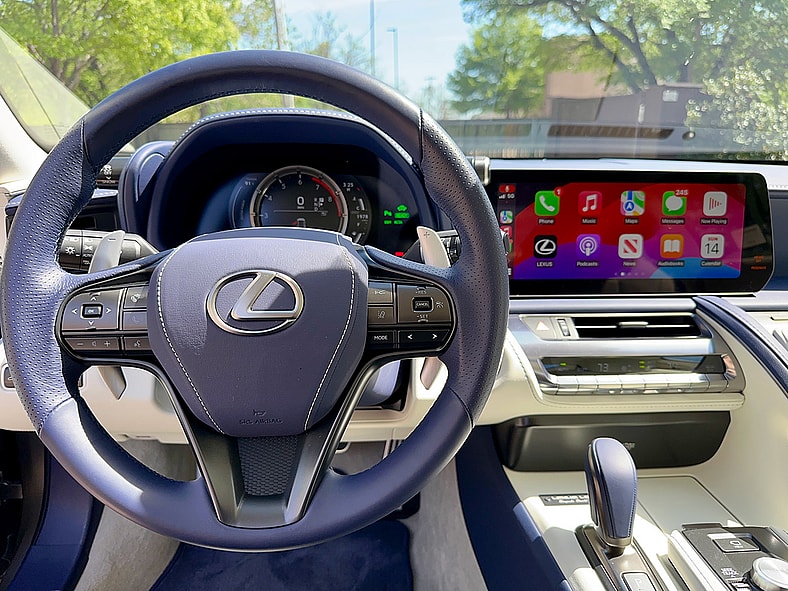
Android Auto and Apple CarPlay help mitigate distracted driving by having everything you need from your phone up on the main screen. Your contacts, favorite destinations (including your home and work address), and text messages can be read aloud and responded to without touching your phone. Both systems allow you to use your phone’s native voice assistant, too, so you can say “Hey, Google,” or “Hey, Siri,” and it will use your phone’s microphone to complete the task.
I love using it to text my husband to let him know I’m coming home, bringing him lunch at work, or to respond to his messages, too. Then the message will be from my phone and go to his. Without touching my phone. It’s the same thing with navigation or making calls. With either phone mirroring technology, there’s no excuse for distracted driving. You can leave your phone in your purse and still use it.
READ MORE: Apple CarPlay and Android Auto: How to Get the Most Popular In-Car Phone Systems
10. Heads-Up Displays Keep Your Head Up
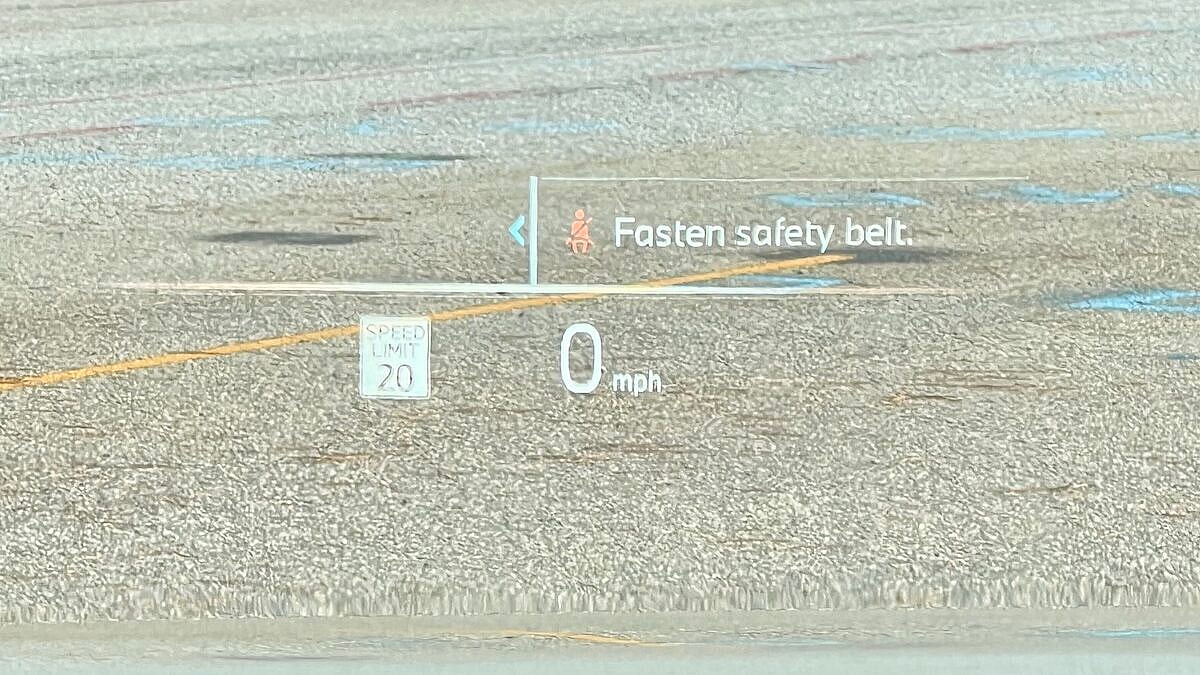
The quality of the heads-up display, or HUD, varies per manufacturer, but we don’t have a bad thing to say about any car we’ve tested that has one. GPS directions can be displayed on there so you’re not looking at your center screen to know when to turn, some will display a speed limit with knowledge gained from GPS data and tell you if you’re speeding, some will relay signs cameras have detected so you’re aware of signs ahead, and so much more.
You’re probably not shocked to learn that BMW and Mercedes-Benz have some of the best HUDs on the market. However, we’ve also liked the HUDs in Lexus cars, Genesis, Hyundai, Kia, and Toyota.
Distracted driving is slowly and surely becoming less common, especially as laws around it become stricter, but these features can make it more difficult to drive while distracted—which is something we all need a little help with.
READ MORE: 2026 Genesis GV70: Subtle Design Changes and a Big Tech Upgrade Enhance This SUV’s Luxury

More About:Car Safety Car Technology