



My husband’s favorite party trick is asking, “What’s the most important part of a car?” Most people furrow their brows, and they think hard. Many answer, “motor oil,” or “a radiator,” or even “coolant.” Very few, even industry veterans, know the answer: Tires. When they give up and he says “tires,” it takes a moment, but then it clicks: without tires, your car is useless, even if everything else is working perfectly.
Before I met my husband, who is a certified, professional tire nerd (with documents to prove it), I was just like many of the other people I know, men included, who didn’t understand the technical differences between an all-season and an all-weather tire. It’s a lot, and it’s confusing, and it took my husband decades to be able to rattle off specifications.
There’s a lot to understand, and I’m still learning—but with my experience with Michelin at Road Atlanta paired with what I learned being married to a tire buff, I’m going to lay it out. That way, you won’t be tricked into buying snow tires in June for “improved traction.”
This story is 100% human-researched and written based on actual first-person knowledge, extensive experience, and expertise on the subject of cars and trucks. I was a guest of Michelin’s, but all opinions and impressions are my own.
Unless You Have a Race Car, You Don’t Need Summer Tires


Unless you drive a BMW, Mercedes, or a Porsche regularly at a track, you rarely need a dedicated performance tire. Summer tires are often unnecessary for daily driving unless you live in consistently warm climates and need extra grip in high temperatures or light rain. Their tread and material offer less grip in colder weather, requiring seasonal swaps.
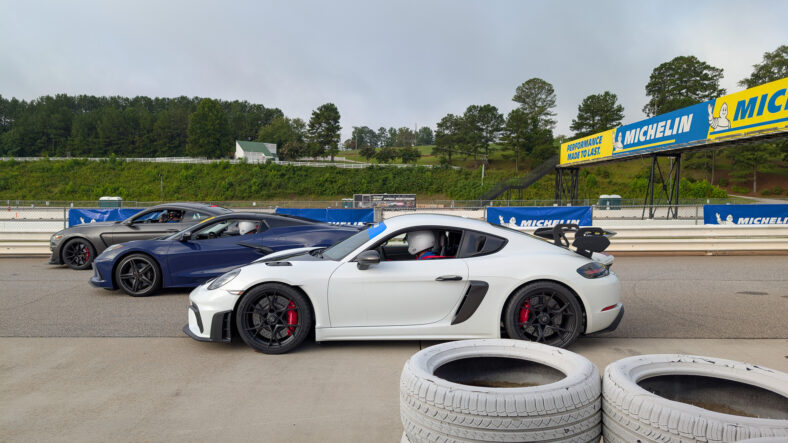
Michelin’s Pilot Sport All-Season 4 Tire was developed to address this. We saw its versatility demonstrated on a Ford Mustang, Chevy Corvette, and a Porsche GT4RS at Road Atlanta. The Porsche’s grip, even at 140 mph through 12 turns, was incredible, with minimal squealing during hard braking and tight turns. It never lost grip. Later, we got to test the tire on an autocross track and behind the wheel of a Lexus IS 350, with the other fitted with the Bridgestone competitor.
To summarize, Michelin Pilot Sport All-Season 4 tires (or any sporty all-season tires) are great if you:
- Own a performance-oriented car or SUV in a multi-season climate, particularly with warm, dry summers and wet winters, like a Porsche Cayenne in Oregon, or a Chevy Corvette, which comes from the factory with these tires, in the southwest.
- Don’t have snowy, icy winters that merit a dedicated winter tire, and want the convenience of not swapping seasonal tires around
- Prioritize braking, steering, and handling performance and grip over a smoother, quieter ride that the Defender series all-seasons would provide
- Prefer the sporty, sleek look of a performance-grade tire over a blockier traditional all-season tire
READ MORE: I Need New Tires. Should I Buy the Same Ones My Car Came With?
All-Season vs. All-Weather: What’s the Real Difference?
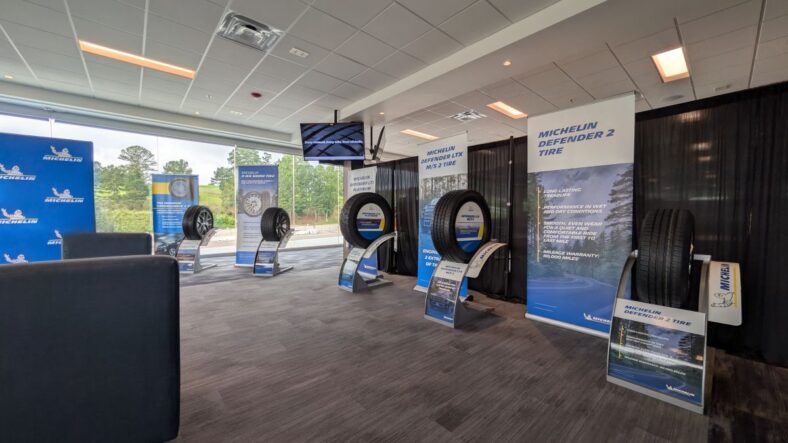
To put it as simply as I would to my three-year-old, an all-weather tire is better for driving on snow and ice, while an all-season tire is better for warm and dry conditions with occasional wet conditions. I’ll use my family as an example: both my sister and I have Subaru Foresters. When I lived in the San Francisco Bay Area, I used Michelin’s Defender all-season tires, and my sister, living in Yosemite National Park, used Michelin CrossClimate all-weather tires.
I didn’t need Michelin’s three peak mountain snow flake rating to fight traffic heading to Berkeley, and she needed the more flexible, water and snow evacuation from the “V” tread pattern with cutting rubber edges to give her traction on ice. Both of them performed well in warm and dry conditions, and both were exceptional during the rainy season. My Michelin Defender tires were quiet and smooth, even at the end of their life, and my sister never complained of road noise during her many three-hour drives from Yosemite to the Bay Area.
Here’s what I learned from my own experience, reinforced by my time with Michelin.
All-season tires, like the Michelin Defender series, are best if you:
- Live primarily in warm and dry climates with mild, rainy winters. They can handle light snow, but they don’t handle heavier snow or ice as well as all-weather tires with a 3PMSF rating or a dedicated winter tire.
- Want the security of year-round traction without sacrificing a smooth and quiet ride.
- Drive a mom-mobile SUV, minivan, or even sedan, and you don’t need any performance-oriented features–all you care about is traction is ride quality.
All-weather tires, like the CrossClimate series, are best if you:
- Live in a multi-season climate with an aggressive wet season, or see icy winters with regular snowfall. They’re very popular on Subarus in my hometown of Bend, Oregon, for a reason!
- They’re also great if you’re like my family, and take annual trips to snowy areas, like a ski resort, and don’t want to swap tires or rely on tire chains to get up and down a mountain pass.
- Do more off-roading or camping than the average family, as they can provide better traction on dirt, mud, and rocks than an all-season tire.
READ MORE: Kumho Tires Solus 4S Review: Does This Unique Design Deliver Quiet and Confidence?
The CrossClimate 2 Tires are Truly Impressive–And Hard to Find
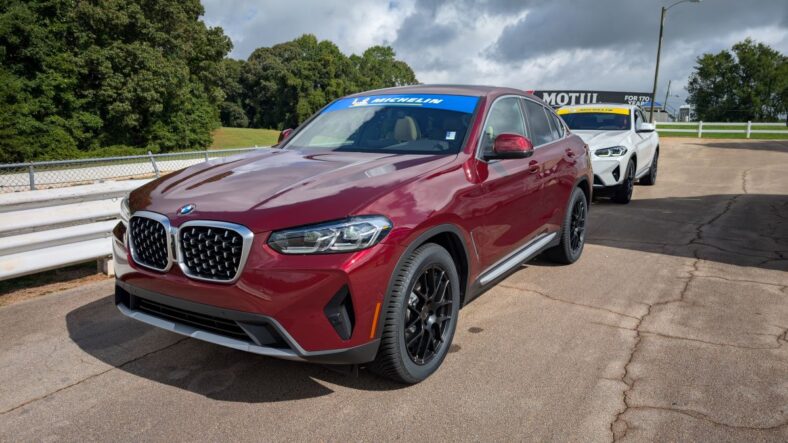
I’ll note, too, that Michelin showed us just how trustworthy the CrossClimate 2–which is the industry’s most copied tire–by fitting two BMW X5s with them. One had a brand-new set, and the other had tires that needed replacing. On an autocross section, I got to throw all of them around tight turns at high speeds, and barely lost traction with the old tires. Of course, the new tires stuck to the wet road perfectly–but I was impressed by how well the old tires performed, too. No wonder my sister vouches for them.
When we first moved to Central Oregon, the CrossClimate 2 tires were the ones I wanted to replace my worn Michelin Defenders with. But, due to their popularity, they were consistently worn out in my tire size. Thankfully, the CrossClimates come in 80 different sizes, with 5 more being released next year. Hopefully, I’ll be able to get my hands on some soon.
READ MORE: What Do the Michelin Guide and Michelin Tires Have in Common? We Took a Road Trip To Find Out
Michelin Says EVs Don’t Need Special Tires–But They Can Benefit From Them

This was the most interesting part of the segment to me. During one of the talks with the Michelin representatives, one of the speakers, Ed Gliss, who started as a test driver for the company and switched to being a product manager. Not only did he understand how the products worked and how they were manufactured, but he’s experienced it all first-hand. When another media member asked him to explain how Michelin manufactures tires specific to EVs, he said that technically, any tire is EV-ready.
EV-specific tires, like the Michelin e.Primacy all-season tires are engineered to provide everything a standard all-season tire does for a passenger car, but with a different rubber composition and tread pattern that helps reduce the amount of energy the car expends to get it moving.
Any Michelin tire, he said, is EV-ready and engineered to handle the extra weight and torque of an EV. Michelin showed this by putting all-season Defender LTX MS2 tires on a 9,134-pound Cadillac Escalade IQ, and they performed fine. The e.Primacy, a tire that’s designed to use less energy, delivers better driving range, has a longer tread life, and provides a quiet ride all year-round. EV drivers will see the benefits in the long run.
READ MORE: Should You Buy New Tires From Your Car Dealer? Maybe… Here’s How to Tell
Trucks Benefit From Tougher, Tow-Specific Tires
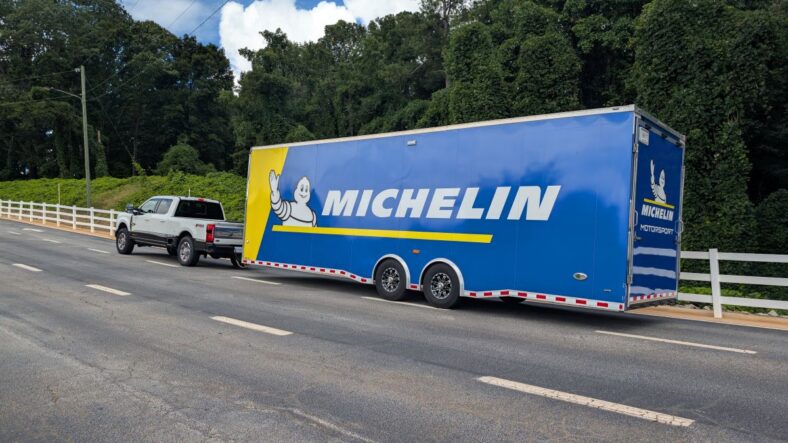
If you have a truck dedicated to hauling a horse trailer, a camper, a boat, or, in our case, a race car trailer, it’s important to make sure you have a tire equipped to handle the extra weight, load, and tread that can handle the increased kinetic pressure. The Defender LTX tires demonstrated this with a steep incline while hauling a full trailer. At the bottom of the hill, we were told to stop and give it a good bit of gas to get the truck started up the hill.
I could feel the tires fighting for grip since the hill was made of asphalt, and the humidity was high, so it was slick, but the truck made it up the hill without a second thought. The TLX tires are a heavy-duty all-weather tire for larger trucks and SUVs, like the super-heavy electric Escalade. It lends the truck the traction and multi-seasonal functionality without sacrificing ride quality. The test drive with the truck was at low speeds for the majority of the ride, but it was notably quiet.
Consider upgrading to a heavier-duty all-season tire for your truck or EV if:
- You regularly tow boats, horse trailers, cargo trailers, car trailers, or campers, and live in a multi-season climate. These would do exceptionally well for the farmers and ranchers in Central Oregon.
- You have a heavier EV, like a Rivian R1S/T, a Cadillac Escalade IQ, Kia EV9, or Hyundai IONIQ 9, and want extra grip in a multi-season climate. However, it should be noted that heavier-duty tires cause more friction, and therefore, overall less range (that’s what the e.Primacy is mainly for).
READ MORE: I Went to Ford’s Towing Bootcamp and Learned to Tow Like a Pro
Michelin Didn’t Display Them, But Run Flats are Life Savers… Literally

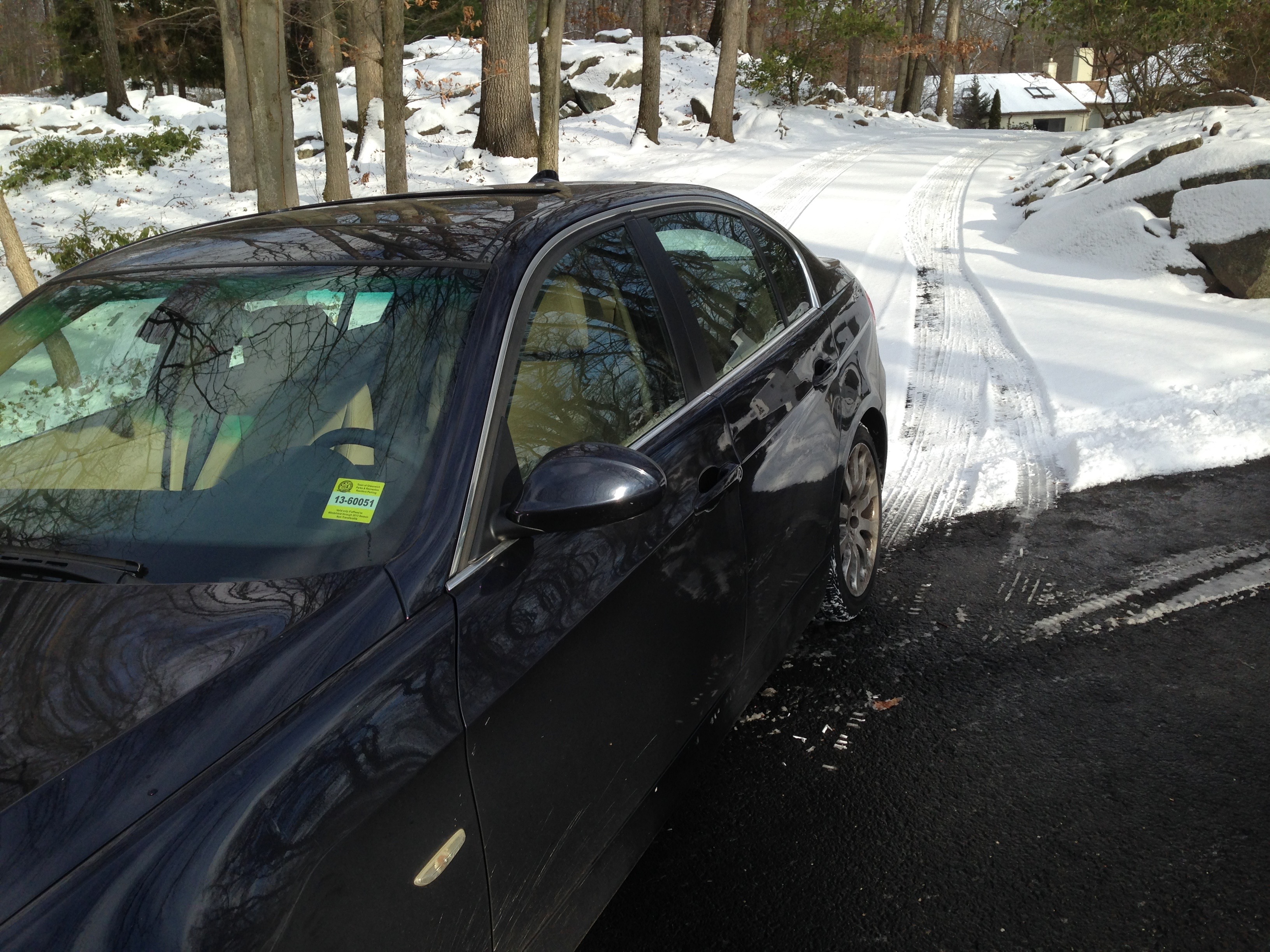
Just ask our founder why run flats are, quite literally, a lifesaver. She was driving on a local freeway at 70 mph when suddenly, she hit a pothole. Within just a few seconds, she saw her TPMS light come on. She made it home before she realized a huge chunk had been taken out of her tire. But, because she’d had run flats equipped, she never lost control.
Michelin makes two run-flat tires, in the form of the Pilot Sport and the Primacy MXM4, with “ZP” or “Zero Pressure” technology. If you live somewhere like Rhode Island, New York, or Connecticut, which is prone to potholes from the road salt, run flats can literally save you from losing control and crashing. Just like they did for Scotty.
READ MORE: Continental Tire Review: These Run Flat Tires Will Change Your Life. Really.
Check Out Our Other Resources Before Heading Into a Shop
One of the most interesting stats I learned from the Michelin reps was that a majority of tire sales happen at a tire shop. I’m privileged enough to be married to a mechanic who orders our tires on sites like Tire Rack and installs them himself at the shop where he works, so I’ve never had to discuss my options with a tire tech looking to score a commission. But I have plenty of friends who have called me while they were at a tire shop to verify what the technician told them. A majority of the time, they were wrong.
We have other articles you should read before buying tires, like when you should buy a new pair, or the most frequently asked tire questions, and whether or not you need winter tires over all-weather tires. Most importantly, though, don’t put too much pressure on yourself. Again, it took my husband nearly 20 years to learn what he knows now. It took me several years to even feel comfortable answering our friends’ tire questions. You don’t have to marry a tire nerd to understand tires (though it helps)—that’s what we’re here for.

