
Which is the Better EV Off-Roader, The 2026 Subaru Trailseeker, or the Toyota bZ Woodland?
Both the 2026 Subaru Trailseeker and Toyota bZ Woodland are excellent, longer-range choices for families. So, which is the better pick?

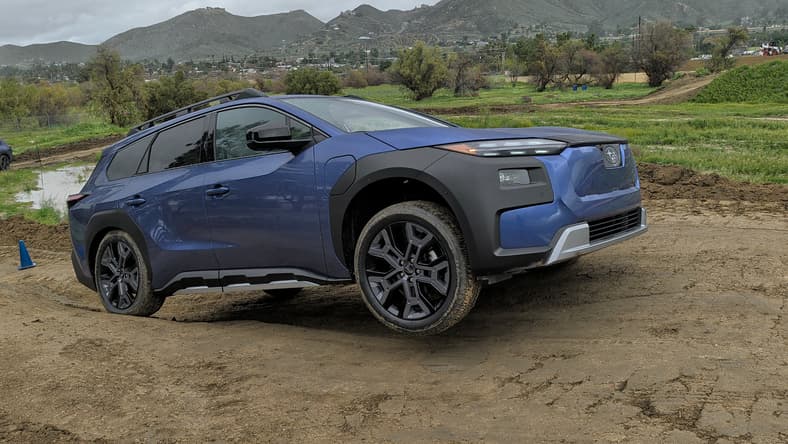
In the world of EVs, the twins produced by Toyota and then sold by Subaru as their own have always been hard to tell apart. In the beginning, the Solterra felt like a mirror image of the bZ4x. Seriously. The only visual difference back then was the shape of the steering wheel and the badging. Everything else was a copy and paste job.
Now, the collaboration is evolving. The newly simplified Toyota bZ and Toyota bZ Woodland (formerly the bZ4x) is bigger and bolder, while the Solterra and the new Subaru Trailseeker are finally finding their own visual identities.
Yet, the core dilemma remains: Toyota still holds the keys to the front-wheel-drive, city-slicking efficiency, while Subaru sticks to its all-wheel-drive, outdoorsy, puppy-loving roots. With a new pricing structure making the choice harder than ever, I took both on the road to find out which one delivers the best experience for the money.
This story is 100% human-researched and written based on actual first-person knowledge, extensive experience, and expertise on the subject of cars and trucks.
School’s in Session: Pricing for the Toyota Depends on the Power, While Subaru’s Depends on the Add-Ons
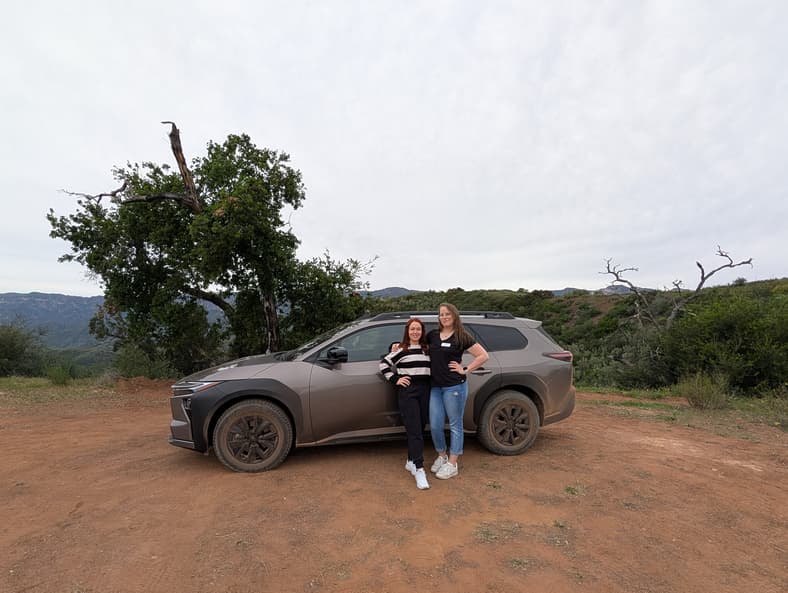
The Toyota bZ provides a more diverse set of options compared to the Subaru Trailseeker, which is firmly committed to an outdoor-centric identity. While the bZ can be configured as a polished, high-end commuter or a stout soft-roader, its standard lineup consists of the XLE and Limited trims, priced from $34,900 to $43,300. The Toyota bZ Woodland edition serves as the premium pinnacle at $45,300.
In contrast, Subaru’s pricing is tighter and generally higher, beginning at $39,995 for the Premium and reaching $46,855 for the leather-clad Touring trim. The core distinction lies in their mechanical focus: the Subaru Trailseeker includes Symmetrical All-Wheel Drive and X-Mode as standard across the board for snow and dirt performance, whereas Toyota markets its standard bZ trims toward urban users, reserving the pricey Woodland for off-road duties.
Subaru provides off-road hardware and software (X-Mode) even on entry-level models, but they lack a high-efficiency alternative to Toyota’s front-wheel-drive variants. Subaru owners are limited to a range between 274 and 280 miles. Toyota users, however, can opt for a single-motor setup to achieve up to 314 miles, though the off-road Woodland’s range drops to a Subaru-like 281 miles.
Furthermore, while the Subaru comes standard with 375 horsepower across all trims, the Toyota bZ offers a choice of four distinct power outputs. The horsepower breakdown for the bZ is as follows:
- The Entry Level (168 hp): This is found only on the base XLE FWD. It uses a smaller 57.7-kWh battery and is designed specifically as an affordable, urban-focused commuter. It’s the “budget” option that helps Toyota reach that $34,900 starting price.
- The Mid-Range (221 hp): If you step up to the XLE Plus FWD or Limited FWD, you get a bump to 221 horsepower. This version also moves you into the larger 74.7-kWh battery, which is how Toyota achieves that class-leading 314-mile range.
- The High-Range (338 hp): Any trim labeled AWD jumps to a dual-motor setup with 338 horsepower. This is a massive 50% increase over last year’s model and drops the 0–60 mph time to about 4.9 seconds
- The Woodland (375 hp): This trim still uses the 74.7-kWh battery with dual motors, but the motors have more power than the high-range models, upping the horsepower. Here, the 0-60 time jumps up to 4.4 seconds.
The Subaru Trailseeker and Toyota bZ Woodland’s Interiors Are Still Nearly Identical
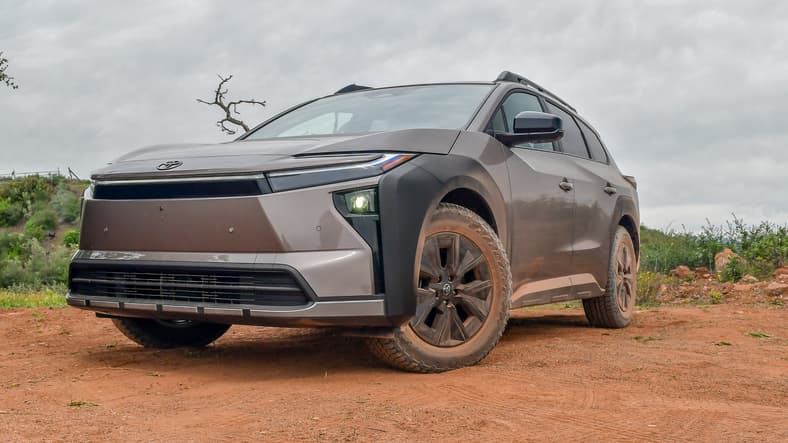
The story here is the same as the Subaru Solterra versus the Toyota bZ4x. The exteriors are slightly different, with the Subaru looking more rugged with heavier bumper armor, and a more “open” look to the starry headlights, and more body cladding, no matter the trim. And, of course, there’s the Subaru badging. Depending on the trim, the wheel arches on the bZ can match the color of the body, while the Woodland is matte black to appear more rugged and tough.
Toyota’s look is a lot more angular, too, compared to Subaru’s softer look. The bZ and bZ Woodland have the company’s signature hammerhead headlights, which I especially like because the design both fits the off-road aesthetic of the Woodland, but looks very tight and polished for the Limited or XLE models.
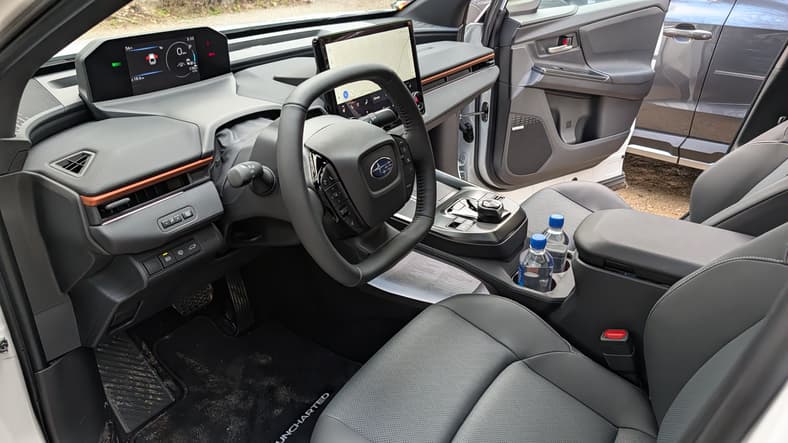
The interior, though, is basically identical. The size, shape, and placement of the multimedia and driver display screen are the same. The shape of the steering wheel is the same, save for a flat top and bottom for the Subaru. Both have the dual-wireless phone chargers up front, as well as what I call the “thick neck” steering column. They’re shamelessly identical, which bummed me out, because I always preferred Subaru’s gas-only interiors to Toyota’s, and hoped that design language would translate into their EVs, but… I guess not.
They’re Fairly Evenly Matched Off-Road, Thanks to X-Mode
In terms of trail performance, these two EVs are functionally identical, operating on the same underlying software logic. Both utilize an X-Mode system to regulate braking and motor output for better traction in slick conditions. While Subaru labels its interface “Dual-Mode”—featuring dedicated toggles for Deep Snow/Mud and Snow/Dirt—Toyota calls its version X-Mode with Grip Control. The primary difference is experiential: Subaru integrates these controls as a core part of the drive, whereas Toyota presents them as secondary features.
Subaru claims a slight victory in mechanical specifications. The Trailseeker provides 8.5 inches of ground clearance, marginally beating the bZ Woodland’s 8.4 inches. While the difference is small, it can make a big difference in rocky terrain. Furthermore, the Subaru features a significantly tighter 36.7-foot turning circle compared to the Toyota’s 40-foot radius, making it much more agile on narrow forest trails.
The choice often hinges on specific details and intended use. Toyota offers factory all-terrain tires for the Woodland at no extra cost, which improves confidence on jagged trails but reduces range to 260 miles. The Trailseeker, conversely, is equipped only with all-season tires across all trims. However, Subaru includes thoughtful off-road features like a rear camera washer and a flat-top steering wheel designed to keep the instrument cluster visible during steep ascents.
The most critical factor is Subaru’s pricing philosophy. Unlike Toyota, which treats off-road software as a premium upgrade for the Woodland, Subaru includes its AWD and off-road systems as standard equipment. This means you can purchase a base-model Trailseeker for significantly less than a Woodland and still receive the same core, off-road capabilities. Ultimately, the decision rests on whether you prefer Toyota’s styling or Subaru’s value-driven packaging of off-road technology.
For Soft-Roaders, The Subaru’s Price is Tough to Beat
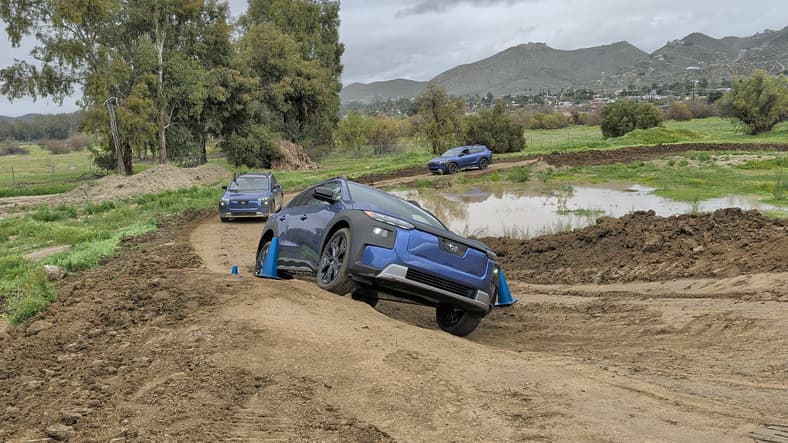
After putting both to the test in off-road environments, I can confirm they are both fantastic options for drivers in rainy or cold regions. Still, it is difficult to overlook the value Subaru provides by including its “premium” off-road hardware and tech in the base Trailseeker, which starts at $39,995. While I personally find the exterior of the bZ Woodland more appealing, its price tag is hard to defend when the Subaru delivers the same capabilities (excluding the all-terrain tires) for $5,305 less. You could use those savings to install your own AT tires and still have money left for light modifications.
To summarize, the best choice for off-roading: the Subaru Trailseeker is easily the smarter investment due to the pricing structure. Even the entry-level Subaru provides 375 horsepower, a longer range, and all-wheel drive, justifying its higher base price compared to the entry Toyota model. While the Woodland is the better-looking vehicle, that aesthetic comes with a significant premium. If you truly prioritize all-wheel drive and X-Mode performance, the Subaru is the way to go.

More About:Car Buying