


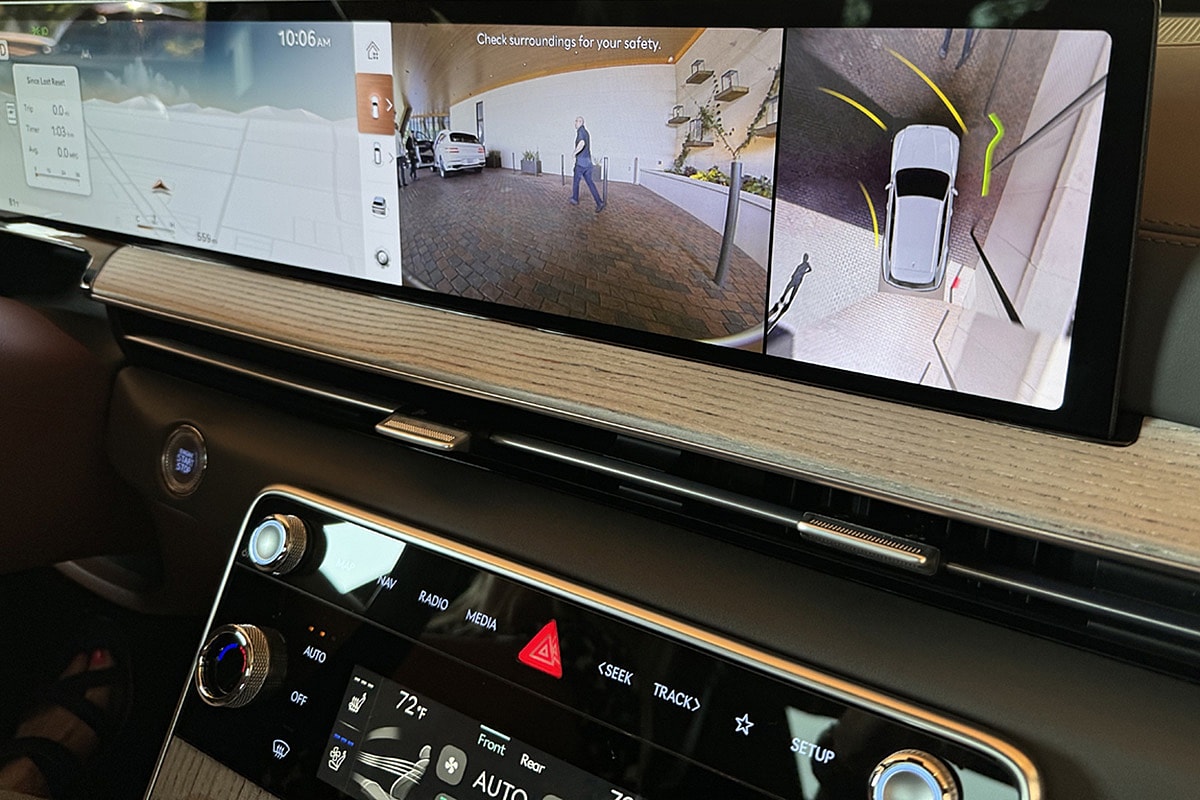
They beep, buzz, light up, and flash. They take some of the stress off the driver when it comes to safety features, and sometimes, they jump right in and take the wheel. Advanced Driver Assist and Safety features, or ADAS, are becoming increasingly common, and most of them are now standard equipment on new cars.
But automakers can give them fancy-schmancy names and make it confusing to tell what systems a car has and what they do. Even the list of standard and advanced safety features can be overwhelming.
So, we decided to break it down so you know what they mean (and because, hey, there are a lot). Then, read on for a brand-by-brand look at what each new popular car brand offers (luxury cars will appear on a separate list).
This story is 100% human-researched and written based on actual first-person knowledge, extensive experience, and expertise on the subject of cars and trucks.
Safety Features Can Drastically Improve Your Drive—When They’re Not Driving You Nuts


Features like blind spot detection, cross traffic detection, automatic emergency braking, and others are called Advanced Driver Assistance Systems (ADAS). Their sole function is to compensate for what otherwise might be a mistake made by a distracted driver—from you or another driver.
These systems have been proven to decrease the number of accidents by thousands according to the National Safety Council, which predicts they have the potential to lower traffic deaths by 62%.
If an ADAS sensor detects a potential collision, like a driver wandering into another lane without using a signal, it will beep loudly, and lights will flash before it’s activated, which annoys most drivers. Many are turned off, which increases the risk of an accident.
Many Automakers are Offering ADAS Safety Features as Standard Equipment

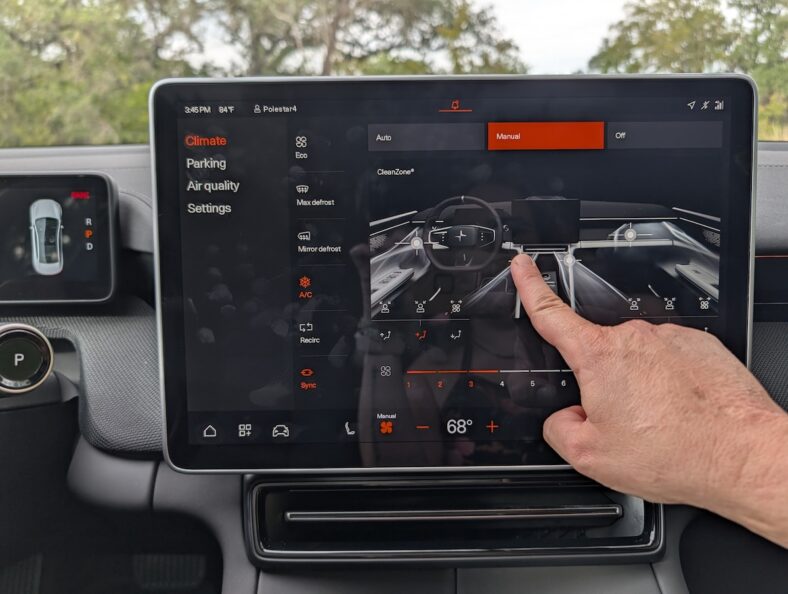
Increasingly, automakers are adding more ADAS standard safety features standard on all models. Some market them under different names, but here’s a list of common safety features:
- Traction control
- Anti-lock brakes (ABS)
- Vehicle stability control
- Rear-view camera
- Automatic emergency braking
- Lane departure warning and/or lane keep assist
- Tire pressure monitoring system
- Passenger & driver seatbelt warning
- Rear occupant alert
- Forward and rear collision avoidance
- Blindspot warning
- Parking assist
- Driver attention or focus monitoring
- Adaptive cruise control
- Advanced highway driving assist (semi-autonomous, as seen in Rivian’s models, Ford’s Blue Cruise, GM’s Super Cruise, etc)
- Front and rear cross-traffic alert
- Rain-sensing wipers
- Pedestrian and cyclist detection
- Traffic sign recognition
Related: Test Driving the New H.E.L.P. Disabled Car Safety Alerts
“Advanced” Safety Features Are, Thankfully, Becoming More Widespread
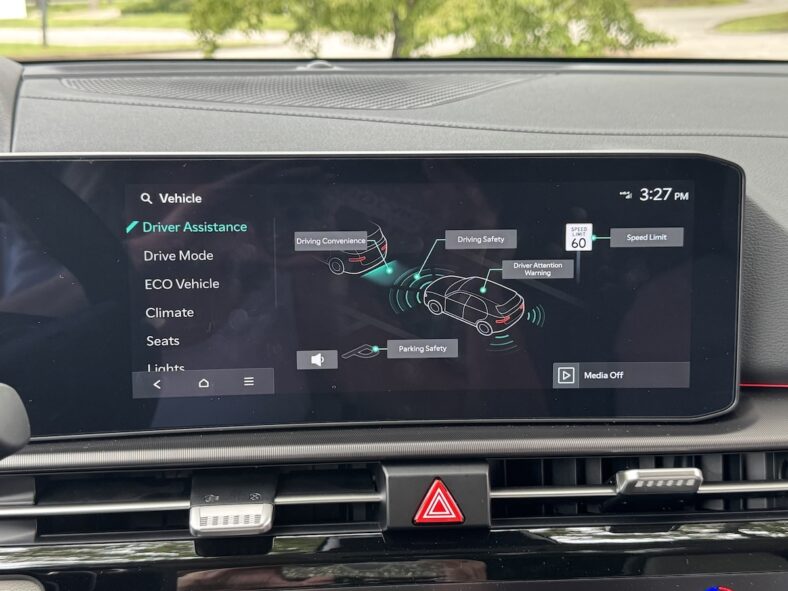
“Advanced” systems are categorized as such because, unlike the basic features, not all cars have them. Some are reserved for the more luxurious and expensive trims, sometimes more advanced features like a 360-degree camera or park assist come as an add-on, while some manufacturers have them on all trim levels. These features are typically:
- Blind spot detection/monitoring
- Rear and cross-traffic alert
- Parking assistance
- Intelligent/Adaptive Cruise Control
- Lane Keeping/Steering Assist
- Automatic headlights/high beams
- Road sign recognition and warning
- Adaptive headlights
- Reverse Automatic Emergency Braking
If you’re car shopping, it’s probably not a bad idea to make a list to ensure that the car you’re looking at has the features you know you’ll need. Here’s how manufacturer of popular car brands sum up the systems in their cars.
Read More: The Subaru Solterra is a Beautifully Rugged All-Electric SUV
Toyota’s TSS Systems Continue to Evolve


Toyota calls its system “Toyota Safety Sense” and evolves it with a number designation each time the company adds more features; current new models carry TSS 3.0. The company’s list of features included ABS, emergency automatic braking, traction, and stability control, as well as electronic brake distribution.
Toyota also has advanced or upgraded versions of this called TSSC (for compact cars) and TSSP (for larger SUVs).
Most Toyotas have several or all of the Safety Sense features, which include:
- Pre-collision system and pedestrian detection
- Lane Departure alert and centering
- Adaptive cruise control
- Automatic high beams
- Lane trace assist
- Road sign assist
- Blind spot warning
- Proactive driving assist
- Rear seat reminder
Read More: The Ultimate Off-Road Hybrid Showdown: Toyota RAV4 Woodland vs. Subaru Forester
Honda Sensing Leaves the Senses Tingling

Honda calls its ADAS features “Honda Sensing” and includes common safety items. Not all vehicles in the Honda lineup include all of Honda Sensing’s safety features, but many do include some or all of them.
Here’s what each typically includes:
- Lane Keeping Assist
- Stability control
- Anti-lock brakes (ABS)
- Electronic brake distribution (evenly distributes braking force to each wheel to optimize performance, adding to traction and stability control as it’s used in tandem with ABS)
- Brake assist
- Adaptive cruise control
- Forward collision warning
- Collision mitigation braking system
- Cross-traffic warning
- Sign recognition and warning
- Road departure mitigation
- Traffic sign detection
- Rear seat occupant reminder
- Blind spot monitoring
Honda discontinued “LaneWatch,” which was a feature that provided a live feed of the right and left lanes from cameras on the side mirrors on the center infotainment screen. Now, Honda calls it “Blind-Spot Monitoring.”
Related: H.E.L.P. Roadside Assistance is On the Way —Thanks to New Tech Coming to VW
Subaru Has Its Eyes on the Road with EyeSight

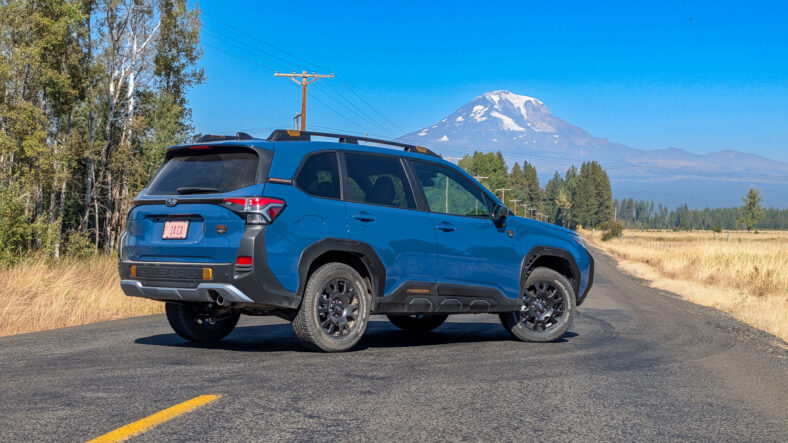
Designed to work like the human eye, the Subaru system combines three color cameras that converge on objects like the road ahead to detect things the way you would. The system includes:
- Adaptive cruise control
- Lane keep assist
- High-beam assist (which will automatically engage when light sensors deem them necessary, or turn them off when a vehicle in the oncoming lane is detected)
- Pre-collision braking
- Lead vehicle start alert (which is only activated if the in-car camera senses your eyes aren’t on the road, but it alerts you that the car ahead has moved)
- Pre-collision throttle management, which manages speed to reduce impact
For 2026, Subaru is releasing the fifth generation of EyeSight, which will come with a hands-free driving assist (Subaru’s version of advanced highway driving assist) up to 85 mph, new wide-angle cameras to improve pedestrian and cyclist detection, improved automatic emergency braking, and better lane change technology, as well as blind spot detection. The new infotainment screen in the Outback is faster and more responsive, too.
Most importantly, Subaru’s adding Emergency Lane Stop Assist to its safety suite, which will automatically pull the car over and call emergency services if the driver doesn’t respond to audio and visual warnings. This is to combat falling asleep behind the wheel or if the driver suffers a medical emergency.
Read More: Love and Puppies — 10 Reasons Subaru Owners Are So Loyal
Nissan Protects with its Intelligent Safety Shield

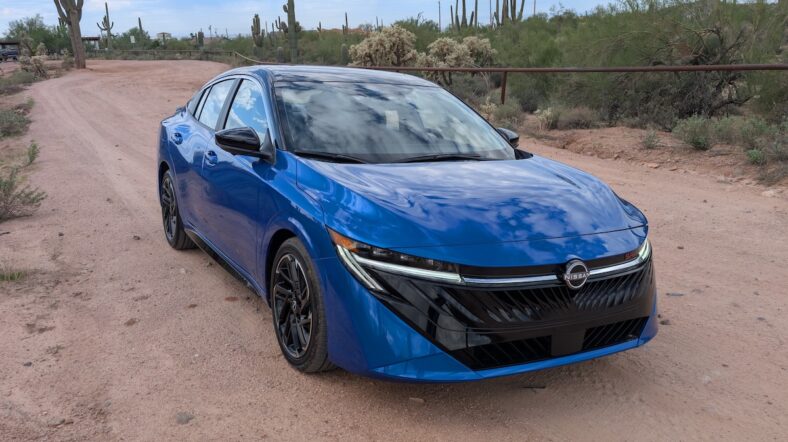
Nissan’s list of safety features is very similar to those offered by other manufacturers, and includes six main systems on some or all of its models:
- Auto emergency braking with pedestrian detection
- High beam assist
- Lane departure warning
- Blind spot warning
- Rear cross-traffic alert
- Rear automatic braking
Most Nissans come with Intelligent Driver Alertness Sensoring, which utilizes computers to “learn” a driver’s steering patterns. If the system detects any irregularities, like over- or understeering due to fatigue, a warning will appear on the screen. Nissan tells drivers they may be overtired by using a coffee cup as an icon.
ProPilot Assist is a batch of features that are included in the Ariya EV, Pathfinder, Rogue, Leaf EV, and Altima. It includes systems like:
- Adaptive speed control
- Lane keep and lane departure assist
- Brake assist
- Highway driving assist
Read More: 10 Ways Your Car Can Prevent Distracted Driving — And the Cars That Do it Best
General Motors is the Only Manufacturer to Offer Teen Driver Mode

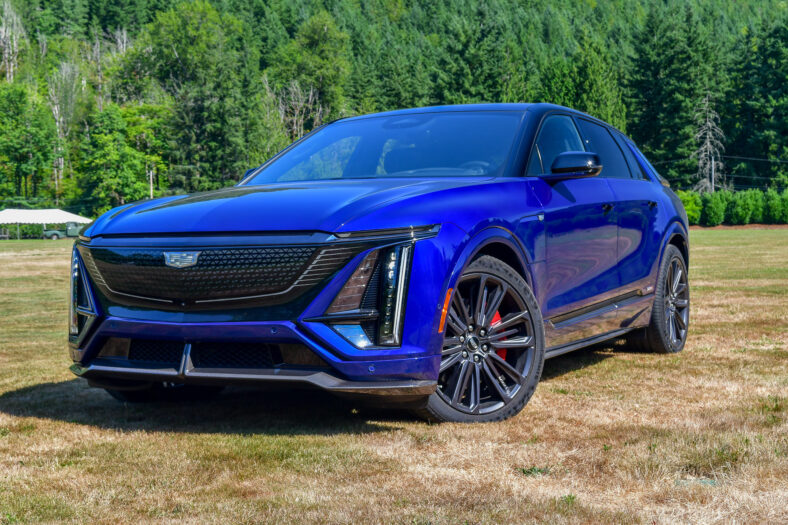
General Motors encompasses the Chevrolet, Buick, GMC, and Cadillac brands, and while the company doesn’t give a system name to the suite of safety features, they do a really nice job of spelling out what each does on the website. Most GM vehicles have these features as standard equipment:
- Forward collision alert
- Lane keep assist
- Front pedestrian braking
- Rear cross-traffic alert
- Side blind zone alert
- Rear park assist
- Following distance indicator (a sensor that will tell a driver if they’re too close to a vehicle based on the speed they’re traveling by showing how many seconds the vehicle is behind the vehicle in front of it)
- Rear seat alert
- Blue Cruise – which has been expanded to the Buick Enclave, with crucial improvements.
GM brands, save for Cadillac, offer Teen Driving Technology for the Chevy Malibu, Equinox, Traverse, Colorado and Silverado. The GMC Terrain and the Buick Enclave have it, too. When in use, the principal driver can set speed alerts, hard braking or acceleration alerts, volume alerts, and record average speeds, all accessed via the car app or user account.
Volvo and Ford offer something similar to a valet key, where if the vehicle’s computer detects a certain key, speed and volume limits can be set.
Read More: The 2026 Kia Sportage Is Freshly Redesigned—and Shows Why The Top Trim Is So Popular
Mazda Calls Their ADAS Safety Features “i-ActiveSense”
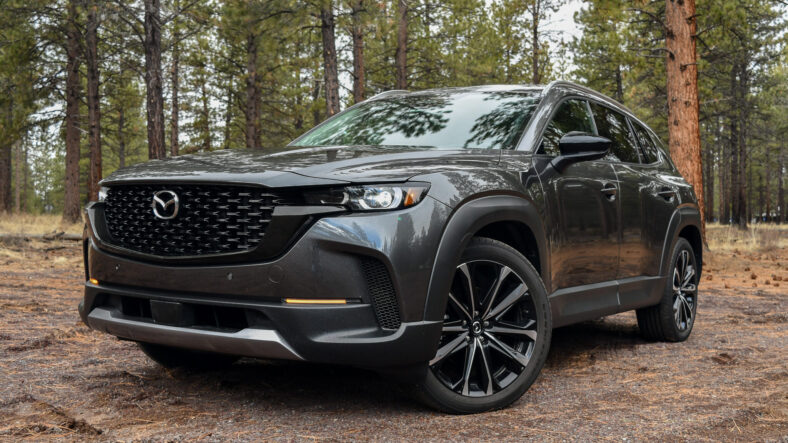
Mazda has always been at the forefront of safety and was one of the first to offer a head-up display and a solid suite of safety features standard. The Mazda i-Activesense group of technologies includes:
- Rear cross-traffic alert
- Blind-spot monitoring
- Adaptive front lighting
- Lane departure alert
- Automatic high beams
- Radar (adaptive) cruise control
- Emergency braking
- Exit warning
- Driver focus monitoring
- Rear seat alert
For 2026, the company’s expanded its safety suite to include Cruising & Traffic Support (CTS), Emergency Lane Keeping, and front traffic alerts to help keep you safe in intersections. On most models, front lighting and 360-degree view monitoring will be available.
Ford’s Safety Features are Your Co-Pilot

Ford calls their safety features Ford Co-Pilot360 and boasts an extensive list of safety features to help the driver. Both packages come with various advanced safety features you’ll want:
- Front rain-sensing wipers
- Auto high-beam headlights
- Blind spot information system with Cross-traffic alert
- Lane-keeping assist
- Adaptive cruise control and forward collision warning, and brake support
- Auto-dimming rearview mirror
- Pre-collision assist
- Reverse braking assist
- Intersection Assist
- Exit warning (mainly used for cars merging onto busy streets, it utilizes the cameras to alert a driver to unexpected cyclists or vehicles before merging)
- Evasive steering assist
- Auto parallel parking
- Lane centering
Vehicles that offer CoPilot360 as standard are the Mach-E, F-150, Mustang, Explorer, Edge, Expedition, Bronco Sport, Bronco, Escape, Maverick, Super Duty, E-Transit and Transit vans, Ranger, and F-150 Lightning models.
Most importantly, Ford’s Co-Pilot360 can now detect pedestrians in low-light conditions, and blind spot detection has been expanded to 33 feet. The company’s also adding new modes to the lane keep assist feature, and adaptive cruise control can now function in stop-and-go traffic. For those who tow, Ford’s added Pro Trailer Backup Assist.
Kia Drivewise has Your Back Wherever You Go


Kia is among the last to put a name to its suite of safety features, but the company has offered a lot of great systems in its cars and SUVs. For a while, all Kia vehicles have come with these features as standard equipment:
- Forward collision warning
- Rear cross-traffic collision avoidance
- Driver attention warning (similar to Subaru, where it will alert you if the in-car camera senses the driver is spending a dangerous amount of time looking at anything other than the road)
- Blind spot detection warning
- Blind spot collision warning
- Smart cruise control
- Surround view monitor
- Lane the following assist
- Highway driving assist (Kia says it uses real-time navigation and traffic data to be interpreted by vehicle cameras to help adjust speed and steering)
- Driver attention warning
- Surround view monitor
- Tire pressure monitoring
- Park distance warning
- Hill start assist
- Safe exit warning
- Parking collision avoidance
Hyundai’s Intuition is Always Active
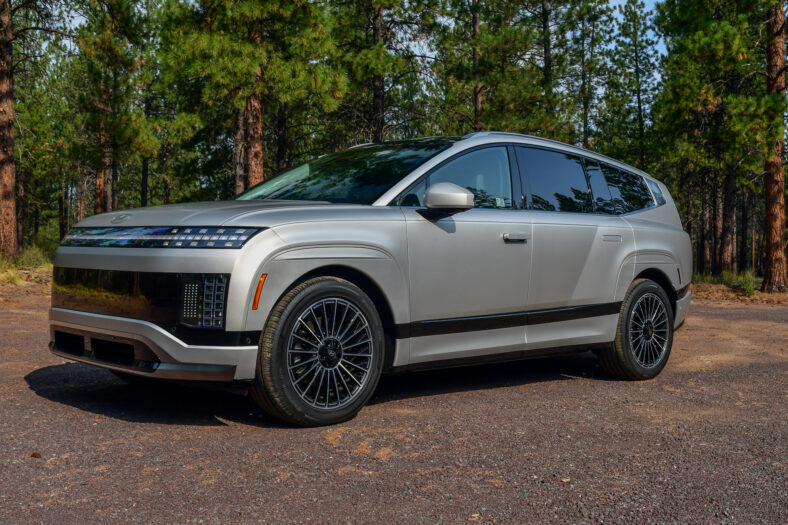
Hyundai calls its safety suite SmartSense. It’s a group of technologies that aren’t available on all models, but plenty of them.
Here’s a breakdown of the features:
- Forward collision assist
- Blind spot detection, monitoring, and collision avoidance
- Lane following assist
- Lane-keeping assist
- Driver attention warning
- High beam assist
- Rear seat occupant alert
- Smart parallel parking assist
- Adaptive cruise control
- Safe exit alert (This safety feature, which we’ve only seen on Hyundai, is for when you’re parallel parked and the vehicle detects an approaching vehicle from behind; it will not allow your child to exit the back seats, and even override the child safety lock feature)
Models that come with SmartSense are the Elantra, Sonata, Kona, Santa Cruz, Tucson, Santa Fe, IONIQ 5, and IONIQ 6. For the new year, Hyundai’s updated its safety suite to include cruising and traffic support, and improved driver attention warnings, too.
Related: Safest Cars On the Road Under $30,000: These Cars Are Loaded with Safety Tech and Features
Stellantis Brands Offers a Bundle of Safety Tech


Stellantis, which is the parent company of Jeep, Ram, Fiat, Chrysler, Dodge, Maserati, and Alfa Romeo, is keen to offer as many safety features as they does brands. Like General Motors, there’s no designated name for safety feature packages.
These are safety features that are standard for most vehicles:
- Emergency vehicle alert system (which alerts the driver to approaching first-responder vehicles or disabled vehicles)
- Full-speed forward collision warning-plus (a fancy name for automatic emergency braking)
- HAAS Alert (alerting drivers to upcoming work zones or emergency responses)
- Predictive AI-powered collision avoidance system (using AI-powered cameras to avoid collisions)
- SOS assist
- Auto-reverse windows and sunroof
- Electronic locking fuel-filler door to prevent theft
- Intelligent battery sensor (shutting down less-critical electronic systems to preserve the vehicle battery if the level is low)
- Lane departure and keep assist
- Adaptive cruise control with Start-Stop (on specific models)
- Blind spot detection
- Rear cross-traffic warning
- Parking assist
- Night vision (which uses infrared cameras to detect obstacles at night and warn the driver, like deer or pedestrians)
Volvo Has Had it Figured Out Since the 1990s
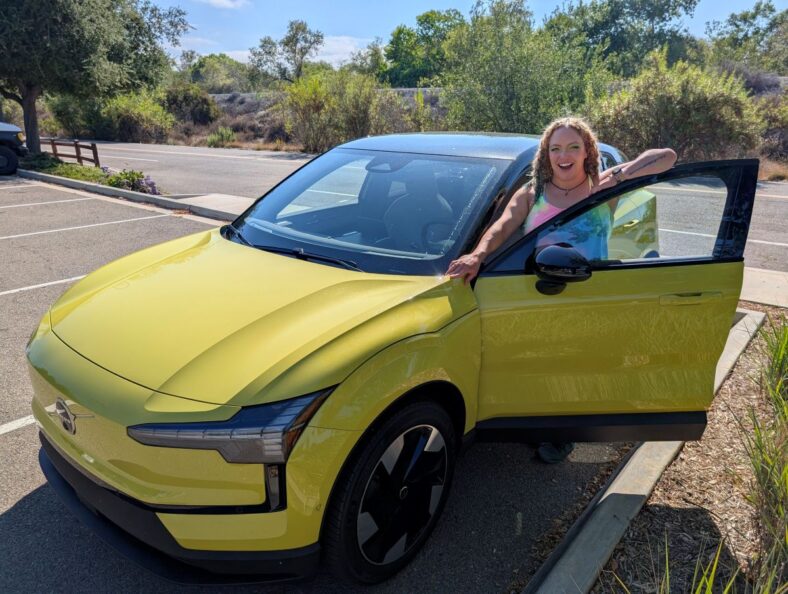
Volvo names its safety features package “Intellisafe,” and for good reason. The Swedes have been prioritizing safety since the boxy era of the 240s. Unlike many of the other manufacturers on this list, Volvo offers Intellisafe on all models.
Features as part of the package include:
- Driver understanding system (distracted or sleepy driver detection that will reduce speed or improve braking to counteract sleepy driving, or stop the vehicle when safe to do so)
- Rear-seat alert with the use of radar detection to pick up heartbeats from children or pets
- Rear, cross, and frontal collision avoidance
- Lane keep assist
- Blind spot detection
- Surround view camera
- Speed limiting system (that automatically limits vehicles to 112 mph)
- Valet key (or “Care” key, which limits speed if the car is being driven by friends, family, or a teen)
The Volkswagen Group has Your Family Covered
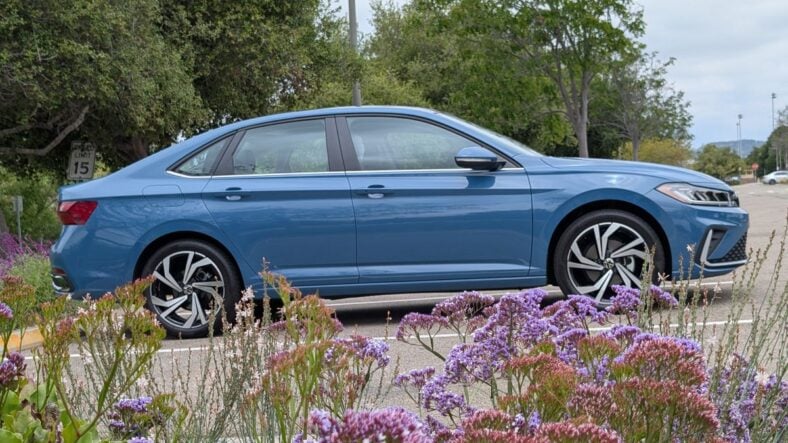
Volkswagen, like Stellantis, is a parent company of many brands, including Audi, Porsche, Bentley, Lamborghini, Bugatti, and Ducati. But Volkswagen itself packages its suite of safety features under the name IQ Drive; these include:
- Blind spot detection and monitoring
- Intelligent crash response
- Adaptive cruise control
- Rearview camera
- Forward collision warning
- Rear traffic alert
- Tire pressure monitoring
- Lane assist
- Park assist
- Front crash avoidance system
- Auto emergency braking
- Safety Cage (which emphasizes crumple zones in the front and rear to protect drivers and occupants)
- Traffic jam assist
- Night vision
- Rear occupant alert
Mitsubishi Plays it Safe

Mitsubishi offers a trove of standard features, like:
Mitsubishi is often underrated. Though their models are some of the most inexpensive in the industry, they’re packed with safety technology.
Mitsubishi offers a trove of standard features, like:
- Forward collision mitigation with pedestrian detection
- Rear cross traffic alert
- Blind spot detection
- Cross-traffic alerts in the front and rear
- Lane departure warning
- Automatic high beam
- Adaptive cruise control
Moving into 2026, the forward collision mitigation has been expanded to include pedestrian detection, and the Outlander especially gets important navigational and infotainment upgrades to improve driver experience and usability.
Tesla Has Long Led With Automatic Safety Systems


Tesla has made it well known that they offer ‘Autopilot’ and ‘Full Self-Driving’ modes, depending on how much you’re willing to pay for a subscription. But what does this even mean? It’s really just a set of advanced safety features offered by other vehicle brands (as listed above) as well. These include
- Cruise follow distance settings (1-3) on adaptive cruise control
- Forward collision warning
- Lane departure warning
- Lane departure avoidance
- Blind spot detection
- Automatic emergency braking
- Forward ‘obstacle-aware’ acceleration
- Side collision warning
- Automatic high beams
While these systems contribute to self-driving, they should not be used for self-driving; even when the system is active, the driver should be aware, alert, and in charge to be safe.
And that can be said for any of the cars on this list; many of these systems will do a lot of the driving (and parking!) for you, but they are no substitute for an alert, aware, and safe driver. Which is why they’re called “assist” systems.
Now that you have a full run-down, make sure the car you’re shopping for is fully and properly equipped.

