
The Short Girl’s Guide to Comfortably—and Safely—Setting the Driver’s Seat In Your Car
If you don't have a wide peripheral view, or you have a death-grip on the steering wheel, your seat isn't set right.


I often see people behind the wheel reclining like they’re ready to take a nap or clinging to their steering wheel like it’s the edge of a cliff. I also see short girls sitting so close to the steering wheel that I almost want to stop and get to help them adjust their seats. If they were to have a crash they’d likely end up with a broken nose thanks to the airbag.
I’m 5’4″ and learned a long time ago that properly setting my seat is the key to good driving. I need enough space between me and the steering wheel to be safe, to be able to comfortably hold the wheel and to easily reach the pedals. I need to be able to see all my mirrors and have a good view of the road.
This story is 100% human-researched and written based on actual first-person knowledge, extensive experience and expertise on the subject of cars and trucks.
Learn to Set the Driver’s Seat Properly, Short Girl. Then Make it a Habit

It might be the one thing no one ever tells you: setting your seat properly is a key factor in your expertise as a driver—especially as a short girl. Being able to properly see the road, see the driver’s display, control the car and know where its corners are all depend on proper seat setting. And, it’s a safety factor. The airbags, seatbelt and other safety features depend on your seat being properly set.
Nearly all driver’s seats are adjustable and most of them are powered in new cars, so you can easily adjust the height and position of the seat. Getting into new cars every week, or sometimes several in a day, has forced me to make a checklist before each drive. Here’s what I do to ensure I’m properly (and comfortably) set for each drive.
Watch: Natalie Takes the New Mazda CX-5 for a Test Drive
1. Adjust the Height Of the Driver’s Seat For Visibility
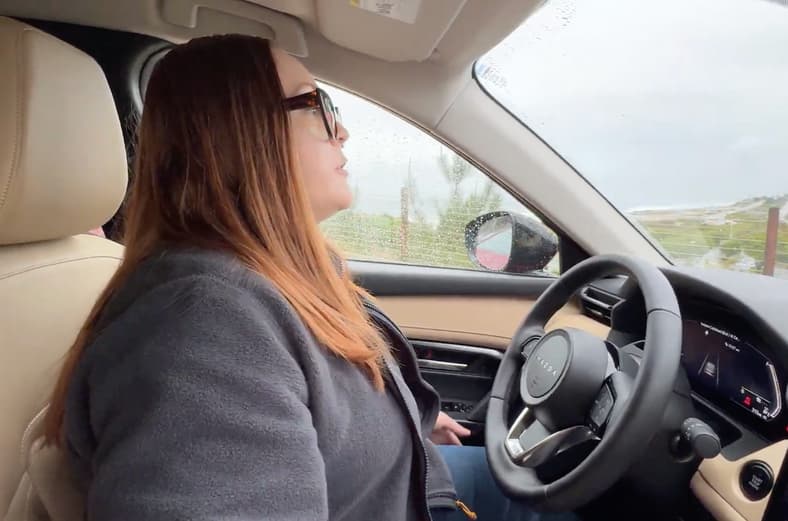
The first thing to do is raise or lower (usually, raise) the height of the seat so you can see the road. You should see over the hood and have a view on the left and right without turning your head. If you have to tilt your head to see more of the road, you’re sitting too low.
You should have a fist’s distance from the top of your head to the ceiling of the car—put your fist on top of your head to check. This will give you a good view of the road, the cars ahead and a nice peripheral view of the car’s surroundings.
Read: 11 Things in the 2025 Infiniti QX80 That Made Me Swoon
2. Check the Proximity to Your Pedals: Are You Close Enough?

For the perfect seat configuration, sit and assess how close or far you are from the pedals. If you cannot touch them or you’re barely tapping the pedals, this is dangerous. Also, if you’re too close to them, that could lead to an *accidental* lead foot. Move the seat forward until you test the pedal with a gentle push. You should have a bend in the knee, but not too much, but not fully straight.
If you have a power-adjustable seat, press the button until you’re at the right distance. If you have a manually adjustable seat, pull the bar under the front of the seat and then slide your seat forward using your hips with your feet firmly planted on the floor, then test the distance to ensure you have a comfortable driving position.
Read: What to Know About Tires Before You Buy
3. Assess the Steering Wheel Distance With a Relaxed Position

Most steering wheels telescope in and out and move up and down. This is a great feature for shorter drivers—and a good one to check when you’re buying a new car! Once you’ve set your seat height and distance from the pedals, extend an arm and place it on the top of the steering wheel; your wrist should rest on the top of the wheel. If it is too far away or closer than you’d like, adjust the steering wheel by bringing the column towards you or pushing it back toward the driver’s display.
Not all cars have the option to reposition the steering wheel forward or back, so if you’re reaching to hold the steering wheel or your arms feel cramped holding it, you may need to adjust your seat a bit more—higher or lower, or forward or back.
Read: New Technology in Cars is Truly Your Co-Pilot
4. Adjust the Steering Wheel for Visibility of the Road and the Driver’s Display
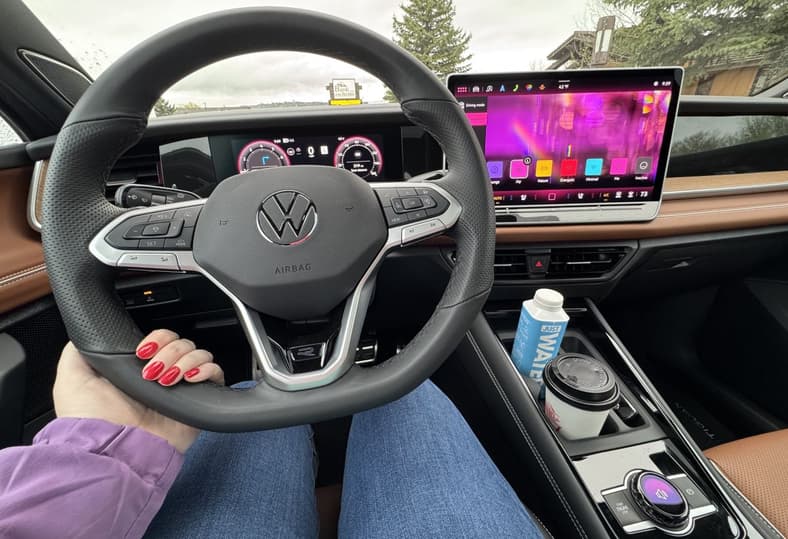
Nearly all cars have a steering wheel that is adjustable up or down. This gives you the ability to set it so you can see the driver’s display clearly. The last thing you want is your speed or fuel level blocked by the steering wheel and to have a nasty surprise on the road.
Once you’ve set the seat and the forward or aft position of the steering wheel, check that the display’s key information is visible and adjust the wheel up or down as needed. Don’t forget to lock it back into place when you’re done, so it doesn’t move while you’re driving.
5. Adjust the Back of Your Seat for Support and Comfort

Some drivers like to sit waaaay back in their seats, and if you’re a 6’4″ dude, we get it. But if you’re a smaller person, you should have your spine fairly straight and supported by the seat back to give you the best visibility and control over the car. Once you’ve set all the other seat settings, adjust the seat back so it rests against your back gently.
If the seat is powered, simply move the seat back toward you until it gently cradles your back at a slight angle or firmly upright—whichever you prefer. Your seat should feel like it’s giving you a gentle hug.
If you have manual-adjustment seats, you may find a wheel or lever on the lower left side to control the seat back. A non-powered seat back may take some adjustment, so take your time to find the right setting.
6. Check Your Side and Rear View Mirrors
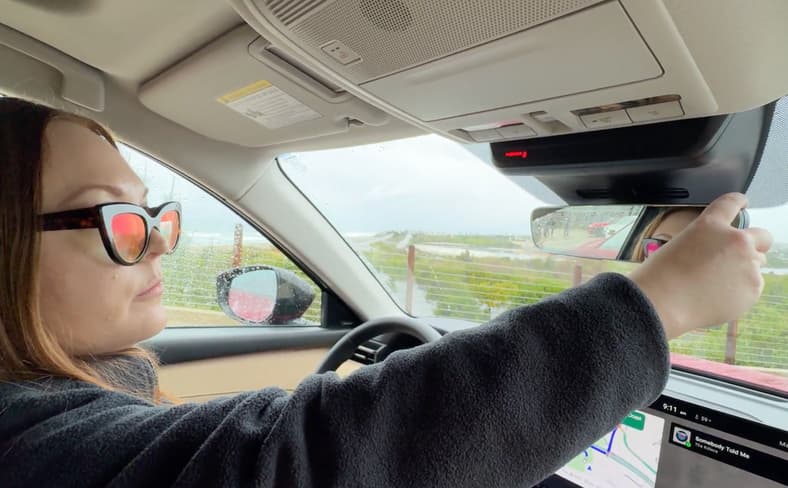
With your seat and steering wheel set, it’s time to check your side and rear view mirrors. Looking at each side mirror, you should be able to see the door handles and a bit of the side of the car; most of the view should be the area around the car, from the pavement to the sky.
Then, ensure the rear-view mirror is centered to see what is out the back window. The rear-view mirror is actually not required equipment in cars, but we’ve come to rely on it, so be sure you can see clearly. Many cars have a digital rear-view display mirror that gives a camera view or, with the flip of the toggle on the underside of the mirror, a reflective view. This is nice at night since the camera sees more than the mirror, and when your car is packed to the roof with people or gear.
7. Finally, Put on Your Seatbelt and You’re Ready to Drive

Now, pull your seatbelt over, plug it in and you’re ready to go. With your seat back comfortably set, your height set for an optimal view of the road, your mirrors delivering the view around and behind you, and your feet safely over the pedals, you’ll have better control of the car and more confidence on the road.
For me, this has become muscle memory: When I get into a new car, I go through the steps automatically without thinking about it. And it’s served me well; I love the peace of mind knowing I have the perfect fit without crouching, slouching, or compromising. And it lets me feel confident in a car that’s my size or a truck so tall that I can stand under its mirrors. Either way, I’m in control. As it should be.

More About:Car Safety