
What You Need To Know About Driving After Breast Cancer Surgery
PSA: Get your annual mammogram. Early detection is crucial.

Being diagnosed with breast cancer last year was a shock. Every year I get my mammogram and every year, I expect everything to be fine. Even after the doctor ordered a follow-up ultrasound I wasn’t worried.
But then she ordered a needle biopsy and that tripped my internal alarms. When they found a tumor, I experienced the gamut of emotions from fear to anger to denial before settling on a positive attitude; meeting my oncology team and putting a plan in place helped, too.
The one thing I didn’t consider, though: What about getting to post-treatment appointments or driving? I didn’t realize that this very routine part of daily life would be part of the challenge, too.
This story is 100% human-researched and written based on actual first-person knowledge, extensive experience, and expertise on the subject of cars and trucks.
Surgery Often Means Your Mobility Is Curbed
My care included a lumpectomy and oncoplasty, which means I had two surgeons: one to remove the cancerous cells and achieve clear margins all the way around the tumor, and one to reshape the breast and the non-cancerous side to match. After healing I would need weeks of radiation and physical therapy.
But a lot of follow-up visits in my future also meant I had to make transportation plans. I was advised not to drive, but to have someone drive me. As an automotive journalist and test driver, not being behind the wheel is odd. Having to ask someone to drive me? Even more unnatural. Of course, I followed the advice of the medical team, and learned that they give this advice for good reason. This is what I learned about driving after surgery for breast cancer, and I hope it’s helpful to you or the women in your life.
Read: No Minivan Shame: 6 Reasons A Minivan is the Best Thing Ever
Riding in a Car Could Be Painful, At Least At First
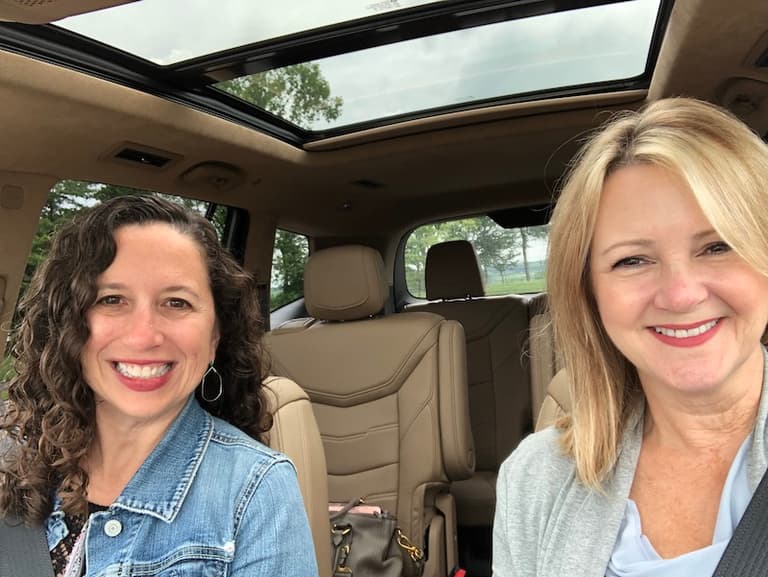
A few days after surgery, I couldn’t stand having dirty hair for another moment, but I also couldn’t fathom trying to navigate a shower with drains and tubes still attached to my body. I phoned a friend who picked me up and drove me to a local salon for a wash and style. Walking was slow and deliberate, getting into the car was a challenge, and every turn induced a twinge of pain. It was a few days before I tried getting in the car again.
Two weeks after surgery, my husband drove me to the high school so I could watch a baseball scrimmage in which our son was playing. He drives a massive Ford F-350, which was surprisingly easy to climb into with power running boards. The ride, however, was a little rough for my healing body. That brings me to my next point.
Read: My Son Got His Permit, So I Took Him To Teen Driving School. Who Learned More, Me or Him?
The Type of Car, Truck or SUV You’re Riding in Matters
The friend who picked me up to take me to the salon drives a Land Rover Discovery, and it’s built for luxury. As such, the ride was comfortable and smooth. Another friend drove me to Walgreens in her Volvo XC90, which was also lovely.
My husband’s F-350 is a great truck for towing, off-roading, and tackling the caliche roads of his family’s land in west Texas. It is not, however, the best vehicle for post-surgery rides. That’s mostly because the F-350 rides on leaf springs (long stacked strips of metal attached to the suspension) instead of coil springs (which look like thick Slinky toys). Leaf springs are terrific for towing and absorbing brake shock and speed bumps, but they’re less comfortable than SUVs and trucks with coil springs that flex and cushion the ride.
Thank Heaven For My Padded Seat Belt Cover
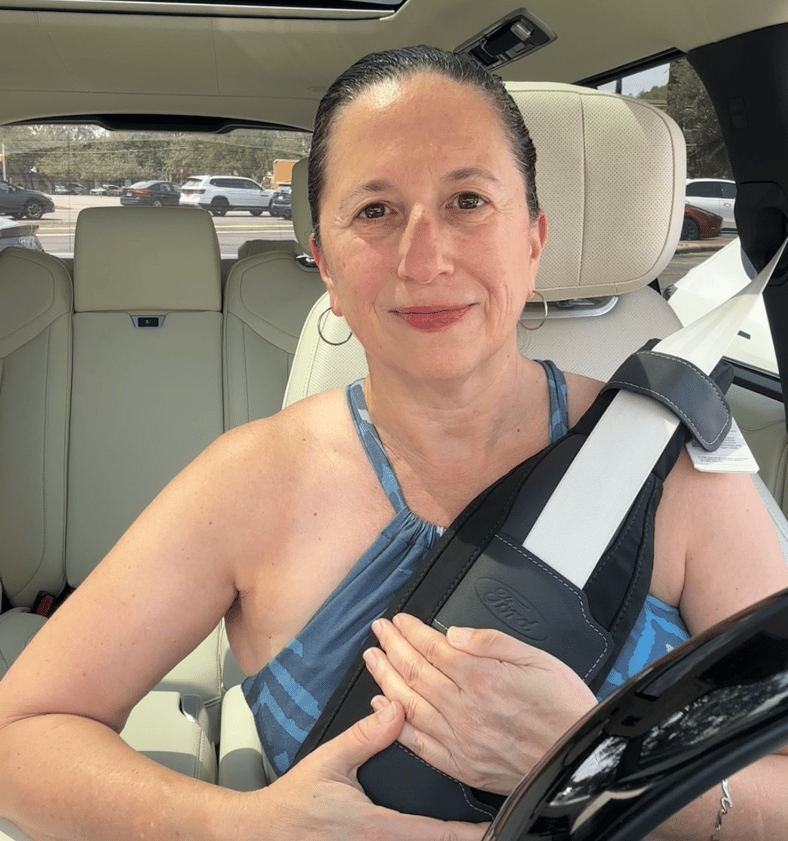
In 2024, I contributed to the Popular Science Best of What’s New award nominations in the automotive catergory, and my editor brought the Ford SupportBelt to my attention. Created with input from doctors, engineers, designers, and breast cancer patients, Ford came up with a seat belt cover that keeps belt friction from irritating tender surgery wounds.
To be honest, I barely remember the post-anesthesia ride home. But I do know that I used the SupportBelt on every drive after that for weeks, even when I was riding in others’ cars. That includes two weeks in an RV on the Rebelle Rally where I served as staff just three weeks after the surgery.
Ford made the design available via license for other automakers to manufacture and test in their vehicles, but I haven’t seen any others on the market as of yet. Meanwhile, Amazon offers another version at this link.
Read: Pregnant for an Hour: Inside the Ford Empathy Suit
Don’t Rush Back Into Driving
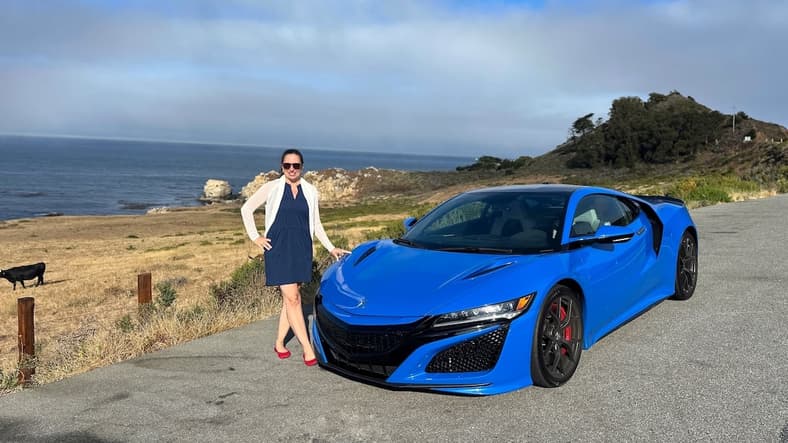
The last thing you want after invasive surgery is a car crash. Follow your doctor’s orders for when you’re allowed to drive again and do not ever mix painkillers with driving a car, truck, or SUV. Start with short trips near your house and be aware of your fatigue level. Driving tired can be just as bad as driving under the influence of alcohol or drugs, including prescription ones.
The American Cancer Society says several cancer treatments like chemo, radiation, surgery, hormone medications, anti-nausea, and pain medicine can affect your state of mind. Not to mention the stress and anxiety about dealing with cancer.
“Some people with cancer notice that they can’t think as clearly as they used to,” the ACS says on its site. “They may have trouble remembering things, focusing, finishing tasks, or learning something new. These are symptoms of cognitive impairment, also known as ‘chemo brain’ or ‘brain fog.’”
Driving is a Whole-Body Experience
After surgery, you might feel pain or strain in muscles you didn’t know you had. Your body has endured a traumatic experience, and it needs time to heal. Perform all the stretches and exercises your doctor tells you to and give yourself some grace. You may find that your shoulder isn’t cooperating, or that your core is getting a workout you weren’t prepared for.
As for me, my prognosis is excellent and I feel terrific under the guidance of a great team of doctors and incredible friends who have helped along the way. It’s a comforting thought for others who may be facing a similar path. But knowing what to expect helps. When your’e ready to start driving again, take short drives and run errands before gradually extending your time in the car to match your recovery.
Before you know it, you’ll be back to yourself and moving on with the rest of your life. You’ve got this!

More About:Car Culture