
Buy This, Not That: In the Sedan vs. SUV Battle, These 8 Sedans are Family-Friendly, Less Pricey SIV Alternatives
As a parent and former sedan owner, I promise you: you don’t need to upgrade to a larger SUV if you love your sedan. These modern examples prove my point.


Back in 2018, long before strollers and snack cups took over my life, I drove a 1999 Nissan Maxima. It had a plush ride, a bulletproof V6, and a trunk so massive it felt like it had its own zip code. That car was well-loved and well-maintained for over 250,000 miles. But as my now-husband and I started planning for a future with kids, I convinced myself I needed an SUV. My mechanic, fellow car-nerd of a husband, urged me not to join team SUV. He argued that my Maxima had plenty of room, it was easy to fix and the insurance was cheap. But the cultural conditioning won. I bought my 2011 Subaru Forester.
Fast forward to today: I review cars for a living. Every time I swap out of a massive SUV and into a standard sedan for a week of testing, I think back to those sedan vs SUV discussions. And as much as it pains me to admit it… my husband was right. I could have kept that Maxima; it would have fit the kids just fine.
While I don’t regret my Forester, spending years buckling toddlers into modern vehicles has truly flipped my perspective. The idea that a family needs an SUV is largely a myth. While the arguments for them can be real—they can be easier for loading and unloading kids, their car seats and all their gear—unless you’re hauling a massive crew or towing a camper, the humble four-door can handle daily family life beautifully—while saving you thousands.
This story is 100% human-researched and written based on actual first-person knowledge, extensive experience and expertise on the subject of cars and trucks.
First, What’s Behind The Age-Old SUV Propaganda to Parents?
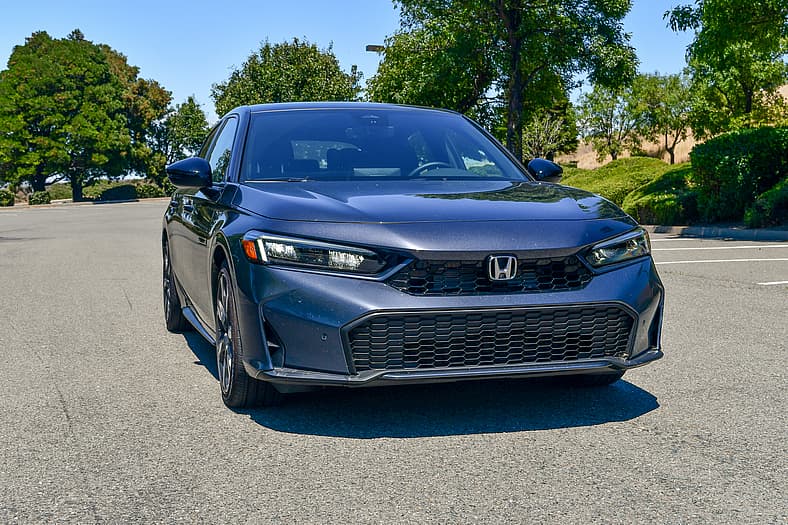
If you feel an overwhelming, almost magnetic pull toward an SUV or crossover the second that pregnancy test turns positive, don’t blame yourself. You’ve been targeted. For decades, automotive marketing has fed parents a very specific, highly effective narrative: Good parents buy SUVs. Great parents buy bigger ones.
I can remember watching car commercials as a kid, showing SUVs conquering torrential downpours or navigating rocky terrain with a serene, peaceful sleeping baby tucked safely in a tall, spacious back seat. They sell us the illusion that riding higher up makes us invincible. While ground clearance is great for visibility, rough terrain or snow, the propaganda conveniently forgets to mention that modern sedans often have identical (or better) crash-test safety ratings, a lower center of gravity (making them far less prone to rollovers), and sharper handling to avoid an accident in the first place.
And, let’s be honest: there is a subtle cultural stigma that sedans are for high school or college students, commuters or fancy executives, while SUVs are for established families. Automakers leaned hard into this because—and here is the ultimate kicker—SUVs are incredibly profitable for them. It costs car companies roughly the same amount of money to build a sedan as it does a similarly sized crossover, but they can charge a premium for an SUV just by giving it a taller ride height and rugged plastic cladding. So, here are some sedans to consider over their pricier SUV alternatives.
A Few Quick Points in the Sedan vs. SUV Debate
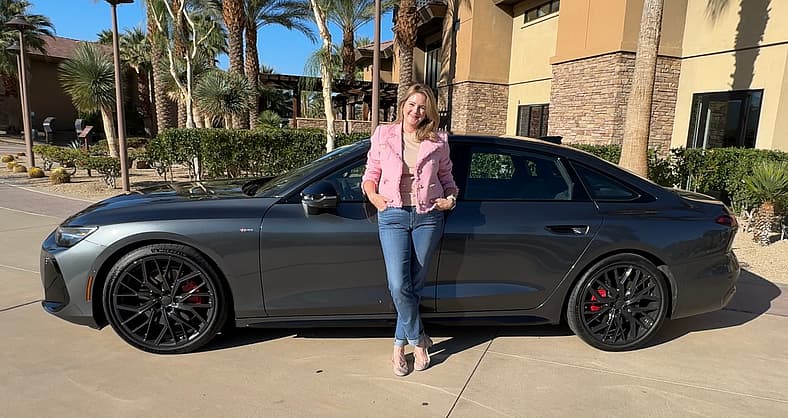
In case you want to hear more of my mechanic husband’s arguments, here are other solid arguments he made before I pulled the trigger on my Forester that turned out to be 100% true:
- Sedans, most times, are much more affordable. Because they don’t require as much material to build, they don’t need larger engines or more complex transmissions or suspension systems to handle more substantial weight, and they’re usually more affordable (we’ll get into that later).
- They’re less expensive to insure. This obviously depends on which model is in question, but when they’re put up against a similarly sized SUV, they’re almost always less expensive to insure (because they’re not as expensive as SUVs. Makes sense?)
- Their low, sleek, and wide shape makes sedans more efficient, even as a gas-only car. Even more so as hybrids. EV sedans usually have a higher range compared to taller, boxier SUVs, too, thanks to improved aerodynamics. Less air resistance = less strain on the powertrain.
- Vertical space in an SUV’s rear cargo space can be more annoying than helpful, compared to the low, flat, and enclosed trunk of a sedan. Trust me, I’ve had my groceries or cargo fall out of my SUV’s trunk when I parked in my sloped driveway with a baby in my arms. A sedan wouldn’t have done that to me.
- The ground clearance and entry points of a sedan can often be similar to those of an SUV-often within an inch or so. I remember thinking that getting car seats or babies into a sedan would be more annoying than that of an SUV, and that’s not always true.
Still convinced you need an SUV? Here are some comparisons between sedans and their popular SUV counterparts.
The Toyota Camry, In Some Areas, Is Roomier Than the RAV4
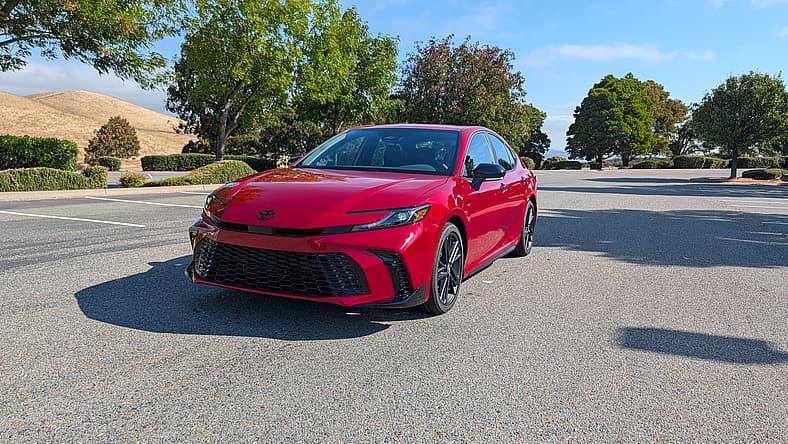
I was lucky enough to test the Toyota Camry Nightshade hybrid right before I got the keys to the new RAV4 Limited hybrid, and I noticed something that nearly gave me whiplash: The overall trunk space was similar, while the legroom looked to be slightly larger. Then I dug into the numbers: the Camry offers about 38.0 inches of legroom, while the RAV4 has 37.6 inches.
And while the Camry’s trunk space reads 15.1 cubic feet because it doesn’t have the tall roof the RAV4 has, which opens it up to 37.8 cubic feet, I promise you the Camry’s trunk space is plenty. And it’s a great segue to one of my husband’s other arguments for sedans: the closed, contained nature of a trunk versus a rear cargo area. And, to reinforce my point about mileage, the Camry averaged 48 mpg with all-wheel drive. The AWD SUV, though? Averaged about 42 mpg.
And the Camry is remarkably less expensive across the lineup compared to the RAV4. The base LE model starts at $29,600, boasting a 52 mpg rating in the city, while the XSE, which is the top-shelf trim for the Camry with all the bells and whistles, starts at $36,000. The RAV4 is… Much more. The base LE starts at $31,900, while the Limited’s MSRP is $43,300.
The Honda Accord is Less Expensive, More Efficient, and Just as Roomy as the CR-V
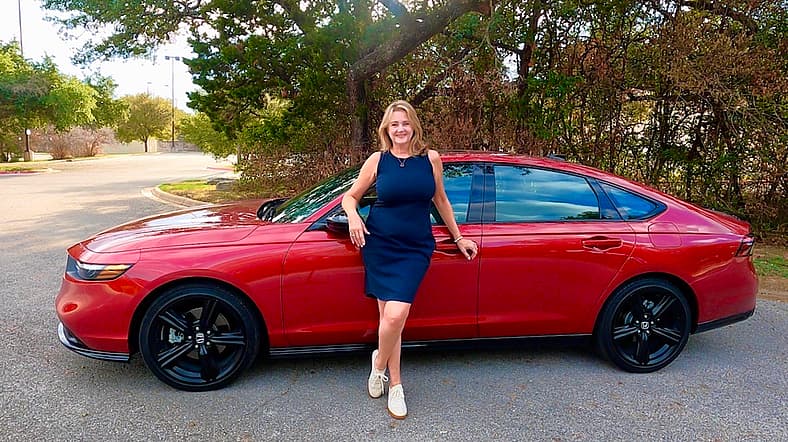
Both the Honda Accord and the CR-V are two of the company’s darling models. They’re both affordable, family-friendly, no-nonsense options for families and singletons alike, because they have so much to offer. But, because I’m trying to prove to people that sedans aren’t the enemy of family-friendliness, here’s the skinny: the Accord actually has more rear legroom than the CR-V. The Accord has an incredible 42.3 inches of front legroom and a massive back seat that feels like a full-size luxury car, while the CR-V has 41.0 inches, which is still generous for a compact SUV, but not more than a sedan.
The CR-V claims a win on vertical cargo volume because of its boxy hatchback shape. However, unless you are regularly stacking boxes all the way to the roofline, the Accord’s long, deep 16.7 cubic-foot trunk floor easily swallows a full-sized stroller, diaper bags, and groceries flat. Similar to my argument for the Camry over the RAV4, the Accord is less expensive. The Sport Hybrid starts at $33,795 while the Touring Hybrid starts at $39,495. On the CR-V side, the Sport starts at $35,630 while the Sport Touring hybrid starts at $42,550.
Then there’s the mileage argument, which, for these two, also rings true. The Accord hybrid averages about 46 mpg in the city, 41 on the highway, and 44 combined. The CR-V is less, even with front-wheel drive, and the mileage drops more with all-wheel drive. With FWD, the CR-V sees 43 in the city, 36 on the highway, and 40 combined. With AWD, the average settles at 40 city, 34 highway, and 35 combined. The TrailSport gets the lowest averages, with 38 city, 33 highway, and 35 combined.
The Hyundai Sonata Stands Firmly Against the Tucson
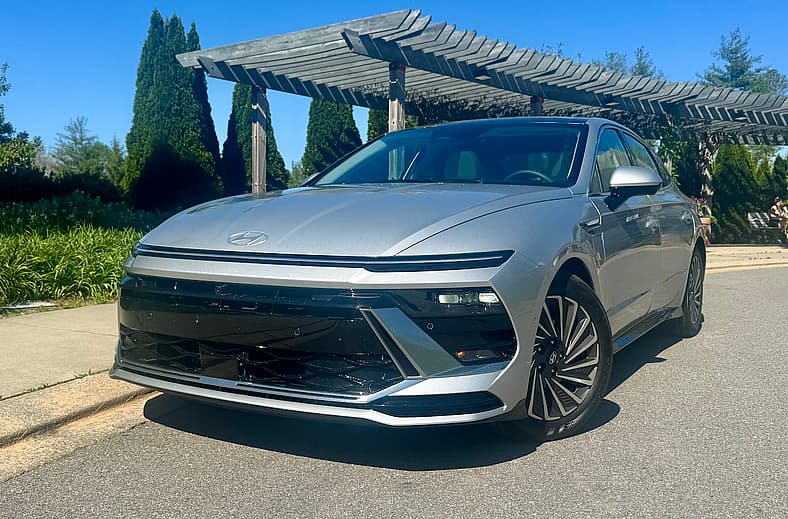
Don’t get me wrong: I loved, loved, loved the Hyundai Tucson. Its fun styling, roomy interior, and impressive cargo space had me wondering if it was worth replacing my Forester for one—especially since you can also get it as a standard hybrid or a PHEV. But, compared to the Sonata, which is vastly under-appreciated in the family-friendliness department, the Tucson shows a shortcoming or two. First point to the Sonata goes to rear legroom. It grants rear passengers a jaw-dropping 46.1 inches of legroom back there, while the Tucson has 41.3 inches.
Once again, the SUV’s measurements look bigger because the measuring tape goes up to the ceiling, but the Sonata’s trunk is 15.6 cubic feet. Which is more than enough for daily needs. I will say, though, that the Sonata loses a few points here because the rear seats can’t fold down to increase the space. Bummer. But if mileage is what really matters to you, the Sonata is miles ahead of the Tucson, even as a hybrid. Literally. As a hybrid, the Sonata can average up to 47 mpg in the city, 56 on the highway, and 51 combined as the Blue model, while the Tucson’s averages drop to 38 city, 38 highway, and 38 combined, even with FWD as the Blue version.
Pricing follows the same trend. The Sonata Hybrid starts at $29,200, while the Tucson starts at $32,450. If we want to compare the gas-only apples, we see the same principle: the Base SE trim starts at $27,300 for the Sonata, while the Tucson starts higher at $29,450.
The Audi A5 is an Underdog That Packs a Punch Compared to the Audi Q5
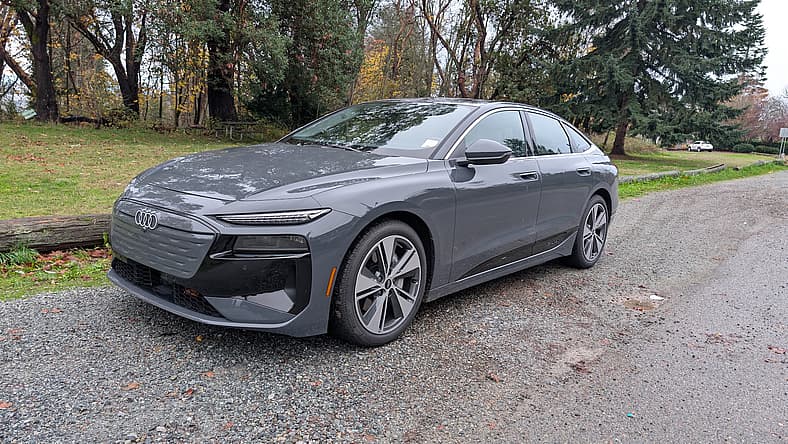
I had the pleasure of driving an Audi A5 through Seattle, and I was blown away by the interior space it offered. It also started a debate between my friend and me. I argued it was more of a hatchback (hence Audi’s moniker “Sportback”), while he argued it was a sedan. Spoiler alert, I was right, but Audi wanted this exact debate to take place. Technically, it is a hatchback, but it’s disguised as a sedan. It’s a hatchback because the entire rear glass lifts up like a … hatch.
This makes it a solid choice for those with littles, because it gives you a massive, wide cargo opening. And thanks to a cargo area that is long and deep rather than tall, the A5 Sportback offers an incredible 22.6 cubic feet of trunk space (the most so far) with all seats in place. That is shockingly close to the Q5’s 25.8 cubic feet in the rear. Unless you are regularly stacking boxes all the way to the roofline and blocking your rear view, the A5 Sportback handles standard full-size strollers and soccer gear with ease.
The Q5, though, does offer slightly more legroom for rear passengers with 38.0 inches compared to the A5’s 36.1 inches. However, I’d argue that the longer wheelbase (which grants a smoother, stable, and quieter ride) justifies it. The A5 looks even better when we compare pricing and mileage. The A5 starts at $51,495, while the Q5 costs $54,095 at the base. Given their performance pedigrees, neither has a brag-worthy fuel ecomony. The A5 averages 22 city, 32 highway, and 26 combined, while the Q5 averages 21 city, 29 highway, and 24 combined. But that’s thanks to the performance, which makes both the sedan and SUV fun to drive.
If You’re Looking at the VW Tiguan, Don’t Immediately Discount the Jetta
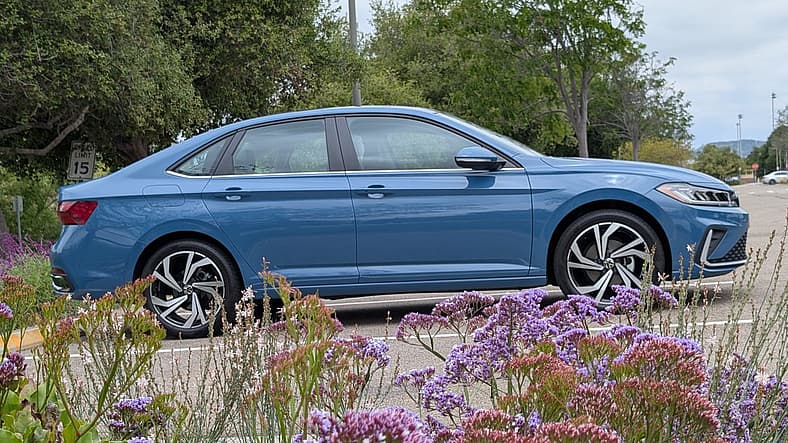
Hear me out on this one. I know, you probably recoiled at the thought that the Jetta would be just as roomy as the Tiguan. The Jetta is, even according to VW, classified as a “compact sedan,” so how on earth can it compare to the Tiguan, which is technically a mid-sized SUV? A lot closer than you think.
On paper, the Tiguan wins the passenger legroom battle, giving rear riders a generous 40.2 inches. However, the Jetta’s 37.4 inches of rear legroom is exceptionally spacious for a compact sedan—more than enough to install a rear-facing car seat or accommodate growing kids, teens and adults. If it’s helpful, my Subaru Forester, which I thought was soooo much bigger than my old Nissan, has 38.0 inches of legroom. Not a massive difference. Its trunk floor is deep and wide, too, with enough room for a full-size stroller to slide straight in flat, leaving plenty of leftover space around the sides for diaper bags and grocery hauls.
Here it comes: the argument for the Jetta being less expensive but more efficient. The Jetta starts at $23,995, while the Tiguan starts at $30,805. Because you can’t get a Jetta with all-wheel drive (even as the GLI model), the Jetta automatically achieves higher fuel ecomony ratings. The Jetta normally scores about 29 mpg in the city and 40 on the highway, while the Tiguan averages 26 mpg in the city and 34 on the highway. Naturally, that drops with all-wheel drive.
The Genesis G80 Grants Executive Luxury Living to GV80 Shoppers

I’ve tested both of them, and I love them both equally. They’re cut from the same cloth, but they give off very different auras, have different (though excellent) drive dynamics and show-stopping interiors. I could go on and on about Genesis, but let’s get back on topic. When it comes to sedans versus SUVs, the G80 offers so much more than a few double-takes in the grocery store parking lot. If you’re looking at the GV80 because you’re a family woman now, let’s discuss some reasons the G80 is worth a look.
When it comes to the numbers, the two are closer than I thought. But if you look at the interior dimensions, you realize you don’t need that massive, heavy SUV body just to keep your kids comfortable. The G80 luxury sedan matches its giant SUV sibling millimeter-for-millimeter in the backseat (38.7 inches), so there’s no room to argue that the G80 is smaller. Because it’s not. Once again, the rear cargo space is numerically larger in the GV80 because of the height, but the G80’s deep, wide trunk and large footprint give it enough space for luggage and/or a stroller.
Let’s not forget pricing and mileage. The G80 starts at $54,945 compared to the GV80’s $57,700. And since you have more engine options in the GV80, the ceiling for pricing is much higher, too (though we don’t need to get into that). The fuel economy is similar if the GV80 has the smaller 2.5-liter turbo four that’s in the G80, but the G80’s lower roofline makes it the winner. It sees an average of 20 city and 29 highway, compared to the GV80’s 19 city and 24 highway rating. It’s even worse if the GV80 houses the larger 3.5-liter twin-turbo V6.
Kia’s K5 Sedan Puts Up a Good Fight Against the Sportage
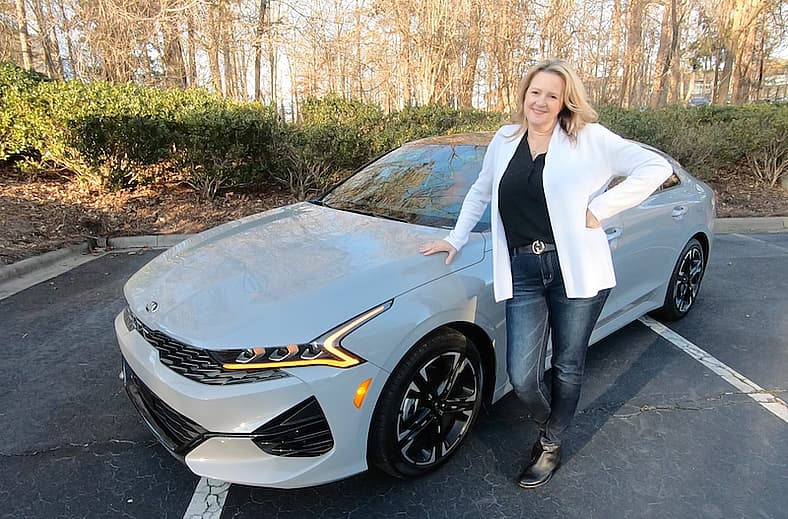
The Sportage was one of the smaller SUVs that really, truly surprised me. It was almost the same size as my father-in-law’s 2025 Toyota RAV4 XSE, but it looked and felt like it had more legroom in the rear and a similar trunk. It’s an easy SUV to recommend to families, especially for the price, available powertrains (you can get it as a gas-only car, standard hybrid, or as a PHEV), and the interior features. But if you think Kia doesn’t have a sedan that competes with that, I’d love to introduce you to the K5. The K5 is a looker, has a smooth drive, and a surprising amount of curb appeal. There’s also plenty of room for those in a family way, too.
Now, if you pull out the tape measure, the Sportage wins the backseat space battle on paper with a generous 41.3 inches of legroom compared to the K5’s 35.2 inches, which handles bulky rear-facing car seats and booster seats with zero issues. It’s the same story with cargo: the Sportage has a taller, boxier rear window, but the K5 features a deeply recessed 15.6 cubic-foot trunk floor. It easily swallows a family’s daily needs.
Pricing and mileage are in the K5’s favor, too. The K5 starts at $27,490 compared to the Sportage’s $28,790. The fuel economy is where the sedan really runs away with the crown. Both vehicles share a standard 2.5-liter four-cylinder engine, but the K5’s aerodynamic, lower profile makes it a stellar highway cruiser. It sees an average of 26 city and 37 highway MPG, compared to the gas-powered Sportage’s 25 city and 33 highway rating.
Don’t Say Goodbye to Sedan-Life If You Don’t Want To; No One Will Fault You For Switching Teams
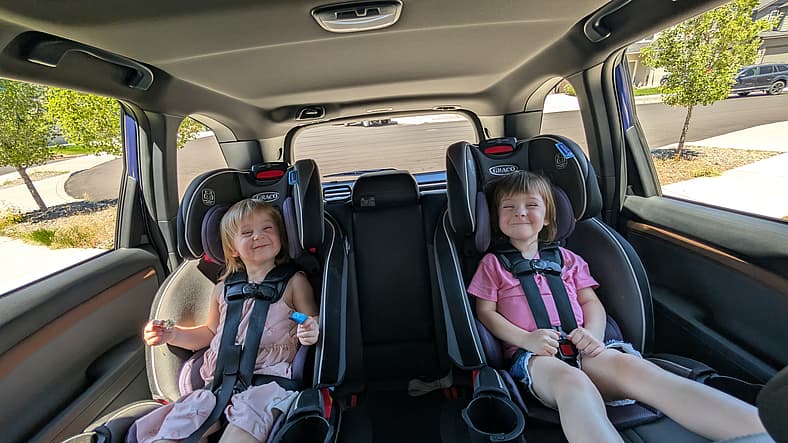
At the end of the day, your family car needs to fit your life and your family’s needs, not a commercial. If you genuinely feel like you need an SUV for massive cargo or third-row seating, buy it, love it, and don’t regret it (I don’t). But if you’re only upgrading because you feel like society expects you to, consider this your permission slip to skip the bigger car payment, save on gas, and feel giddy about a lower price tag. Keep the sedan, keep your budget intact, and spend that extra money on making memories with your kids instead.

More About:Car Buying