
Could a Used EV Be the Best Option For a New Car?
After six months in the Hyundai Ioniq 5, this is what I’ve learned, and what makes a used EV a great option.

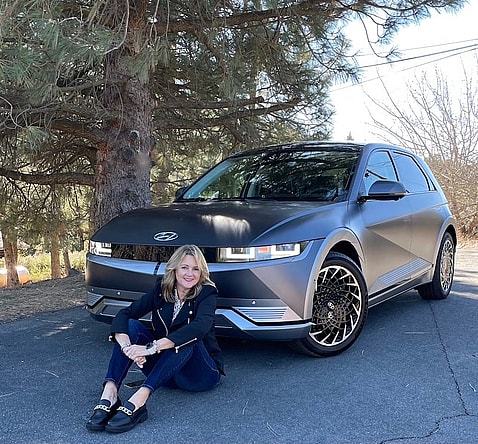
As the price tag of the average new car pushes $50,000, the average loan period stretches past six years and the cost of gas continues to fluctuate, new cars are proving to be more expensive than ever. When new cars go up in price, so do used cars. There’s no relief, it seems.
Or is there? The silver lining in the car market might just be a used EV.
This story is 100% human-researched and written based on actual first-person knowledge, extensive experience and expertise on the subject of cars and trucks.
Used EVs Are Having a Heyday—For Good Reason
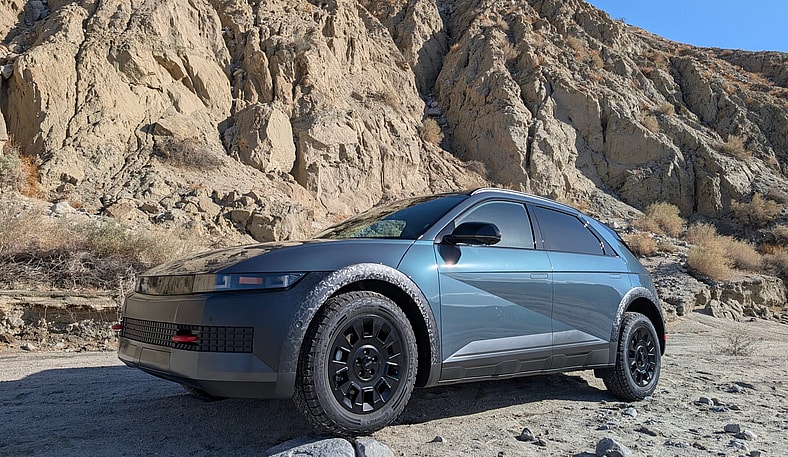
If it seems like there are a lot of used EVs on the market, you’re not wrong. Thanks to an abundance of EVs leased to consumers over the last few years paired with lemon-law buy backs due to technical issues, there are quite a few for sale right now.
Normally this might be a red-flag market: typically, lease vehicles are base models that are low on luxuries, but most EVs were sold as premium vehicles and loaded with a lot of nice features. Even the base model of many EVs are more premium than their gas-powered counterparts.
Then, the car maker’s investment is your gain: To get people behind the wheel of an EV and to meet federal emission regulations, car makers offered many EVs for lease at ridiculously low rates—some under $200 a month for what was essentially a $50,000 car. Car makers had some incentives; they were able to write down some of the cost by claiming the federal tax incentive of $7,500 and they needed to get up to speed in the EV market to meet emissions regulations.
The result is that few years later there’s an abundance of used EVs for sale.
Read: The Chevrolet Equinox EV Impressed Me So Much, I Bought It After Reviewing It
Isn’t a Buy-Back a Red Flag?
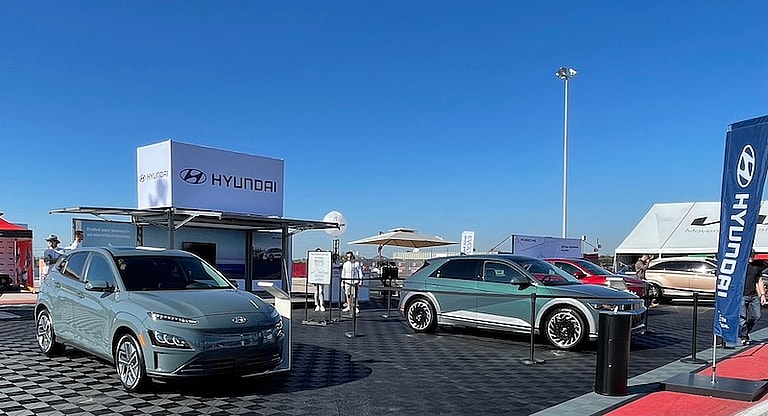
Many of the used EVs for sale now were repurchased by the automaker after the original buyer complained of an issue or due to a recall. Other car makers bought back some of the vehicles they leased to avoid flooding the market and depressing new car pricing. This isn’t necessarily a red flag, but rather, it could be an opportunity.
The launch of many EVs came at the start of a perfect storm: new technology, supply chain issues that caused long delays in repairs and consumer protection laws that forced carmakers to buy back EV with issues. So, rather than fight the system, they bought back those cars, fixed the issues and returned them to the market.
The result is that there are lots of great used EVs on dealers lots that are perfectly good, nicely equipped and offered at a low cost. Here’s what you need to know if you’re thinking of buying a used EV, and why it can be a great deal.
Read: 2025 Hyundai Ioniq 5 Long Term Test Drive: What It’s Like to Own and Drive This Popular EV
Buying Used EV: What You Need to Know
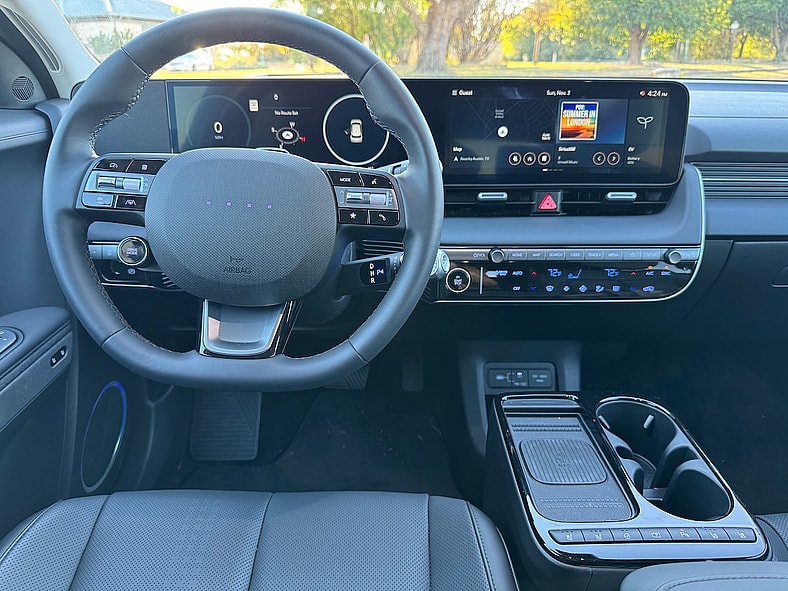
As with any used car, do your homework. Research the car you’re looking at by reading the CarFax carefully for repairs, recalls and accidents. Look at the amount of warranty left both on the car (bumper to bumper), the powertrain and the battery system; you may want to call the manufacturer and verify the warranty— they will need the VIN to look it up. EV batteries and motors have much longer warranties than standard warranties; this adds peace of mind when buying a used EV.
Then, have the car inspected and ask for a battery health report. This will tell you how much charge the battery can hold; EV battery capacity degrades slightly over time, from a few percent when new to as much as 30% over a longer period. You’ll want to know what the remaining range is and how that compares to the same battery when new; you’ll also want to know how many times it’s been charged at DC fast chargers, which the health report can tell you; this type of charging stresses the battery and can reduce its lifespan.
“On a used EV, the battery is the engine, transmission, and fuel tank all rolled into one. If that part is healthy, the rest of the car is usually easy,” said car buying expert LeeAnn Shattuck.
And then, go shopping. Electric For All has a great site with lots of EVs for sale; they also list incentives—yes, EV incentives still exist— so you can find out if there’s a cash bonus for buying an EV.
Find The Right EV— On Facebook? Go With Me Here
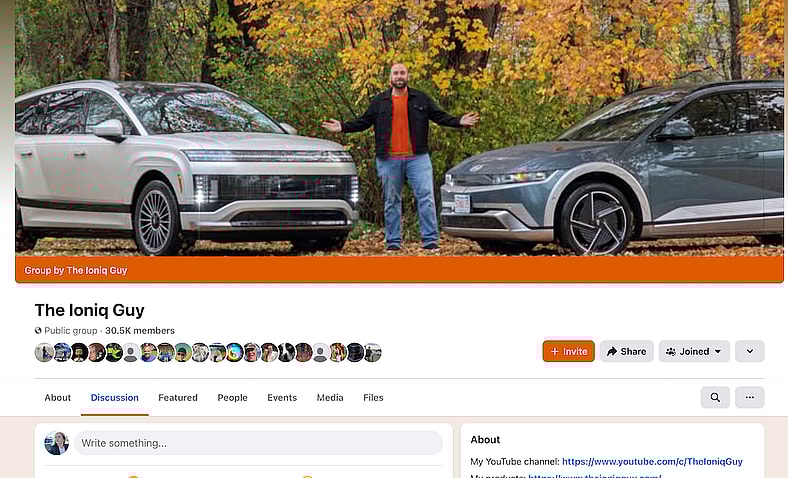
This is something no one told me, so I’m telling you: Join the Facebook groups for the brand or model EVs you’re considering. Read the posts and comments and you’ll see the highlights and lowlights of ownership. You’ll get a feeling for what issues this car frequently has—and while some will have the same issue, not all will, so keep that in mind—the fixes, work arounds and quality of life tips that’ll keep you happy in your new car.
Ask questions and read all the answers. EV owners can be a helpful and analytical bunch. They quickly discovered how to keep the range high on cold days, how to road trip to places without a lot of public chargers, and how to live the best EV life. They totally changed my experience—and I’m grateful.
Driving An EV Every Day: What You Need to Consider
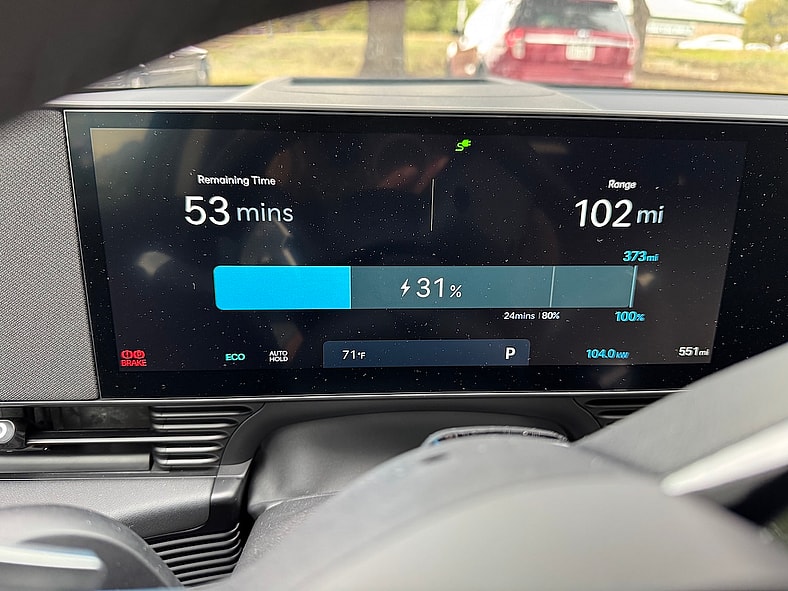
This may be the best part: driving an EV every day. They are fun to drive, easy to drive—who knew using the brake was exhausting? But I’m here to tell you, it is.
It’s been 6 months since I’ve gotten gas and I don’t miss it one bit. In fact, as the price of gas fluctuates, I’m grateful to simply be able to plug in the Ioniq 5 in my garage and wake up to a (nearly) full battery.
I also really love that I can drive around all afternoon and barely nudge the range—especially when using iPedal, Hyundai’s version of one-pedal driving. I also learned that I don’t need to charge the car more than every couple of weeks. This was a surprise, but Hyundai’s solid regenerative brake system is very efficient for in-town driving.
Charge at Home. It’s Easier and Cheaper Than You Think
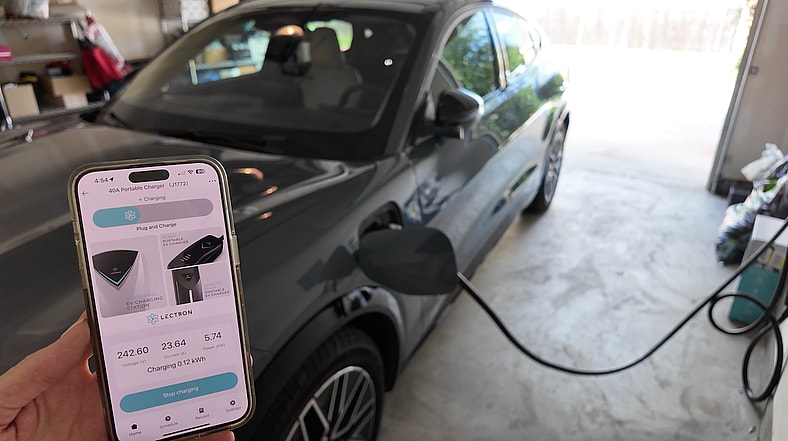
Charging at public charge stations can be as expensive or more than charging at home, even including the cost of installing a home charger. In fact, I would probably not consider buying an EV if I only had public charging as an option because it can be that much more expensive than charging at home. I installed an EV outlet for $150—for the electrician and the part; a $200 Lectron smart charger allows me to connect to an app and manage charging remotely.
My average “full” charge, which is really only about 60% since I charge when the battery gets to 20% and stop when it’s at 80%, costs about $4 (though sometimes it’s as low as $2); it would cost about $25 to drive the same number of miles in the average gas-powered car. And that “full” charge would be about $20-$30 at a DC fast charger depending on the rate per kWh.
If I wanted to plug it in daily I could use the 110V charger in my garage, too; that would recharge about 30-40 miles of range but I’d need to charge it more often. But, I’d also save on having a charger installed in my garage.
Public Charging Caveats To Watch For
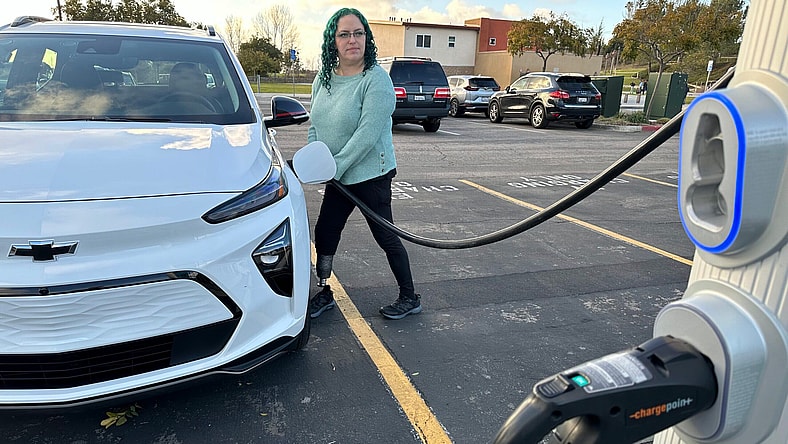
I felt so bad when a friend said she charged an EV to 100% and it cost her $80. Her gas-powered car never cost her more than $40 to fill, so this was not only a rude surprise, but it left her soured on EVs. But she got caught in the ugly truth about public chargers: Overage fees.
Public chargers are great when you need them, but most networks charge high fees for idle time and charging past 80%. When a car is connected to the charger but not charging, most will add $1 a minute that the car is plugged in.
They also add an extra charge for fully charging to 100%; that last 20% of the charge takes a long time, so many networks add $1 a minute or a charge a higher rate for that last 20%.
These charges should be in the fine print on the charge station’s app or your own car’s app—where you’ll also find the cost per kWh the charger charges; prices can vary from $.30 to $.70 per kWh, so it’s a good number to watch. To be safe, set your car’s charge system to stop at 80% and watch the clock when you’re at a public charger.
Get to Know Your Car’s Quirks
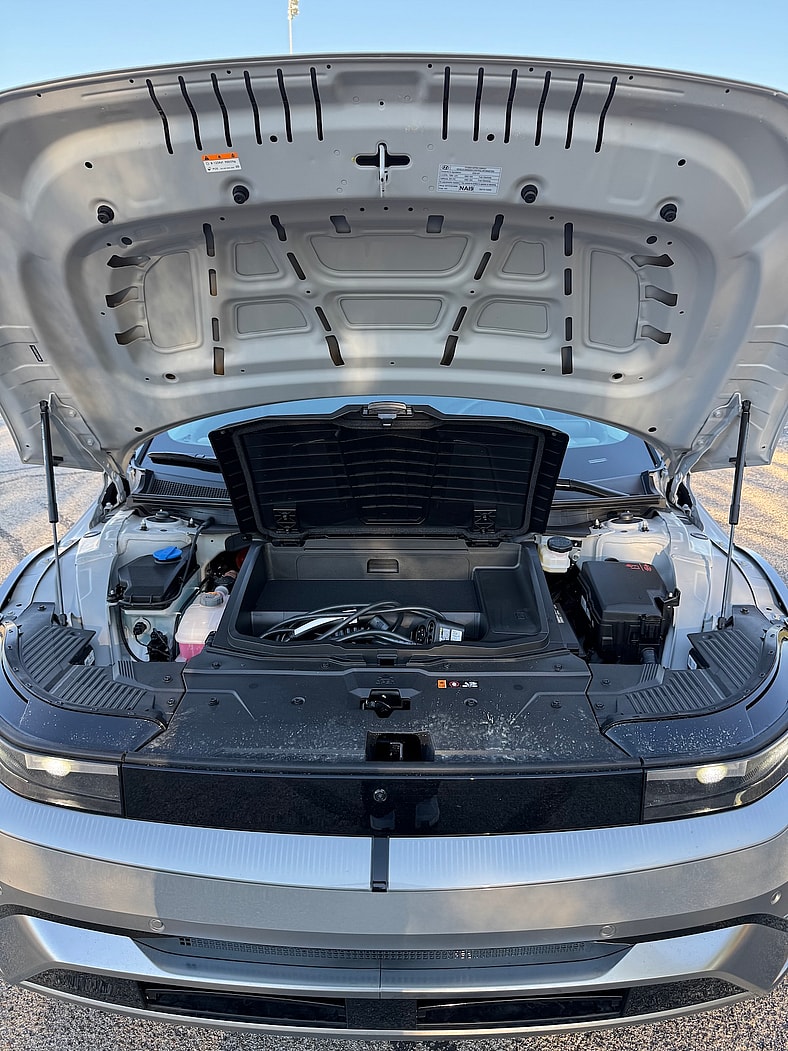
My last long-term EV test drive, a Mustang Mach-E, was great for road trips. I’ve had short term EV loans, usually about a week, and driven them a lot and found them to be efficient on the highway and in cold weather: the Polestar 5, Audi Q6, Cadillac Escalade IQ all performed much better than I’d have expected.
And while the Ioniq 5 long is superior around town, after taking it on a few road trips I’ve learned I still have some things to learn. Slow down, pre-condition the battery before leaving for a long drive and precondition before charging. Always make sure to pull the iPedal paddle (or activate the regenerative braking) so you’re getting the most brake regeneration when you can.
And plan for those trips: Plan your route, know where the public chargers are and have at least two charge apps to fall back on in addition to your car’s built-in navigation to find public chargers. I like PlugShare and Google Maps in addition to Hyundai’s navigation system.
I’m on my second EV and it won’t be my last. I like electric driving. I like not getting my hands dirty on gas pumps or checking the oil and antifreeze. I like not going to the gas station. I like the ease and fun of driving EVs. I like the modern, fresh styling. And the price of used EVs makes them look better than ever.

More About:Car Culture