
We Tested the BFGoodrich Trail-Terrain T/A+ SUV Tire on 5 Different SUVs. This is Why You’ll Want Them
I’m not gonna lie, it was pretty fun to ride trails all day on this comfy, quiet, capable tire

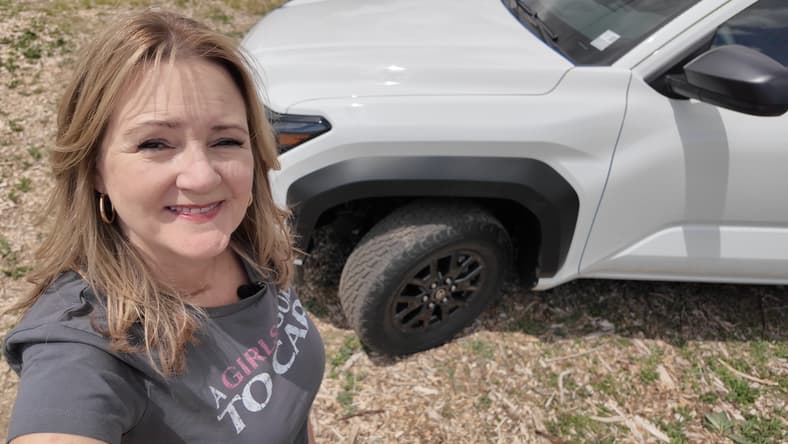
Buying tires can be a confusing experience, paralyzing even the most tenacious shopper; information can be overwhelming and there are a lot of considerations that may not really matter. And worse, imagine doing all your homework only to drive home on your new tires and realize you didn’t get the tires you really needed.
Where you drive, what you drive and how you drive can be the biggest factors. Many of us drive SUVs and many of those SUVs find their way onto gravel roads, light trails and through small amounts of water, snow or mud. So finding a tire that can manage in all those conditions while being quiet and comfortable on paved roads is important. And it’s why I wanted to test out the BFGoodrich Trail-Terrain T/A+ all weather tire.
But better, I tested them on five of the most popular SUVs on the road: The Chevy Tahoe, Subaru Outback, Toyota RAV4, Ford Bronco Sport and Toyota 4Runner. I took them on city streets, highways and off-road trails where I drove both fast and slow. Here’s why this tire works for each, how they were different and what you need to know.
This story is 100% human-researched and written based on actual first-person knowledge, extensive experience and expertise on the subject of cars and trucks. Additionally, I was a guest of BFGoodrich for this test drive but all opinions and observations are my own.
First, What Is the BFGoodrich Trail-Terrain T/A+ Tire?
SUV drivers often live in quasi-snowy climates and even in places with a lot of wintry weather. When snow (or sleet or freezing rain) falls, you need the capability to get through it safely and confidently. But many places don’t have enough winter weather to make swapping your all-seasons for winter tires worthwhile.
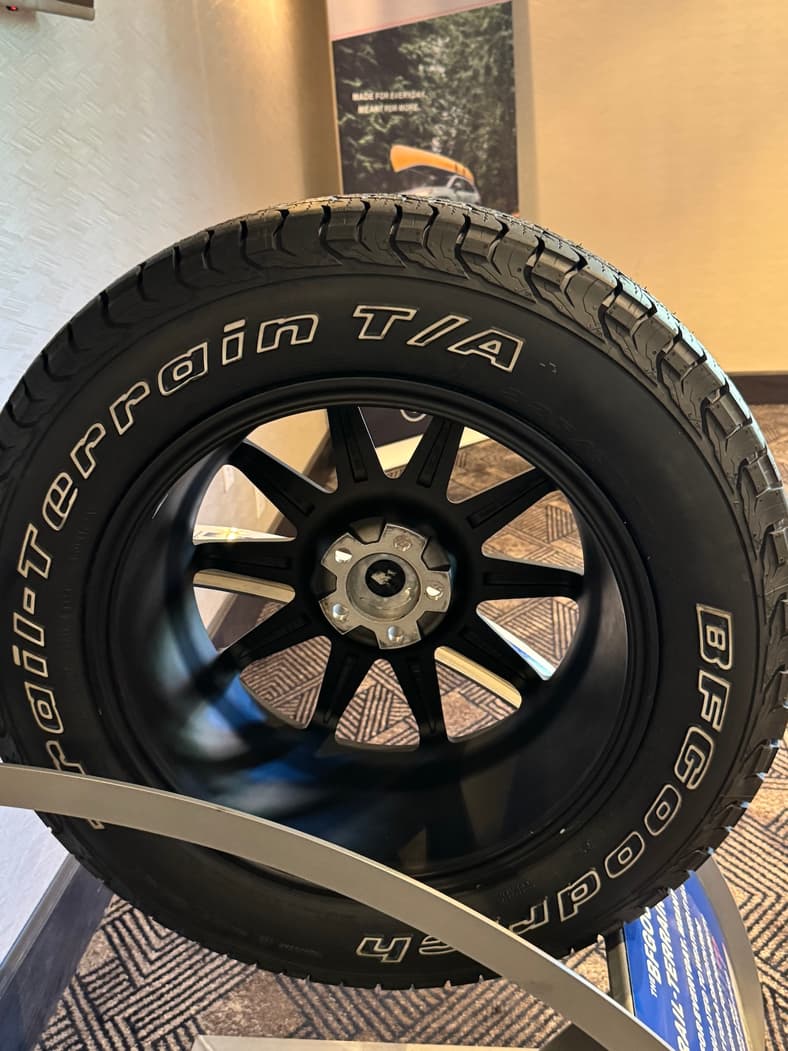
Understanding this, the industry has been focused on building a tire that can do it all: snow in winter, hot pavement in summer. BFGoodrich took it a step further, adding trail and light-off-roading to the wish-list for the Trail-Terrain T/A tire, which it debuted in its first phase in 2021.
Read: Run Flat Tires: The Most Civil Way to Have a Flat Tire
What Makes This Tire Winter-Capable?
It starts with the tread: it needs to be pliable, so it doesn’t become a hockey puck in the winter and slide on frozen pavement the way a puck does on ice. And it needs deep, wide tread to fill with snow to add traction; think of a snowball, compacting snow on snow: snow in your tread adds up to traction on snow.
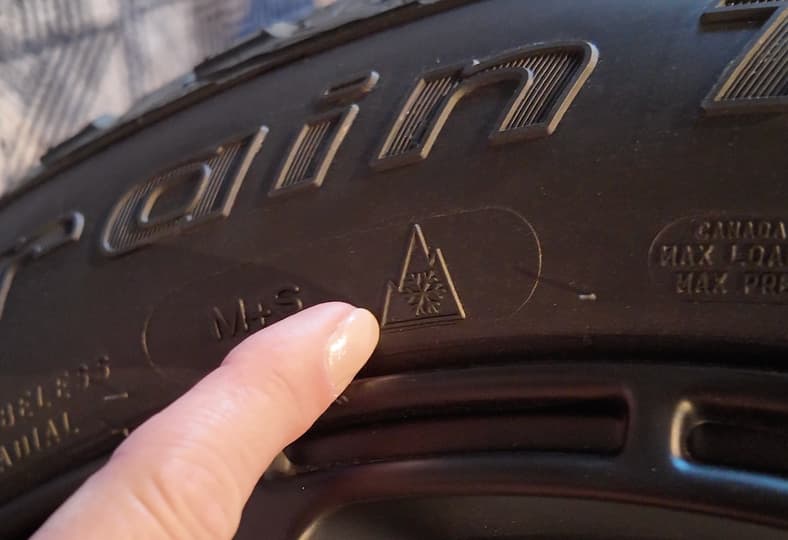
To declare a tire winter capable it has to pass certification, and once it does it can wear the three-peak mountain snowflake icon on its sidewall. Certified winter tires are a requirement in certain places, such as Quebec, and this was important to BFGoodrich for the Trail-Terrain tire, which carries the certification.
Read: The Jeep Wrangler 4xe Is an Incredible New Off-Roading Experience for Jeep Lovers and Converts Alike
Adding Off-Road Capability to All Weather Tires
All-terrain tires have become a big thing as people increasingly drive their SUVs off road. Off-roading, of course, has a unique set of requirements and tires are at the top of that list. Typically, they are thick, knobby and pliable to grab on to the mud, rocks, sand and gravel of off-road trails, some of the same characteristics as winter tires.
So it made sense that the Trail-Terrain T/A tires—as well as the new T/A+ version, which just was introduced in 2026—could fit both requirements. Where it was challenged was in noise, wear, wet stopping and fuel efficiency; winter and off-road tires are can perform poorly on all those measures.
And, they can be un-fun for daily driving: loud, uncomfortable and because they are sticky on the pavement, use more fuel—this is called increased rolling resistance; the more resistance the tire creates on the pavement the more gas it takes to get it moving.
Could a single tire do it all? That was the goal for the BFGoodrich team, said Brandon Sturgis, global product manager of BFGoodrich Tires. And the objective of the Trail-Terrain T/A+ tire.
Read: Soft-Roader, Off-Roader, Overlander, Trail Rider: How They Differ and How To Know Which Is For You
What the Trail-Terrain T/A+ Tire Is Designed to Do
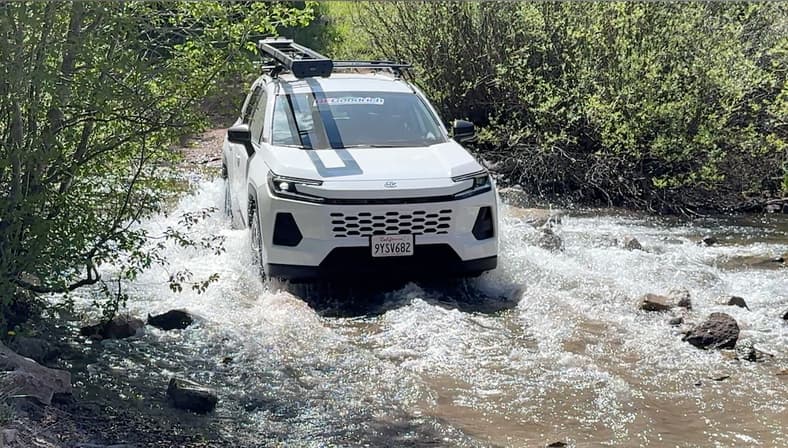
For BFGoodrich, the function is in the name of this tire—which is not always so obvious. Five years ago the company introduced the Trail-Terrain T/A tire with a unique tread design made of a pliable compound capable on both light off-road trails and in winter weather.
The big innovation in this tire was the tread design; a deep inter-directional tread allowed for good performance in the snow and in the rain. The thick tread made it good for trail riding. The sloped sidewalls gave it a quiet comfort on city streets and highways. And, these tires would go 60,000 miles; that’s about five years of driving for the average car.
What Makes This New BFGoodrich Tire Different
But the team at BFGoodrich knew they could do better. Innovations in silica compounds became the key ingredient to the new Trail-Terrain T/A+ tire, Brandon told us. This new compound gave the team the opportunity to build a tire that responds to what drivers say they want and need: Better stopping on wet pavement, better fuel economy and longer wear.
“What we wanted to improve on was the wet traction, but then we also improved the wear,” he said. “So we’re going from 60,000 miles of tire warranty with the old tire to a 65,000 mile warranty with a new tire.”
Another by-product of the new silica compound is fuel economy. The new Trail-Terrain T/A+ tire has improved rolling resistance by 5%. This might seem like a nominal amount, adding up to about 1% MPG improvement, but every bit counts, and over the rolling resistance of the tires on your car right now, it could be significant.
What These Tires Were Like on the Highway
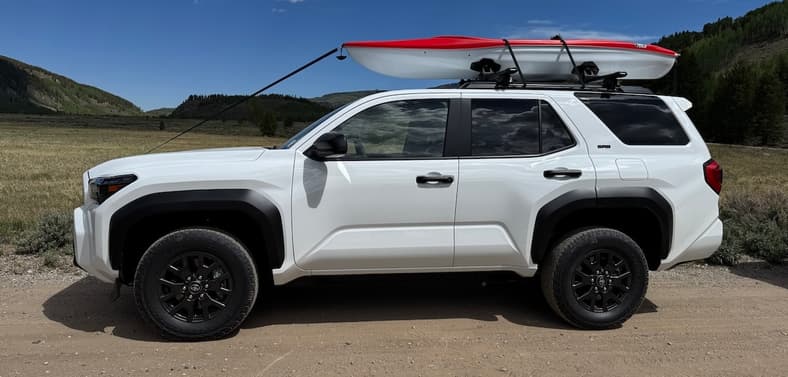
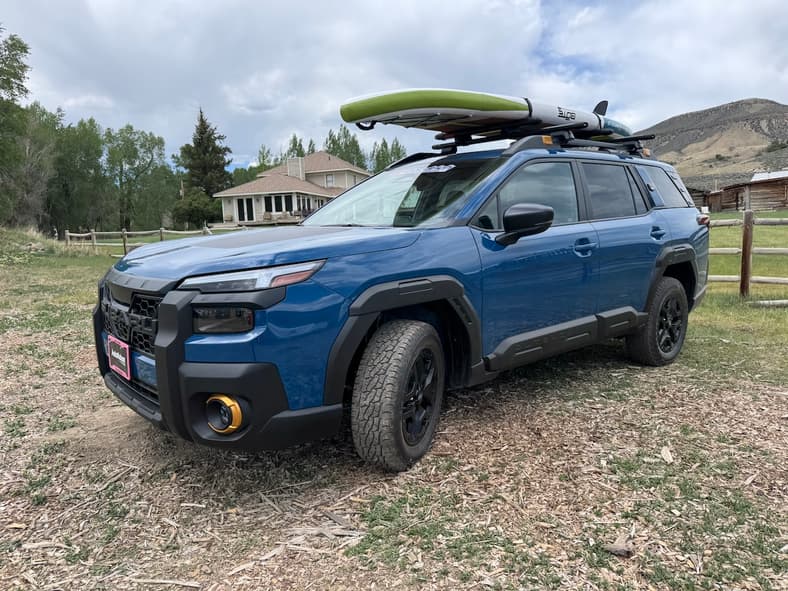
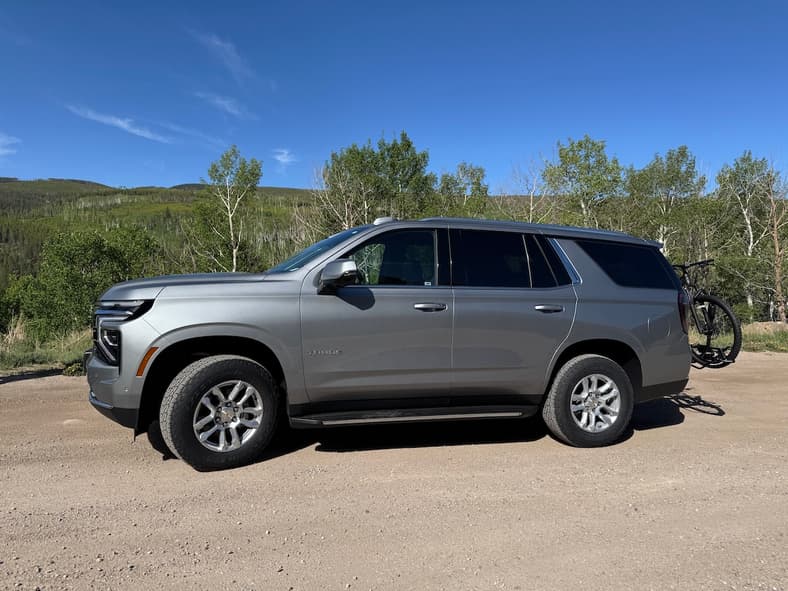
To really see how these tires perform, I drove them on five different SUVs. I was pretty stunned at how different each car sounded on the road—due to the car more than the tires—and how consistently the tires performed. The SUVs I drove were the Chevy Tahoe, Subaru Outback Wilderness, Ford Bronco Sport, Toyota RAV4 and Toyota 4Runner. All except one, the Ford Bronco Sport, had extra equipment such as bikes, kayaks and paddle boards loaded onto the roof or rack attached to the trailer hitch, so they tended to be a bit louder and a little more challenging to drive than usual. Here’s how they lined up:
- Chevy Tahoe: This full-size SUV performed as you’d expect; it’s a very commanding and in-control SUV that normally feels very confident both at high speeds and on rocky trails. Equipped with the Trail-Terrain T/A+ tires I didn’t hear any road noise or feel any slippage or vulnerability on the road or trail; the ride was quiet and easy all around.
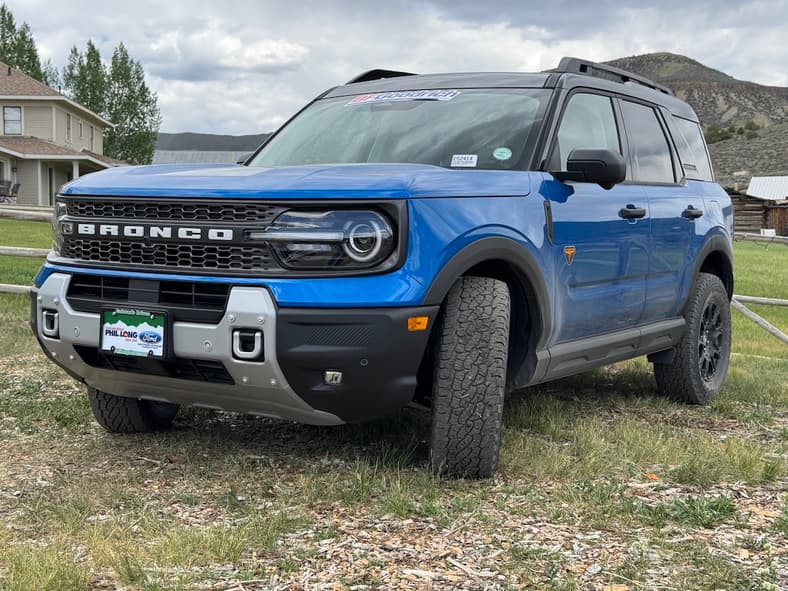
- Ford Bronco Sport Badlands Edition: This one surprised me; the ride was really comfortable both on-road and off, it was really quiet and very comfortable. The Ford Bronco Sport Badlands, which is designed for daily street driving but is capable of trail riding, felt very capable and I believe the tire had a lot to do with that.
- Toyota RAV4: This one surprised me too, but for the opposite reason: as a hybrid, this SUV is lightweight and feels less hefty on the road. It also delivers a lot of road noise, more than the others I tested. The BFGoodrich tires performed as expected and added confidence on the road; I don’t blame them for the road noise.
- Toyota 4Runner: This also delivered a lot of road noise, especially on the highway. The 4Runner is built on the same frame as the Toyota Tacoma pickup truck, so it has a more rough and rumbly feel to it; we had a kayak tied to the roof which added to the less than smooth ride. Still, the tires, which I could feel more than the other SUVs, felt secure on both the highway and the trail.
- Subaru Outback Wilderness Edition: Like the Ford Bronco Sport, this popular SUV felt solid and confident on both the highway and the trail; it was very quiet, comfortable and solidly planted on the road.
Taking these Tires on a Dirt Road… And Driving Fast
The BFGoodrich Trail-Terrain T/A+ tires are designed for fast trail riding with recommended speeds of about 35 MPH, depending, of course, on the road and conditions. Fast trail riding is important; it can often be miles from the highway the trail head and covering that distance at 10 MPH can cut into your day. Getting there at 30 or 40 MPH is a day-saver, and a lot of fun — it’s my favorite type of off-roading.
I took all the SUVs on a long Bureau of Land Management road just off the highway and was surprised. The Toyota 4Runner, probably due to the kayak on the roof, felt more vulnerable than the others; I didn’t feel comfortable at speeds more than about 20 MPH. Without the kayak I’m sure I could have gone faster, but still, it has a more rumbly, less planted feel.
The Ford Bronco Sport, however, with no gear attached, easily let me get up to 45 MPH, and if felt fun and confident at that speed; so did the Subaru Outback Wilderness. Both these SUVs are specified for light off-roading so I was’t surprised that they performed so well. But the tires were great too; I never felt like I would slide, even on the gravel; I had really good stopping power and the ride was fairly quiet (yes, even on gravel!).
The Toyota RAV4 was loud on the trail, just as it was on the highway, so that wasn’t a surprise. This little SUV is very capable with all wheel drive and a good ground clearance for trail riding, but at more than about 30 MPH it got pretty loud.
Of course, the Chevy Tahoe was right at home on the trail and at almost any speed, but that’s the nature of the Tahoe, so it wasn’t surprising, just fun.
What SUVs are Best Suited for the Trail-Terrain T/A+ Tire?
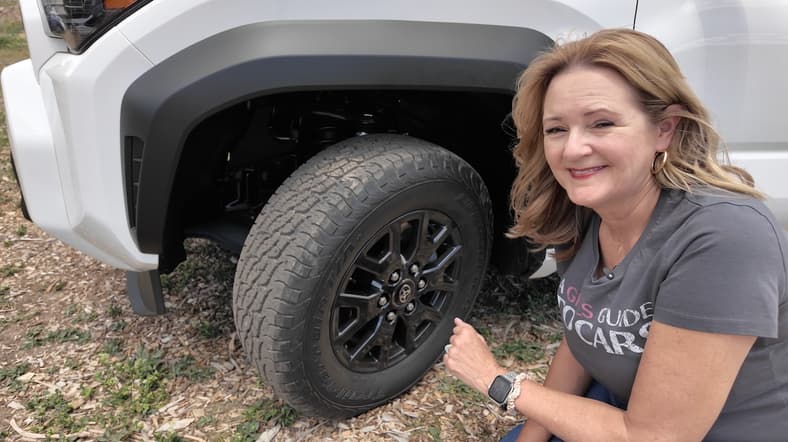
These tires are specified for any light duty SUV and come in the full range of sizes. If you wanted to put them on a non-SUV you certainly could, though you might need to make other accommodations, too.
The tires we tested are replacement tires and retail for about $225 per tire, depending on size. These tires are specified as original equipment for a number of new cars including the Kia Sorento X-Pro, Toyota Tacoma TRD Off Road, Land Rover Defender OCTA and the new Rivian R2.
It’s important to note that while the Trail-Terrain T/A+ tires are capable for off-road, they are not winter weather certified when then come as the original tires on those SUVs; this is in order to optimize fuel efficiency.
But they’ll still deliver a fun drive, capability on the trail, confidence on the road and a quiet ride. That’s a lot to ask of a tire—any tire.

More About:Car Maintenance