
The Best Test Drive Surprise of 2026? The New Nissan Leaf
A new look, more range and still sub-$30K price makes this OG EV a delightful surprise


Back in 2021 I had my first test drive of the Nissan Leaf. It wore its classic roots on its sleeve and though it had been updated in 2021, it still needed a lot of work. Once the most-sold EV in the world, the Leaf was one of the first EVs on the road; it proved we could drive electric, even without public charging and the knowledge we have now about EVs.
Since then, other car manufacturers came out with EVs that had more range, more luxuries and were better at planning routes and providing guidance to a now-more-robust list of EV chargers. Nissan held steady for so long with the Leaf, it was wonderful to see this little car get such a thorough makeover for 2026.
This story is 100% human-researched and written based on actual first-person knowledge, extensive experience and expertise on the subject of cars and trucks.
When I Say ‘Thorough Makeover,’ I Mean It

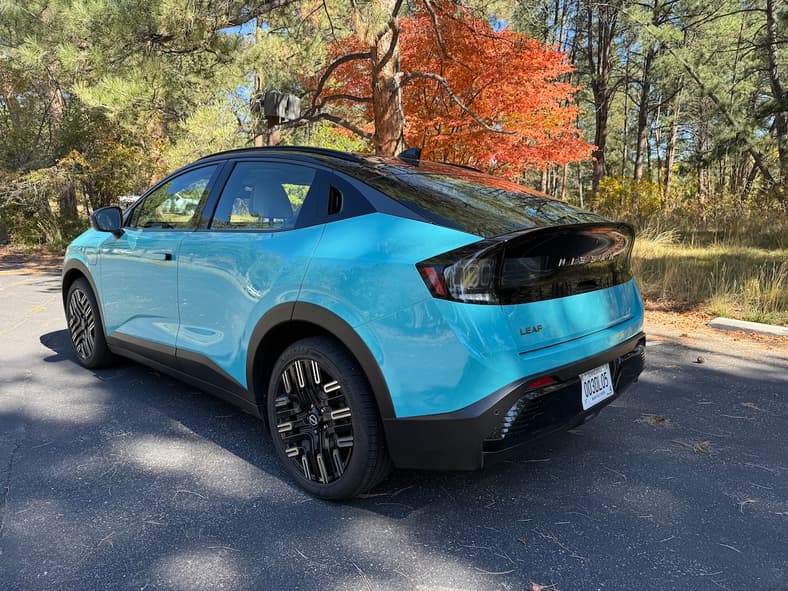
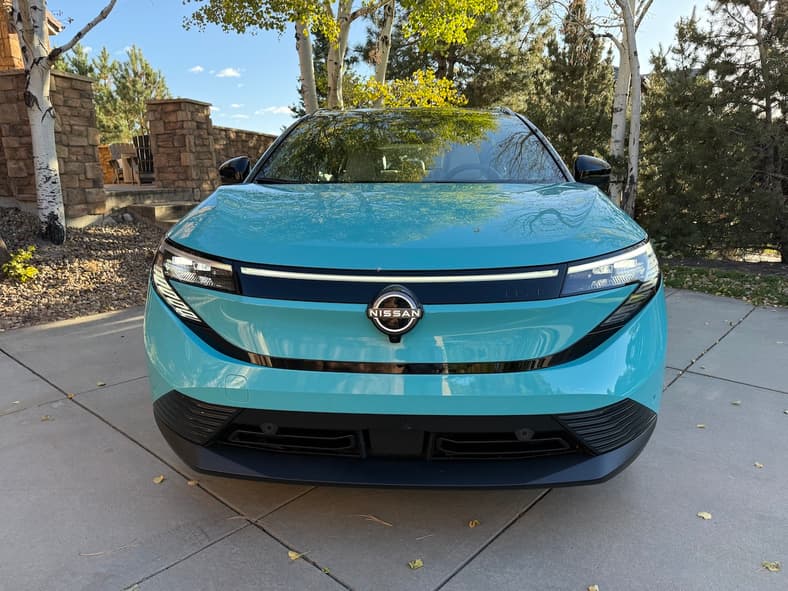
Nissan went all out with the redesign of the Leaf and it’s a very city-friendly, great-looking car. My test Leaf came in a bright, beautiful turquoise blue that made the car look cute. But in a charcoal gray or other muted color it looks more sleek.
My test car happened to be the Platinum+ trim level, the highest trim available. That means it’s the most expensive, ringing up at $41,930 including destination fees. The Platinum+ trim elevates the Leaf by adding special seating materials in the front and rear seats, heated front and rear seats, a head-up display, 19-inch alloy wheels, a cool dimming panoramic moonroof, four USB-C charge ports and a wireless charger, and a 10-speaker premium Bose sound system.
Read: Upgrades Galore Define a More Affordable and More Adorable 2026 Nissan Leaf
The Leaf’s Range and Charging Options are Awesome
Nissan’s done something remarkable by providing two charging outlets on the Leaf. This means you can charge anywhere, at stations that use the J1772 plug for level 2 charging at home charging or at many public level 2 chargers. There’s also a NACS port for Tesla-style level 3 fast chargers, including Tesla Supercharger stations. The nice thing is that you don’t need an adapter for most charging; you can use the old standard plug, which is commonplace and easy to find, for level 2 charging.
At DC fast chargers, many of which use the NACS plug, you’re good to go, though since the industry is still in change-over mode to the NACS standard, it might be a good idea to keep an adapter handy. That Nissan included both types of charge ports eliminates the need to dedicate time and energy combing through lists of charging stations to find the one compatible with your Leaf.
The Leaf’s 75 kWh battery system generates 214 HP and can achieve up to 303 miles of range on its base model, the S+. When using a DC fast charger, the Leaf can achieve a full charge in 35 minutes. All the fancy additions of the mid- and high-level trims will cost you, the SV+ gets 288 miles of range, and the Platinum+ gets 259. The reduced range in the highest trim is also due to its 19-inch alloy wheels.
The Exterior Design Shows How the Leaf has Grown Up

Nissan is showing you from the jump that the Leaf is all new. No shy, sheepish updates here. The Leaf’s got a more sophisticated look that you notice immediately. It echoes the Murano and the Ariya with LED headlights and a light bar that extends across the grille. Gone is the steeply slanted rear hatch, in favor of a more sportback look to the rear end. The proportions are good and it looks modern more than it looks futuristic. Meaning, Nissan was judicious with the redesign, not going overboard with any particular design feature.
The overall feel is cool and contemporary without being gimmicky or polarizing. The rear LED taillights are super cool with lights that echo each other. There is a spoiler and a light bar across the rear liftgate. The 19-inch wheels are distinctive and unique. I like the character they add to the Leaf.
In profile, the Leaf has some really nice sculpted panels on the doors and it doesn’t scream “I’m an EV!” It screams, “I’m a nice car!” And it’s not lying. The flush door handles that recess into the body of the car reduce drag and also keep the look sleek. My test car’s two-tone paint job was an extra $800 to add the gloss black roof.
The Interior is a Winner, Too

The first time I opened the door of the Leaf, I was dazzled by the blue-gray color of the multi-level dash. A thoughtful dashboard always looks more upscale. I could not have been happier to see ivory seats with gray trim that kept the interior light.
The Leaf echoes the look of the Nissan Murano’s interior and takes some design cues from the posh Nissan Ariya; I do like the design consistency between the models. It also has interior LED lighting and an open-design front cabin with space below the dash, a hallmark of EVs. It does not feel blank and cavernous thanks to the cupholder that extends from the center console into the area between the front seats. Each seat in the front has its own space, alleviating any feelings of being in a small car or being cramped.
Comfort Reigns Supreme in the 2026 Nissan Leaf

The seats themselves have been designed to alleviate driver fatigue—Nissan calls them Zero Gravity—and after spending a week in the Leaf I can tell you they are fabulous. I never felt tired. I don’t always get the support I’d like on the backs of my thighs and don’t always find the right setting for the lumbar support. These seats took away all my comfort concerns. It helps that the suspension is surprisingly good for an EV. EVs are heavy, and consequently we feel all the bumps in the road, sometimes to a level I think might rattle my teeth right out of my head. I did not experience that in the Leaf. I was so happy.
A massive moonroof contributes to the lightness of the cabin, and its opacity is adjusted by hitting a switch on the console above the front seats—this is a premium feature. And speaking of glass, there is one vertical piece of glass that houses the driver information system and the multimedia screen. It looks posh and modern in the Leaf’s light and multicolored surroundings. There’s more good news: Some of the climate controls are physical, well, touch-sensitive buttons below the multimedia screen. This is important because you don’t need to use the multimedia touchscreen and potentially go through menus just to adjust the temperature or turn the heated seats on and off in the Leaf.
No Wait, Tech Reigns Supreme in the 2026 Nissan Leaf

Another important tech feature of the multimedia system is the surround-view camera. It’s not only got a bird’s eye view around the car but it has what Nissan calls a 360-degree spin view. It’s exactly what it sounds like, a 3D animation shows you everything surrounding your Leaf, so you don’t run into anything or open your door into anything.
Another important tech feature in the Leaf is Nissan’s Pro Pilot system. This system incorporates adaptive cruise control and lane-keep assist to keep you on the road and away from your co-commuter’s rear bumper. There are different levels of the Pro Pilot system, my test Leaf came equipped with the basic one. It functioned perfectly.
Yet another cool tech-ish feature in the Leaf is the Bose sound system, the speaker setup in particular. You can adjust the focus of the speakers in the car. The set includes speakers in the headrests that that allow the driver to be able to take calls that only other passengers can’t hear. Meaning, if someone calls you while you’re driving you can answer and the only driver’s headrest speakers will play the call. The music will continue to play on the rest of the speakers in the car.
Diving is Fun, if Not Performance-Oriented.

The Nissan Leaf has different drive modes, including Eco, Standard, Sport, and Personal. In Eco mode it is definitely at its most sedate. While there are some EVs that focus on the breakneck speed, the Leaf falls into the category of focusing on efficiency. That’s not to say that the Leaf is incapable of zipping around, as it’s somewhat peppy in its Standard mode. You can engage Sport mode and get instant acceleration that you’ll feel in your gut. Of course, that will come at a cost, meaning you burn more of your range. The Leaf is great in Standard mode and though it’s less focused on top speeds, nothing feels sacrificed.
The Leaf also incorporates e-Pedal step, a button that determines the amount of regenerative braking. Meaning, the more aggressive the setting on e-Step, the more energy the Leaf will gather and store from the power produced by braking. Essentially, heavier regenerative braking will allow for the most power, and will engage the brakes so completely that the car will stop just by lifting your foot up from the accelerator and not touching the brake pedal. For a more engaging experience, drivers can use the paddle shifters to move through different degrees of the regeneration.
What We Love In the Nissan Leaf

Nissan worked hard to make the Leaf more efficient and to include a lot of thoughtful details, though many of these features are found on higher trim levels:
- The interior design details feel premium throughout the entire cabin
- Ease of use for EV features like drive mode switch and brake regen paddles
- Elevated exterior design
- The open cabin design
- The touch-sensitive button panel for climate controls
- The dimming moonroof
- The premium Bose sound system with headrest speakers
- Two EV charge ports for different charging systems-charge anywhere
What You Need to Know

Of course, there are details that are important for buyers to know:
- There is not an AWD option
- Many of the better features are on higher trims
- Leaf can charge at charging stations with J1772 chargers and also at Tesla charging stations
- Higher trim models have reduced driving range
What This Car Costs

The Nissan Leaf has two powertrain options: a shorter range 54 kWh battery model that will be offered in the future, and the 75kWh model we drove. Luxuries and upgrades are packaged by trim level:
- S+, priced from $29,990, includes a 12.3 multimedia touchscreen, wireless Apple CarPlay and Android Auto
- SV, priced from $34,230, adds leatherette seating, heated front seats, dual 14.3″ driver and multimedia screens, 4 USB ports, a wireless phone charger, Google Built-in with “Hey Google” and Google Maps
- Platinum+ adds heated rear seats, a dimmable panoramic sunroof, 10-speaker premium Bose sound system and a household outlet, $38,990
- Destination and delivery $1,545
The Leaf Made Me Love It
Over the course of my weeklong test, I liked the Leaf more and more. The seats never caused fatigue. Sometimes, I noticed more wind noise over the course of the week with the Leaf. But it wasn’t substantial. The interior functions so well with a place for everything. I liked pushing the limits of its electric power even though I know I’m not going to win any pink slips. The comfort, quiet, and attention to detail all made me fall in love with this great little car. The 2026 Nissan Leaf is fun, it’s sunny, and it’s my biggest pleasant surprise test drive.

More About:Car Reviews