
Can the 2026 Subaru Outback Get Any Better? We Toured and Tested It To Find Out.
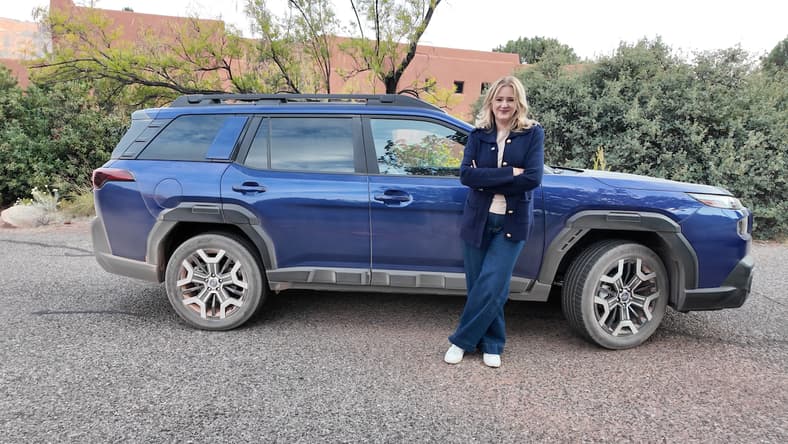
Pardon how dirty my car is in these photos. No excuses here; this test drive was a lot of fun

When Nikkie Riedel, the Subaru Outback’s Product Planning Manager, got up in front of an audience of journalists to talk about all the changes to the 2026 Subaru Outback, I thought, ‘Oh, yay! A woman will update us on what’s new!’
Then, she started to talk about the thousands of messages from customers who shared what they wanted in the new Outback and what they didn’t want Subaru to change. She discussed what Subaru owners do with their Outbacks and what they’ll never do with them. She talked about what, as a mom, she wanted to see in her Outback.
She described showing her Japanese colleagues bags full of oversized water bottles to test out the cup holders and bottle pockets, boxes of kids’ car seats to ensure they are easy to install, and Costco runs to test out loading flats of water and cases of paper towels.
I listened and I wanted to cry. An automaker didn’t just listen; they responded.
This story is 100% human-researched and written based on actual first-person knowledge, extensive experience, and expertise on the subject of cars and trucks. Additionally, I was a guest of Subaru for this test drive, but all opinions are my own.
The Completely Redesigned 2026 Subaru Outback Might Be the Most “Subaru” Subaru Ever
Redesigning a popular car comes with risk. And with any Subaru, that risk is significant. The brand’s buyers love this car for its reliability, resiliency, and comfort. For its go-anywhere-and-leave-money-in-the-budget-for-adventure attitude. For its thoughtful approach to how its buyers live their lives. For Subaru, it means being a part of it all.
So for 2026, Nikkie and her team looked deeply into ways to better serve the Outback driver. The result is a redesign that is more functional and spacious, but that maintains what Subaru fans have loved for so long. And now with more to, yes, love.
Outback Is the Modern New Face of Subaru

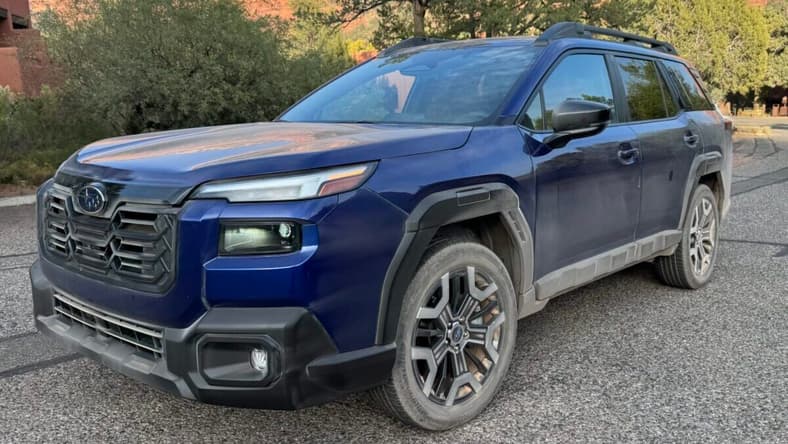
At the risk of offending fans, I might say the new look of the Subaru Outback is overdue. Like many of its competitors, it now has a new flat face, sharp, chiseled headlights, and sleek daytime running lights. It has a boxier shape with a squared-off rear end, with the nameplate and a light bar spanning the tailgate. Along its sides are more rugged cladding panels and wheels that add a modern geometric look.
The new look is boxier, thanks to its square lines and added height; it’s 1.4” taller for more headroom and additional cargo space—and to accommodate taller passengers.
What Hasn’t Changed in the 2026 Subaru Outback
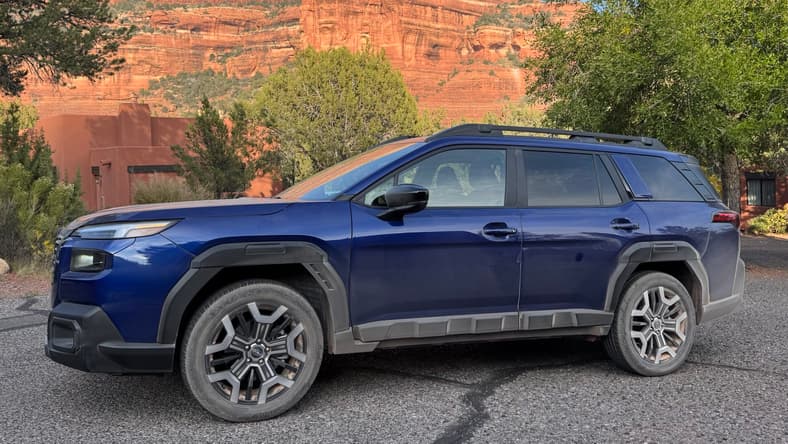
What didn’t change is the Outback’s length and ground clearance, which remain 8.7” and spell great news for off-roaders who appreciate the manageable size for traversing rocks, roots, and rutted roads.
This also means that the Outback’s ample front and rear seat space hasn’t changed either. The rear seats are fixed, so they don’t move forward or back, but even with the front seats pushed pretty far back, there’s plenty of legroom.
Also remaining largely unchanged are the engine options: Subaru kept the same 4-cylinder engines: 180 HP/178 torque option and a turbo that delivers 260 HP/277 torque, which is available in the Wilderness and XT trims. The engines were tweaked a bit for better and more efficient performance, but essentially, they are the same.
What is New for 2026? Where Do I Start???

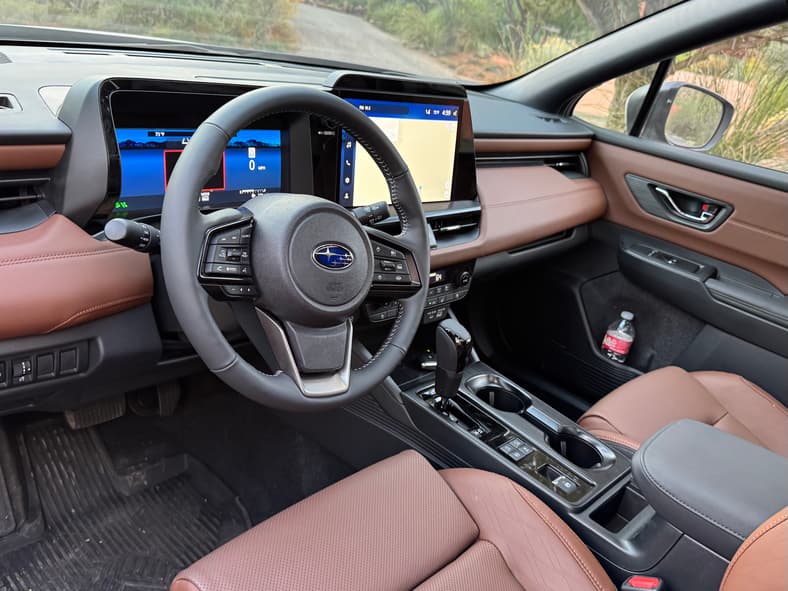
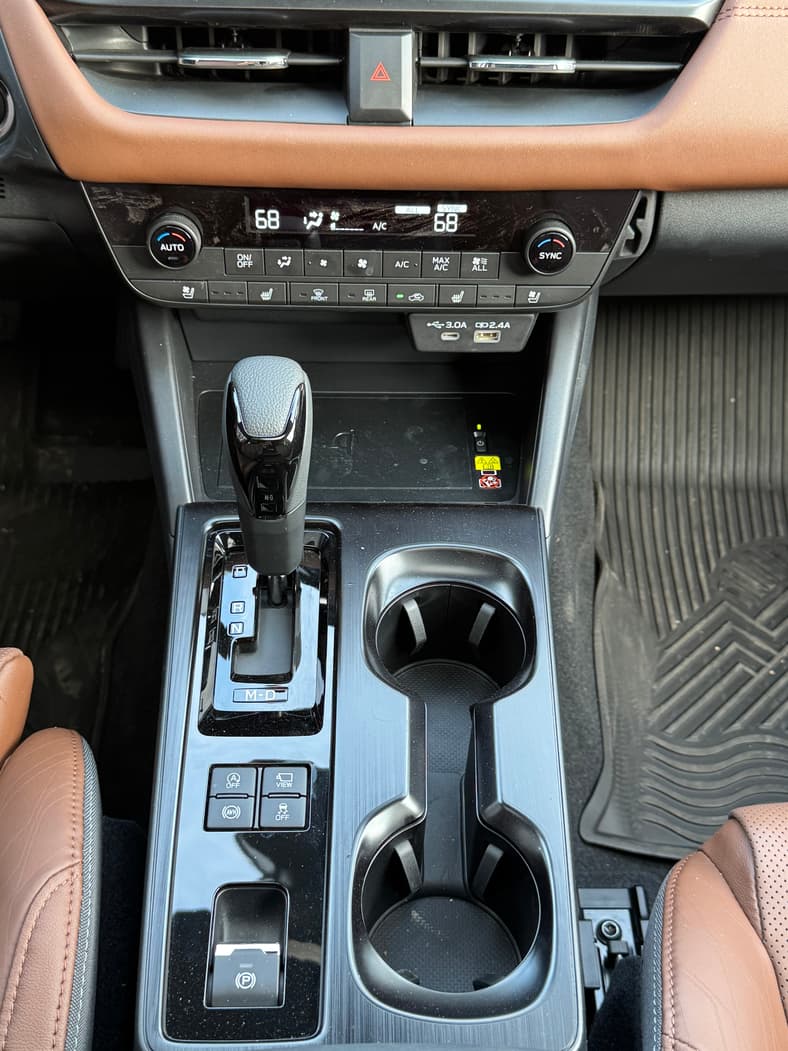
Seasoned Subaru drivers will instantly recognize that the interior of the 2026 Outback is all new. It starts with the dashboard and screens, which are now larger and easier to see. Underneath the center screen is a panel of buttons and dials for climate controls; Subaru found that people wanted physical controls for these functions and added them.
Underneath is a phone cubby with a wireless charger in upper trims, and there are lighted USB ports that sit at the edge of the space so they are easy to reach. To the right of the center console is a cord clip to weave your phone cords through so they don’t become a huge, dirty mess in the cup holders.
The center console also holds the gear shifter, new, larger cup holders that are designed to hold skinny cans and larger bottles and cups, such as a Stanley cup or a mug with a handle. There are buttons for the camera, auto hold, traction control, and auto start/stop.
The steering wheel is also all new; it holds controls for customizing the driver’s display (on the left side), radio volume, adaptive cruise settings, and on the upper trims, the heated steering wheel on button. It’s also where you’ll find X Mode to enhance the standard AWD with better traction.
The New Driver’s Display Screen Offers More Easy-to-See Functions
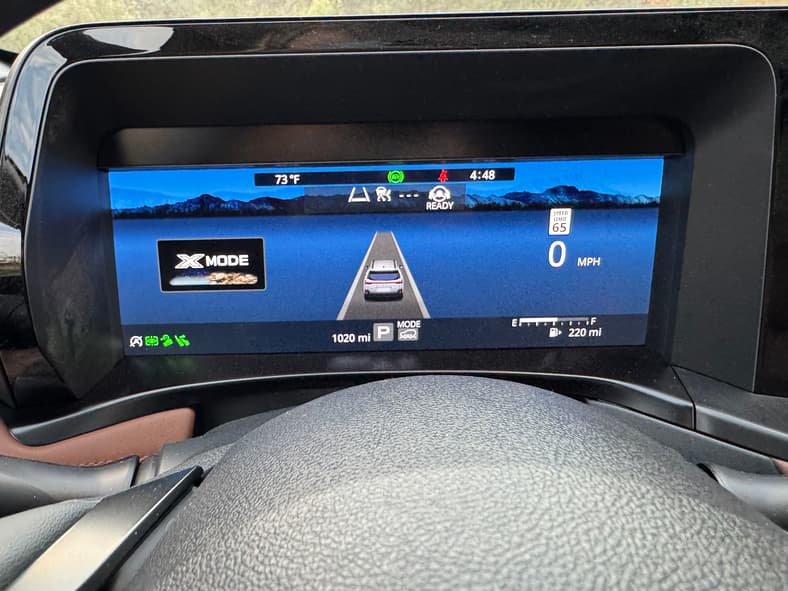
The Subaru Outback has new screens that span the dash, including a 12” driver display and a 12” multimedia touch screen. The setup is all new and standard across the entire lineup, with bright, easy-to-see graphics both on the driver’s display and on the multimedia screen.
The driver’s display offers a few more nice functions, with a few more customization options in the top XT trims. You can choose to see your speedometer and engine speed, or tap the ‘page’ button to choose a more minimalist view. Either way, you’ll see the driver assist features at work, such as lane keep assist and Eyesight driver assist, the safety suite, and the traffic around you on a very clear graphic of the Outback.
You’ll also easily see other features such as X Mode, auto hold, adaptive cruise control, and in the Touring models, hands-free driving indicated by the hands on the steering wheel; when this is activated, you’ll get a blue hands off icon that lets you know you can let go of the wheel and let the Subaru do most of the driving.
The hands-free driving system, which is available on mapped, limited-access highways, is currently in final testing and will be available to XT buyers in the coming months; the update requires a visit to the Subaru dealership but is included with the price of the car.
The Main Touchscreen Has Been Completely Redesigned—Plus “Hey Subaru” Voice Assistance
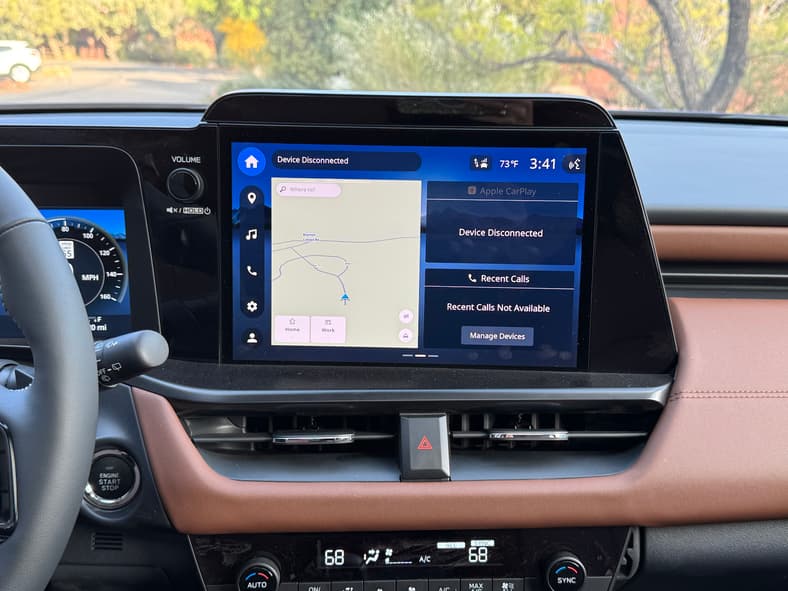
I was a fan of the screen in the last generation of the Subaru Outback for its simple design and easy-to-navigate setup. The new screen puts the same idea into practice. The graphics are clean and clear; a navigation bar along the left side of the screen offers quick access to basic functions, and a “home” icon at the top gives quick access to the main screen.
The new screen is standard across the entire lineup, and most of the functions are the usual: Phone, music, navigation, and wireless Apple CarPlay/Android Auto. All but the Premium model include navigation as a standard feature, so buyers who opt out or don’t get that feature will want to rely on phone-based maps for navigation. The nice thing is that with Apple Maps, turn-by-turn directions will pop up in the driver’s display.
Probably my favorite new feature, however, is the very nice and responsive “hey Subaru” voice assistant. It has to be toggled on (settings-> swipe right to voice assistance-> toggle on wake word), but once it is, it’s responsive and understands that I needed my Starbucks visit. The system delivered navigation directions quickly. It’ll also set the radio station, cabin temperature, and a few other things.
Now, Easier Installation of Child Passenger Car Seats
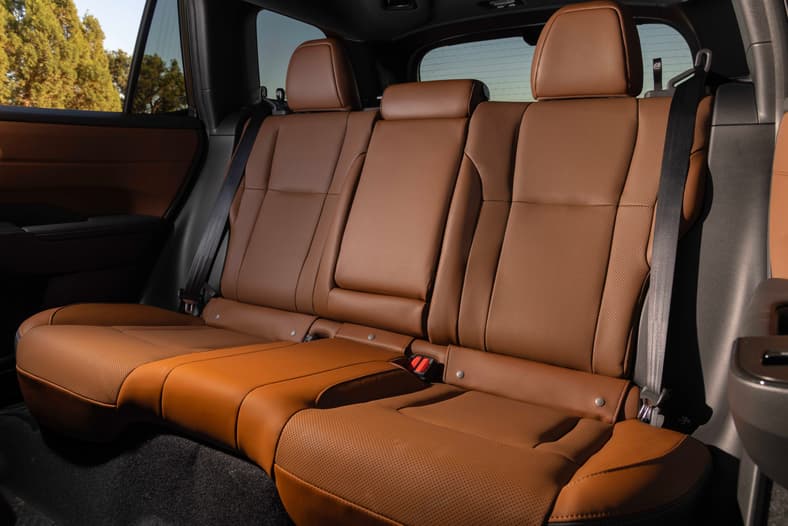
I love that the rear seat passenger space is unchanged, as is the number of LATCH systems for kids’ car seats: There are two full sets of dual lower anchors and a single upper tether in the outboard seats, and the middle seat has a single lower anchor and upper tether. Paired with the ample leg room, you can install two seats easily and possibly a 3rd seat in the middle as long as they are all slender enough to fit.
I measured for rear-facing child car seats and found that behind the driver’s seat set for me (I’m 5’8”), there was 34” from the back of the front seat to the front of the rear seat. That’s enough space to accommodate a fairly reclined rear-facing child car seat.
For those installing seats or installing an adult next to a kid’s car seat, one last detail is brilliant: the seat belt receptacles are now fixed rather than tethered, meaning they won’t sink into the seat cushion and should be easy to locate when you’re stabbing around under the edge of a car seat looking for it.
Maybe My Favorite Mom-Inspired Detail? The New Cargo Cover
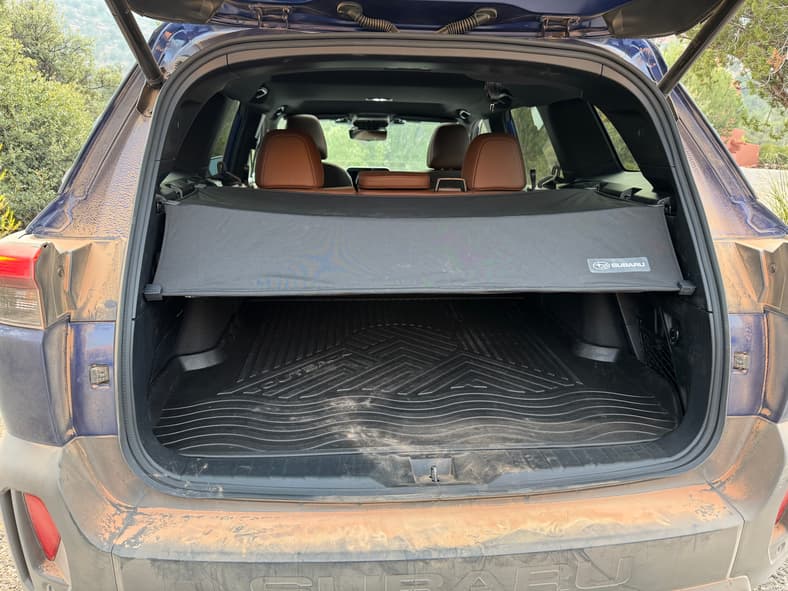
This one is so brilliant and so simple: Rather than an overthought, difficult-to-manage hard-sided, retractable, or unwieldy cargo cover, Subaru installed hooks on the walls of the cargo space and includes a cloth cargo cover that attaches to them; this is standard in all models.
The clip and hook system allows the cargo cover to be configured several different ways: As a cargo cover; as a cargo divider; as a cargo hammock that lets you stow things in it and even zipper the hammock closed; and as a cargo area mat that can cover the rear bumper so you don’t get your legs dirty as you sit in the tail gate and enjoy the sunset after a muddy drive.
You can stow dirty shoes and sports gear in the hammock, and when you get home, unclip the cover and take the gear and the cover right into the laundry and wash them. It’s machine washable!
Clever Details Set the Subaru Outback Apart From Other SUVs

These last few details are truly clever and thoughtful, and this is where Subaru demonstrates how truly in sync with its customers it is. First, the opening to the cargo space is wider, and with the added height, there is an additional 2 cubic feet of cargo space. The new wider opening will make loading and unloading easier.
Then, the ladder-style roof rails are designed to both look and function better. They are designed for carabiners and cross bars, and markings have been added to the rails to make installation easier by counting the markings rather than guessing, something I wish I’d had on my SUVs back in the day.
The roof rails are also stronger. The roof itself can hold up to 800 lbs, and the rails can hold up to 220 lbs. This will allow for heavy roof boxes or a roof-top tent, and the rails can support an awning or a hammock.
And then, if you’re unsure how much cargo you can carry, little easter eggs on the rear of the lift gate will show you: One large dog behind the rear seats (34.6 cubic feet of cargo space) or two with the rear seats folded (80.5 with the seats down). How thoughtful!
Driving the 2026 Subaru Outback
Subaru tweaked the engines for the 2026 model, but the differences are subtle, and there were no surprises on the road. I spent time driving both the 180 HP model and the 260 HP turbo on and off road and was pleasantly surprised at the power and confidence that the Premium model delivered. It handled the gravel road, rutted and rocky trails just fine, even with four passengers on board (and not using X Mode), and while it could have used a bit more power on the highway, it was fine.
The turbo model was a bit more fun and confident on both the highway and the off-road trail, as expected. If I were filling this car with rear seat passengers and lots of camping gear, I’d go for the turbo. If I never intended to do more than snow and mud-season driving, and with limited gear and people, the 180 HP model would be just fine.
How Pricing For the 2026 Subaru Outback Shapes Up
Subaru has simplified the lineup somewhat, eliminating the base model, so now the Premium model is the entry level. After driving it, I found it to be fine, though not as much fun as the more powerful turbo model. Still, Subaru managed to add a lot of nice features on the Premium model to make it feel truly premium but still value-priced. Here’s how the trims and features line up:
- Premium starts at $34,995 includes the 4-cylinder 180 HP engine, AWD, leatherette seating, woven surface coverings, 12” driver display, 12” multimedia touch screen, power lift gate, 18” wheels, LED headlights, ladder-style roof rails, heated front seats, power driver’s seat, keyless access and push button starter, adaptive cruise control, Eyesight driver assist system, multi-function cargo cover, moonroof option and 12” multimedia system, illuminated USB ports, wireless Apple CarPlay and Android Auto, a spare tire and has tow capacity of 2,700 lbs
- Limited starts at $41,715 and adds leather upholstery, leatherette surfaces, front memory seats, Harman Kardon premium audio, navigation, heated rear outboard seats, power front passenger’s seat, wireless phone charger, and a power moonroof
- Touring starts at $45,395 and adds vented front seats, Nappa leather seats, a 360-degree camera, a digital rear view mirror, and hands-free highway driving
- Wilderness starts at $44,995 and adds the larger 260 HP engine, 9.5” round clearance, 17” wheels, all-terrain tires, leatherette seating, tow capacity of 3,500 lbs., Wilderness yellow accents, and embossed interior badges
- Limited XT starts at $44,365 and adds the larger 260 HP engine and all the features on the Limited model
- Touring XT starts at $47,995 and adds the larger engine and all the features on the Touring model
- The Wilderness model will be introduced following the rollout of the other models
Why Does Subaru Inspire, or Earn, the Word Love?

Until now, Subaru’s hallmarks have been reliability and capability: a car that can rise to any adventure and do it confidently and trustily.
But the 2026 model takes it further, not just by asking its customers what matters to them, but by understanding and delivering those things in all the smart little ways. If those things don’t matter to you, you won’t notice them; the new exterior and cabin will just feel smart and modern.
But when you get in the car to take your kids to the bus stop and bring your ceramic coffee mug, because you’re just going to the corner, it’ll fit in the cup holder. Your kids will have heated seats. You can easily roll over the snow mounds at the end of the driveway. At the end of the day, your kids can put their muddy boots into the cargo hammock, and the whole thing can be dumped in the laundry. It’s those little things that inspire the word love. And mean it.

More About:Car Reviews SUVs