
Power Rear Seats In SUVs Can Be Dangerous, a Hyundai Palisade Recall Shows
Sadly, a tragedy led to the recall, but this is what you need to know about power seats in a family car

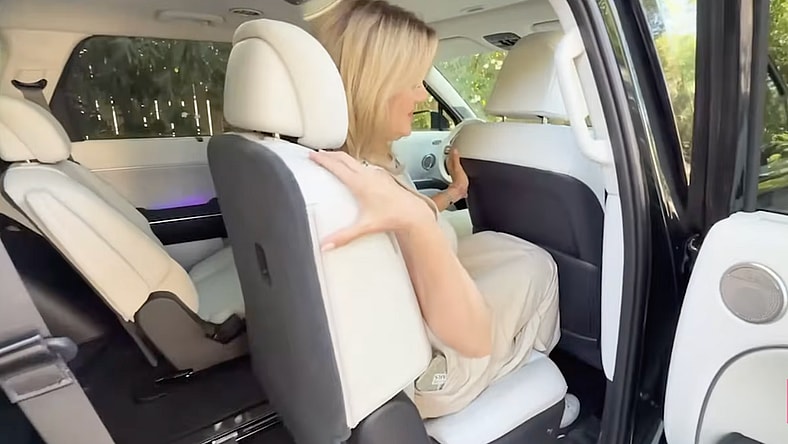
They’re pitched as a luxury and if your hands are full, they certainly are convenient: Power seats that move forward and back with the push of a button. 3rd row seats that fold up or down, center seats that slide and tilt for 3rd row access. Seats that can be controlled through the front touch screen, so you can move those seats without getting out of the car.
But there’s a catch when… there’s no catch. And that’s at the center of a recall of the Hyundai Palisade with powered center and 3rd row seats, which are found in the Calligraphy and Limited models.
This story is 100% human-researched and written based on actual first-person knowledge, extensive experience and expertise on the subject of cars and trucks.
I Knew This Would Happen
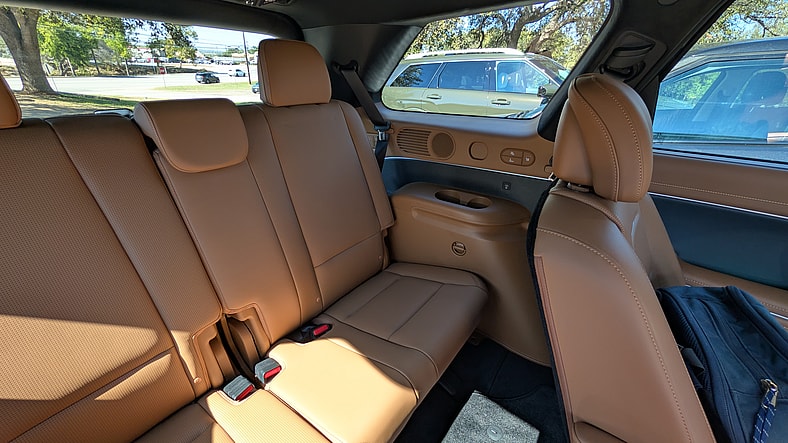
Hyundai introduced these seats several years ago as part of the Calligraphy and Limited. As a company that’s missioned with delivering more features and luxuries for the price, conveniences like this can make a car buyer feel really pampered.
As a car reviewer, I like to get into each new car and push all the buttons and see what they do—I believe this is good advice for everyone, especially if you’re going to buy the car. Know how everything functions and what all the buttons and dials do.
So when Hyundai rolled out the new Santa Fe, a redesigned boxy 3-row mid-size SUV, I had to push all the buttons. And I was shocked to find that when I sat in the center row and pushed the power button, the seat moved forward. And kept moving, pushing me into the back of the seat in front of me. I was pretty shocked, and a bit freaked out; it’s unnerving to have a car’s seat push you forward without stopping.
To be honest, I’m not sure if the seat itself stopped or I stopped it; but either way, it was way too assertive for my taste. From there on, I’ve tested out every center row power seat I’ve come across and while I don’t remember all of them, I do remember the ones that powered forward without stopping, or without stopping soon enough to make me comfortable.
See the full Hyundai Palisade recall announcement here.
A Tragedy, and a Recall
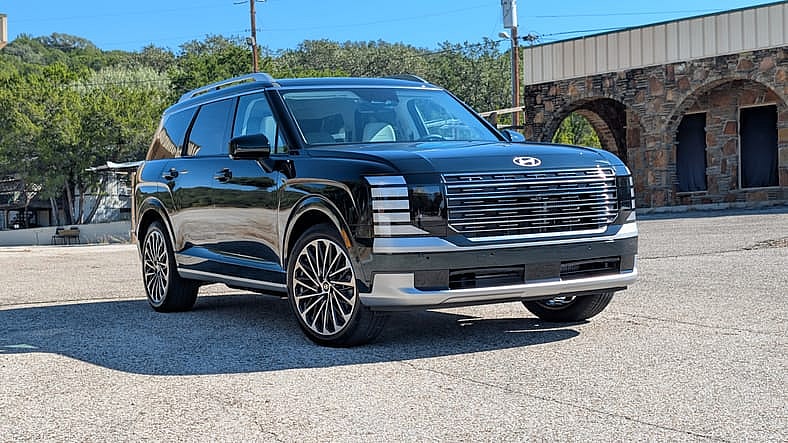
Sadly, the event that caused Hyundai to stop the sale of Palisade models with powered rear seats was the death of a two-year old girl in Ohio. Details on what happened haven’t been released, and the recall mentions the power 3rd row seats as well as the power slide-and-tilt center row seats.
It’s a huge tragedy when a child dies; when a child is a victim of something preventable, it’s even worse. My heart breaks for this family. At least Hyundai acted quickly afterward, stopping the sale of these models and issuing a recall rather than fighting it, as can happen with car companies even when they are at fault. The fix should include an over-the-air software update, and owners who bring their cars in will be given a loan car to drive in the interim.
Watch: Our review and first drive of the 2026 Hyundai Palisade
Do Other 3-Row SUVs Have This Issue?
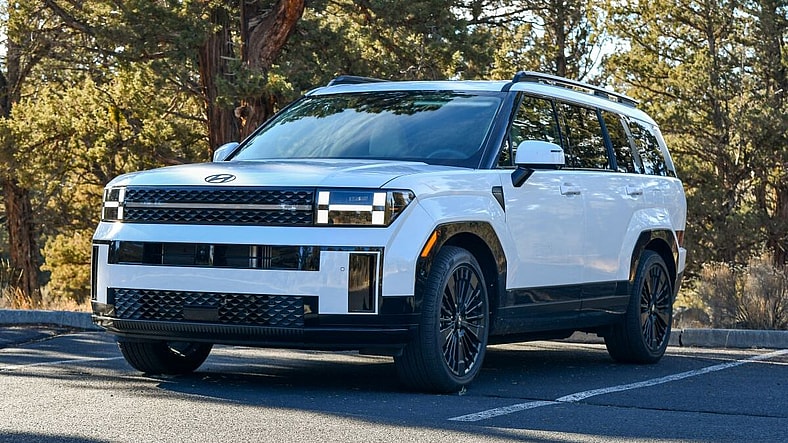
When a car company invests in an expensive or innovative tech feature, it’s not uncommon for them to add those features to other models. So it’s not surprising that all of Hyundai’s 3-row SUVs have powered second and 3rd row seats in their top-of-the-line models, as do sister-company Kia’s. I’ve tried the center seat power test and all of them powered forward even when I was sitting in the seat and clearly, they should not have.
Most power center row seats don’t power forward with weight in the seat, and while I’ve tried a lot of them out, I don’t think I’ve tried them all. I do know that GM’s 3-row SUVs with slide and tilt seats—the Chevy Traverse, Buick Enclave and GMC Acadia—have a default mechanical release when there’s weight in the seat; they release and will slide, but the power function won’t work. Other SUVs allow you to disable this function in the vehicle settings, the Jeep Grand Wagoneer, for one.
Read: The Redesigned 2026 Hyundai Palisade Adds Chic Style, But There’s a Caveat To Consider
What Hyundai Will Do To Remedy The Issue
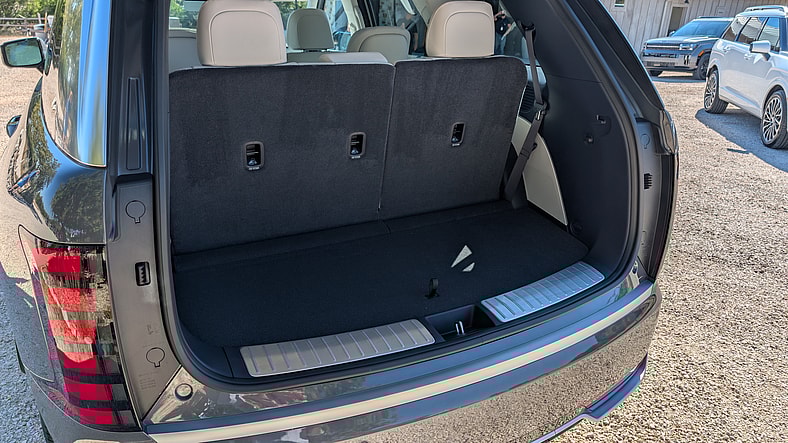
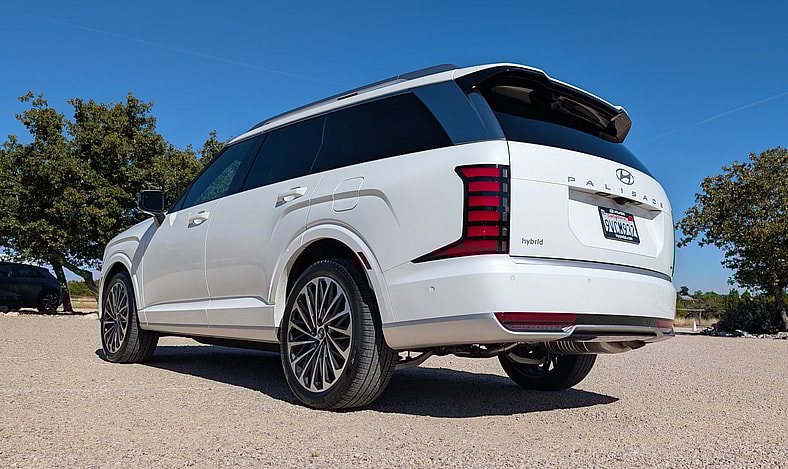
Hyundai notified the National Highway Traffic Safety Administration that it will issue a recall, and immediately stopped the sale of the Palisade Calligraphy and Limited models until the issue is fixed. The company will also issue an over-the-air software update in the next few weeks that should prevent the seats from powering forward with any detected weight in the seat.
Later, the company will make a physical repair to the seats to prevent injury.
Owners who need to leave their car at a Hyundai dealer for repair will be given a loaner to use while the repair is being made. The company is advising that owners use caution when using the rear seats and rear seat controls.
How To Protect Your Family From This Danger
There’s only one way to know for sure that the car you’re putting your family in is safe from this issue. And that’s to try it out when you’re test-driving the car. Here’s what you should do:
With the car on, find all the buttons and push them to see how the seats operate. There may be multiple buttons: On the seat bottom, on the seat shoulder, on the door, on the wall next to or behind the seat, and on the back of the seat for rear seat passengers to power the seat forward. Push each button and notice how it operates the seat.
Then, sit in the seat and push all the buttons. Don’t buckle the seatbelt; this is a common defeat of the function. You’ll immediately know if the seat operates at all with weight in the seat or not. If it does, note if or when it reaches its ‘pinch point,’ when it realizes its weight restriction and retracts from the function.
Test Out the 3rd Row, Too
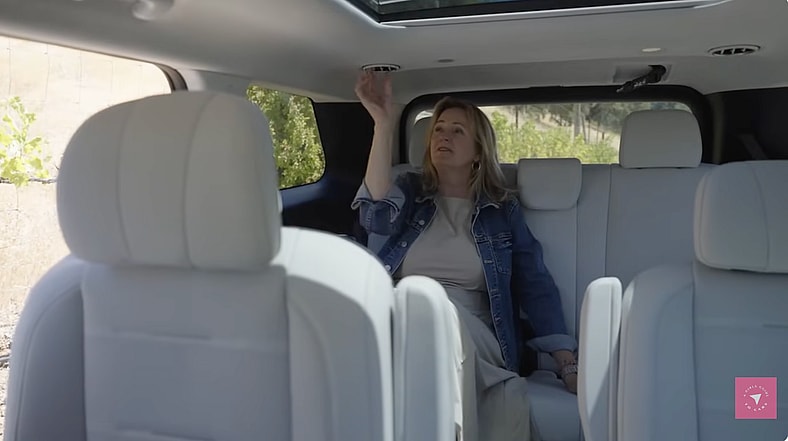
Also, sit in the 3rd row and push all the buttons; will the cargo area buttons that control the 3rd row seats operate with someone sitting in the seat? They shouldn’t, but you need to know they won’t. Will the second row seats stop moving backward when the seats sense your knees obstructing the seat’s path? Not always, I’ve often found.
Then, put a heavy bag, a child booster seat, or another item that weighs less than 20 lbs. in each seat and repeat each test. The seats should ideally detect any weight at all, such as a wiggly toddler or baby who may be on the seat for a diaper change and exploring the buttons.
Last, if you find a seat powering forward or folding and someone or something is in danger, push the button again. A second push will usually reverse the process and hopefully avoid injury. I regularly sit in these seats to see if they are a danger, and I note this in my reviews, and I always find that I can stop the power process by pushing the button a second time. And I hope, and now hope even more, that this will soon be a thing of the past.

More About:Car Safety