
The Secret to Michelin Tires That Last Longer and Go Further: The Track at Petit Le Mans
The performance track might be the best research and development lab, and that's exactly where Michelin hones its latest offerings.


I spend a lot of time thinking about what makes a car great. I mean, doesn’t everyone?
So it was really fun to spend the day trackside at Michelin Raceway Road Atlanta to watch the incredible Petit Le Mans race, the American version of the famed Le Mans endurance race. Though, muy focus was less on the horsepower and more on the rubber on the road.
That’s because Michelin chose this race to announce the company’s renewed 10-year partnership with the International Motor Sports Association (IMSA) and unveil the next generation of Pilot Sport Endurance tires, a racing tire that will make its debut in January at the 2026 Rolex 24 Hours of Daytona.
This story is 100% human-researched and written based on actual first-person knowledge, extensive experience, and expertise on the subject of cars and trucks. Additionally, I was Michelin’s guest at the Petit Le Man, but opinions, research and expertise are my own.
Endurance Racing is the Ultimate Michelin Tires R&D Lab

The real jaw-dropper, though, was the big picture: how the punishing world of endurance racing is used daily as a high-speed laboratory to develop reliable and sustainable tires for use on our morning commutes.
If you’re one of those who see tires as just those black, round things that your mechanic sometimes bugs you to replace, spending the day watching a race team evaluate its performance based on the performance of their tires will change your mind. And, it’ll make you a smarter, and greener, consumer.
Read: The Truth About Worn Tires: This is What You Need to Know
Tires and … Sustainability? Yes, It’s a Thing

If I had to explain tires to my best friend (who thinks an oil change is optional), I would focus on two key things: tire compound and longevity.
The most important part of your tire isn’t the tread pattern, it’s the compound: the recipe that makes up your tire. Yes, tires are rubber, but not all that rubber is made equally. Michelin is constantly tweaking this recipe to make tires that handle better, or are quieter on the highway, or last longer, or perform better off road, or, in the case of these high-performance race cars, handle the utmost abuse at high speed for hours on end.
Read: Never Buy Tires Again? Introducing Michelin’s Sustainable Tire Concept
A Recipe for a “Greener” Tire: Renewable Materials

Michelin is pushing for sustainability by using renewable materials. The current racing tires used in the Michelin Endurance Series (the cars racing at Road Atlanta for Petit Le Mans) are made up of 31% sustainable raw materials. The new tire, revealed this weekend, will be made with an impressive 50% sustainable materials, with a goal of 100% sustainable materials by 2050.
The primary ingredients in a tire are elastomers (natural rubber), plasticizers (bio-sourced resin oils), fillers (recovered carbon black from old tires), and reinforcing materials (recycled steel). These are the same ingredients used in Michelin tires for passenger cars, so once a 50% renewable race tire is developed, Michelin can easily adapt the same ingredients, in different proportions, into a 50% renewable street tire, proving that what’s good for the planet can also be good for your car.
Read: Are All-Season and All-Weather Tires the Same? Turns Out, No. How to Tell What You Need, By Car Type and Conditions
Michelin Tires That Last Longer and Go Further? That’s the Goal

Another important component of a tire is its longevity. As consumers, we love longevity because we don’t have to buy tires as often, but longevity is also important in Michelin’s pursuit of sustainability.
Michelin uses what they call Life Cycle Assessment as a measure of the sustainability of their tires, which tracks the total impact of a tire, from its production to its grave. In a race tire, Michelin has found that the most environmentally taxing portion of the process is the raw materials, since racing tires are not used for very long (just a few hours, compared to the months or years that you and I may keep a set of tires). For consumer tires, though, the usage of the tire is the most environmentally important stage of the process.
How Does Michelin Measure How Long Your Tires Will Last?

For passenger car tires it’s also important for Michelin to focus on that lifespan. A long-lasting, quality tire is by definition a more sustainable tire. Over the last three years, Michelin has focused on this longevity, reducing the tire requirements for their endurance race cars by a third.
A continued focus on better warm-up, longevity, and consistency in the next generation tire has Michelin expecting an additional 30-50% reduction in tire usage by 2027. This focus on longevity in race tires is why Michelin’s most popular consumer tires, like the Defender and CrossClimate series, already last approximately 25% longer than the competition. Looking at it that way, you can see Michelin tires as an investment rather than an expense.
From the Track to Your Commute
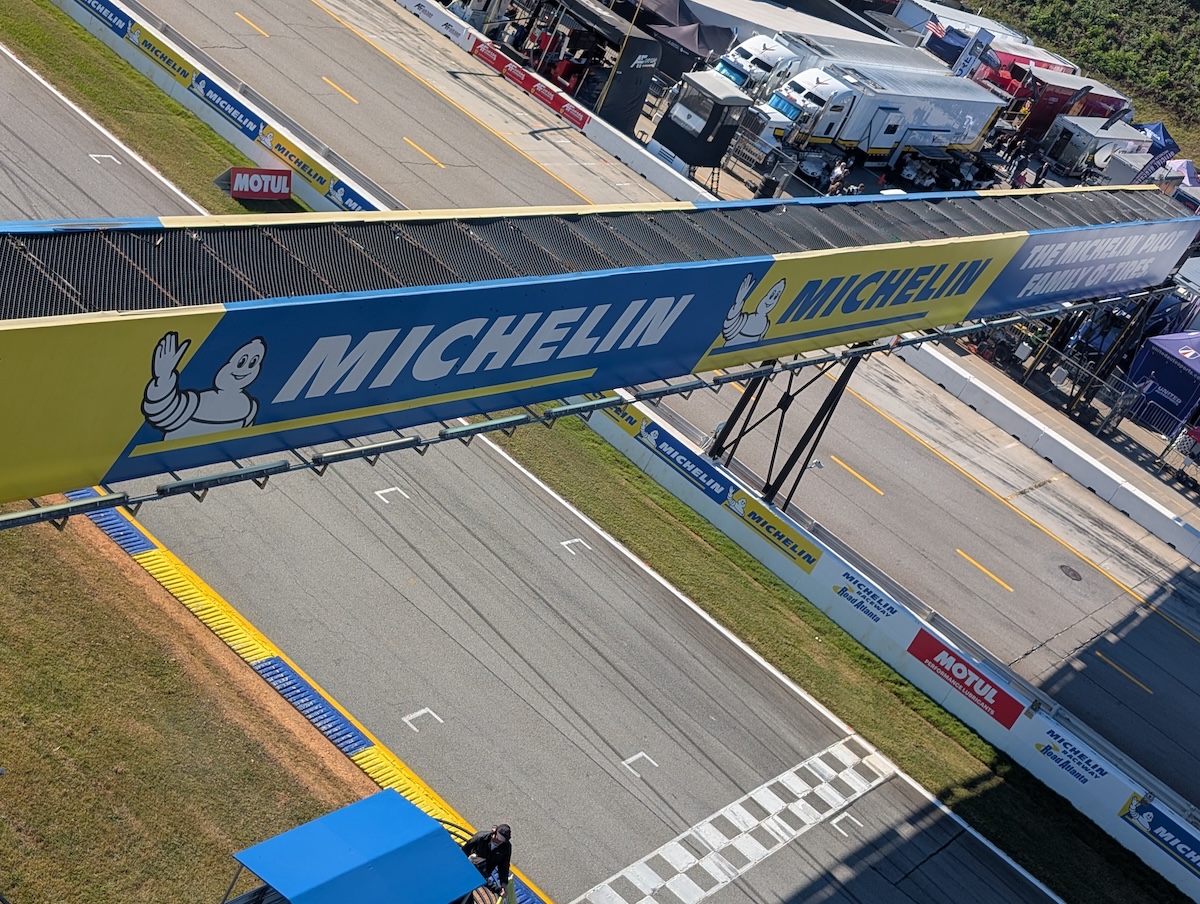
You might be wondering, “But what does a 10-hour endurance race have to do with my drive to work?” Well…just about everything.
Michelin isn’t just sponsoring a race. Through their sponsorship efforts, Michelin has access to a high-speed laboratory, and this has been the company’s process since they first got their start making bike tires.
In the IMSA racing series, Michelin has direct access to work with 18 different car makers, including Chevrolet and Cadillac. These manufacturers are putting the tires to the ultimate test for hours on end, gathering intense metrics on how the tires are handling high forces and speeds. This is testing that your average driver could never replicate, even on a closed test course.
All That Data Helps Design Your Next Set of Michelin Tires

The data Michelin receives, even just from a single endurance race like Petit Le Mans, is a gold mine. Michelin engineers can study how the tire handles stress, how the compound wears over time, where the performance bottlenecks are, and so much more.
Compounded over the course of an entire season, with five races, almost 60 hours of green-flag racing and countless hours of practice and qualifying sessions, the data is endless. Studying this data tells engineers which compounds offer better longevity, how to improve consistency so that your street tire feels the same from mile one to mile 50,000, and how to improve performance for better fuel economy.
Other Tests on Michelin Tires Confirms Lessons From the Track

More testing occurs off-track, as well. In recent years, Michelin has implemented new simulation testing, utilizing complex computer simulations to provide in-depth data analysis prior to the racing season even starting, without any cars ever hitting the road.
Michelin then takes the successful compounds from the track and scales up production for consumer tires. The same principles that allow a racing team to use fewer tires, or that allow a racing car to go faster, give you a tire with better fuel economy and better longevity. The lessons learned by Michelin engineers during racing help them create a more efficient driver. A high-quality tire backed by racing research maintains its performance for a longer period, meaning you’re using less fuel and experiencing a safer, more predictable tire for a longer life. It’s the ultimate consumer benefit distilled from the toughest conditions in motorsport.
Spend Less, Get More From Your Next Set of Tires

Michelin’s commitment to innovation is multifaceted. From renewable materials to sustainable testing procedures utilizing simulation testing, they haven’t left a stone unturned. Even IMSA, the motorsports sanctioning body that oversees this endurance racing series, has taken steps towards a more sustainable racing future, including partnering with the EPA, and reducing the number of trucks on the road by moving television centers offsite. A
A day at Petit Le Mans is a reminder that the tires on my little Mazda 3 are a highly engineered, sophisticated product. While my car may look vastly different from the purpose-built, grand touring prototype cars, also called GTPs, roaring around the race track, the extreme demands these cars put on their tires provide me with a safe commute every day. Isn’t sustainability and high performance a nice bonus?

More About:Car Maintenance