


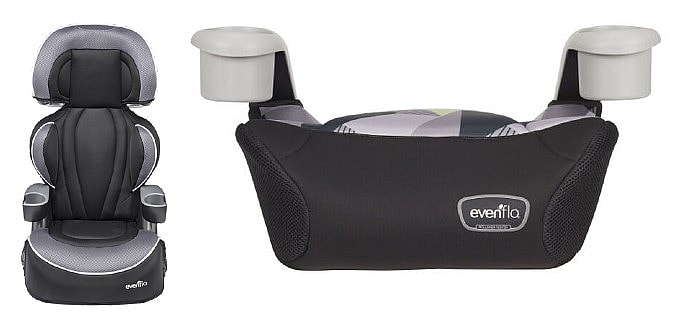
Booster seats are an important upgrade for growing kids.
Not only do they signal that your little one is gaining more autonomy, but it also provides an important change for the kids growing self-consciousness about their car seats. And, they make it easy for a kid to hop in and buckle up on his own without the cumbersome 5 point harness of a traditional car seat.
But a recent Congressional probe has raised some serious concerns about just how safe many booster seats actually are in the event of a crash. Here’s what you need to know and how to make sure your children are as safe as they can be.
Related: A Girl’s Guide to Car Safety
A Refresher on the Rules
Booster seats are generally the final step before your child graduates to a regular ol’ seatbelt. Booster seats are designed to manipulate seat belt position so that your child is well-protected and comfortable.
Different states have different guidelines that help you evaluate when your child is ready to graduate to a booster seat. You can check out your state’s rules at the AAA website. While rules vary by state, some of the basics are:
- Children younger than 8 years old must use a booster seat
- Children shorter than 57 inches must use a booster seat
- Children must use booster seats until they weigh 60 lbs.
Because of the differing state rules, make sure you’ve done your research before purchasing a seat.
Related: A 7 Step Guide of What to Do (and Not to Do) After an Accident


Photo: Asim Z. Kodappana on Unsplash
What’s Going Wrong
Basically, seven brands of booster seats have been accused of putting kids in danger due to “misleading statements… about their side-impact testing protocols,” a House Oversight Committee report reads.
Booster seats must undergo a series of crash tests to ensure that your child will be protected in the event of an accident. But footage obtained by ProPublica show disturbing side-impact crash tests dummies are thrown around like rag dolls. Despite this, those questionable booster seats have still been given a passing safety grade and marketed as “side-impact tested.”
While side-impact crashes are rarer than head-on collisions, they are often more dangerous. ProPublica’s footage found that many children were thrown out of their shoulder belts in a side-impact crash, which puts them at risk for severe, life-threatening injuries.
In one case, seat manufacturer Evenflo would give a passing grade to just about any seat that did not result in the crash-test dummy being thrown to the floor or the booster being ripped to pieces.
CBS has reported on some horrifying stories of children severely injured in crashes due to their booster seats. In many cases, the manufacturer was able to claim that the injury could be largely attributed to either driver error or unusual crash severity.
And It Gets Worse
In the case of Evenflo, internal documents have shown that the company has been aware that its seats are dangerous for lighter, smaller children and instead adopted a 30-lb weight limit – typical for a 2 to 3 year old– instead of the safer 40-lb limit, which is a more typical weight for a 5 year old. The company chose to ignore safety in favor of marketing.
Evenflo isn’t the only one, unfortunately. Many brands have opted to adopt the more dangerous 30-lb limit in order to market its products to a larger audience.
The Congressional probe is designed to hold manufacturers accountable and demand safer changes be made.
Related: Planning a Family Road Trip? These Fun Games, Toys and Activities Keep Kids Entertained


Photo: Maxim Hopman from Unsplash
The Brands in Question
Seven brands are involved in the Congressional probe, including:
- Chicco
- Britax
- Evenflo
- KidsEmbrace
- Baby Trend
- Dorel
- Graco
Keeping Your Kids Safe
Growing kids are more susceptible to injury in a crash partly because their heads tend to be larger in proportion to their bodies, and their necks and spines are still developing and more; their muscles and tendons are not as strong as an adult’s. So even though booster seats are designed to protect your children by ensuring that their car seats are adequately positioned for someone of their size, it’s critical that the child has developed enough to withstand the trauma of a crash. This is why age and weight are so critical.
While it’s up to Congress to hold booster seat makers accountable for the spread of disinformation, there are some tips parents can follow to make sure you’re buying the safest possible seat:
- Understand the height, weight, and age limits of your seat. While your child may technically meet the minimum limit for a booster seat, Consumer Reports recommends that you don’t move up to a different seat type until your child has reached the maximum limit of your current seat.
- Look for seats that protect your child’s head and neck. These are some of the more delicate parts of your child, and you want to ensure your chosen seat will prevent a ton of neck movement in an accident.
- Research what the seat should do. Booster seats are also designed support your child’s internal organs by rearranging the way the seatbelt fits across the child’s torso.
As a little reminder, here’s what your seatbelt should do when it fits correctly:
- The shoulder belt rests across the shoulder and middle of the chest, not the neck.
- The lap belt is snugly fitted to the upper thighs, not the stomach.
- Your child’s head is protected by a headrest, whether that’s on the booster seat or your car’s seat itself.
- Your child’s bum needs to be fitted all the way to the rear of the seat, which means taller kids might need a deeper booster seat while shorter children might need a taller one.
- Your child can comfortably remain in this position for the duration of the ride without being squished or slouching.
Remember, guidelines evolve as testing and developments advance, and safe practices change as your child grows. Frequently check in to make sure your child is properly belted and make adjustments as need be.


The RideSafer Travel Vest might be a viable alternative to the booster seat. Photo: RideSafer
Alternatives
There are some alternatives on the market for you to consider in lieu of booster seats:
- The RideSafer Travel Vest replaces the booster seat with a vest that maintains proper seatbelt positioning to protect your child. It also lowers your child’s center of gravity, allowing them to be more stable in the event of an accident.
- Similarly, the Mifold is a portable device that holds the seatbelt down and accurately positioned over your child’s body. It’s also adjustable, so you can rearrange it as your child grows.
- BubbleBum is an inflatable seat that does the same thing: ensures your child’s belts are properly placed.

