
How Continental Tires New SecureContact Tires Made Me an All-Weather Tire Believer
In years past, I’d only ever bought all-season tires. Here’s how Continental Tires SecureContact AW tires convinced me to switch sides.


I’m married to a certified (literally – certified) tire nerd. Before I’d met him, I grew up with a father who made it his life’s mission to ensure my sister and I knew the basics about tires, the different tires for different seasons, and how they’re the most important part of a car. Growing up in the Bay Area, I’d never needed anything more serious than an all-season tire with an M+S (mud and light snow) rating. But when I moved to Bend, Oregon, which sees regular snowfall, I’d learned first-hand about all-weather and dedicated winter tires.
Therefore, by way of association, I am now a tire nerd. And while I was adamant about all-seasons, my Subaru Forester wasn’t sporting its Bridgestone Blizzaks. All-seasons were the only answer to driving in the spring, summer, and fall.
That is, until I got the chance to review Continental Tires new SecureContact AW tires. Stick with me.
This story is 100% human-researched and written based on actual first-person knowledge, extensive experience and expertise on the subject of cars and trucks. Continental provided me with a set of SecureContact AW tires, but all opinions and impressions are my own.
First, I Had to Realize There’s More to California Than Just Sunny, Dry Commutes
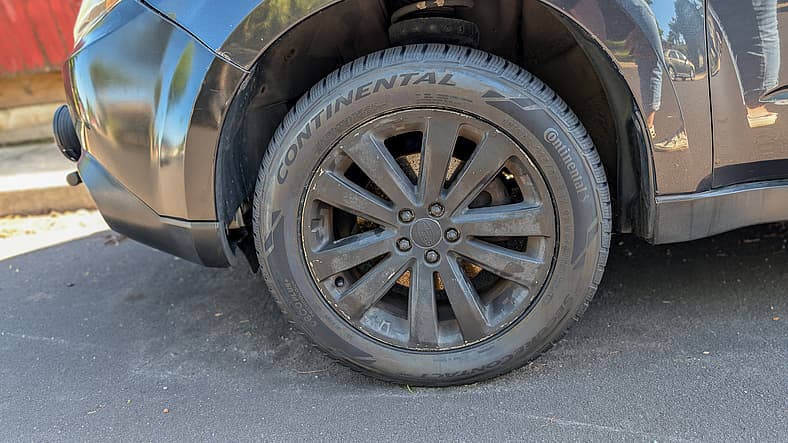
The logic I used to justify buying all-season tires for California’s dry seasons was pretty simple: I don’t need a serious three-peak mountain snow flake rating to get to and from the grocery store in the eastern part of the San Francisco Bay Area. It barely rains here, and when it does, it’s short-lived. We don’t see snow, and I don’t think I’ve ever encountered black ice. So, throwing on an all-season tire just made sense. An all-weather tire seemed overkill, like wearing Uggs when it’s 100 degrees.
But I remembered that time my husband and I got caught in a surprise snowstorm while driving through the Colorado mountains in May. Or how I’d just missed that downpour of snow in Lake Tahoe after my husband and I drove the kids over 80 East. If I’d left just a few days later, my family would have been caught in that.
With my all-seasons, we would have had to pull over and put chains on our tires (which I hate doing), because traditional all-season tires are made with a rubber compound that hardens when temperatures drop below 45°F, turning an otherwise dependable commuter into a hockey puck just when you need traction most. The SecureContact AW tires, however, challenge that.
Yes, They’re Snow-Rated, But They Don’t Require Seasonal Swaps
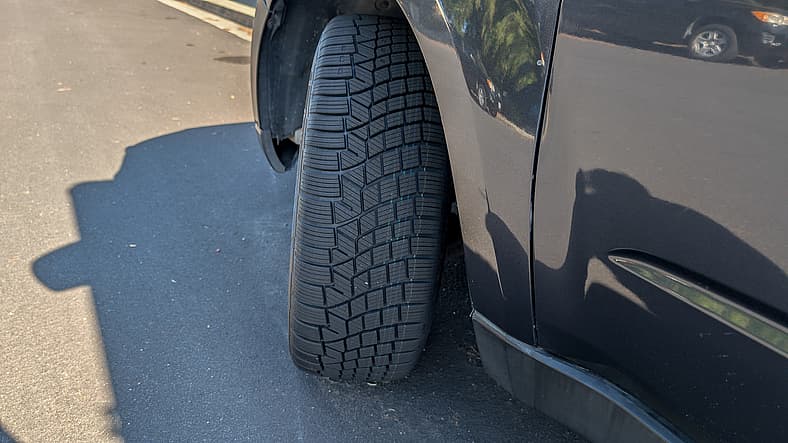
Don’t get me wrong. You’ll never catch me badmouthing a dedicated winter tire. My Blizzaks got my toddlers and me safely back home when we got caught in a blizzard back in Oregon. I didn’t lose traction a single time with those bad boys. And while they’re your car’s (and your family’s) best friend during the winter, you have to remove them once the season is over, or you will ruin them. Because the SecureContact is an all-weather tire, you don’t have to. You can leave them on, all year long, and not have to worry about making the switch. And, when temperatures drop again, they’ll be ready for winter. So, bye-bye, pricey tire swap appointments.
Continental Tires secret lies in the compound and tread engineering for the SecureContact AW tires. The company uses what they call temperature-activated Tg-F polymers and elasticity stabilizers that keep the tires from getting stiff when temperatures drop around or below freezing. Yet, unlike a dedicated winter tire, which stays malleable and squishy for grip on ice, the SecureContact AW tires don’t get squishy, greasy, or fast-wearing when the valley heat spikes into the 100s. It stays composed and sharp regardless of what the thermometer says.
And I’ve experienced that first-hand. When I first installed the tires, the ambient temperatures were mild. But not long after, we started seeing average temperatures going up into the 90s for weeks on end. I’ve driven on my Blizzaks when it was hot, and it was sloppy, slippery, and quite scary. But the SecureContact AW tires never lost their stride, keeping my Forester stable and confident, even in the unrelenting heat. I haven’t tested them in snow (yet), but I’m confident they’ll perform just fine. Now, finally, I understand why so many people in Bend opted for all-weather tires. Only the newbies and the elderly had dedicated winter tires or studded tires.
The Difference Between M+S and a 3PMSF Rating
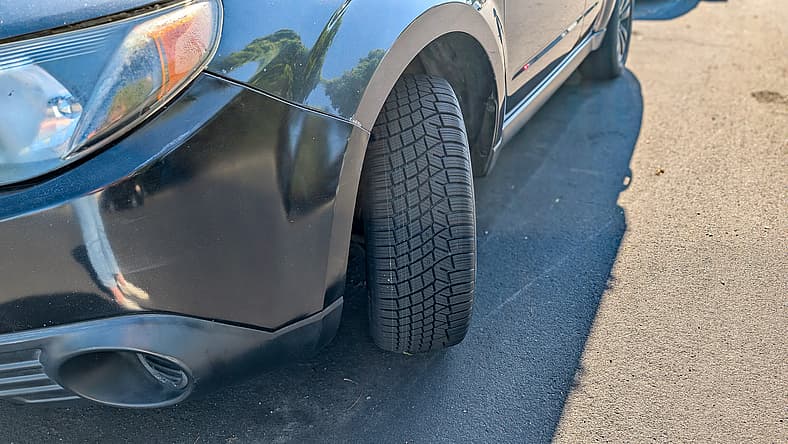
This is something I hear a lot. People point to the M+S on their sidewall and say, “I don’t need chains/winter tires/all-weather tires, these are snow-rated!” And if you’re one of those people, I’m about to learn you up. The M+S stamp is common on standard all-season tires, but it is granted based purely on a geometric tread formula—meaning the tire has enough open groove space to channel mud or soft snow, but it undergoes absolutely no physical performance testing in cold conditions.
Because of this, standard M+S rubber compounds harden when temperatures drop below 45°F, significantly losing traction on freezing or slushy roads. It’ll get you through South Lake Tahoe as the snow is melting, where the scariest part is your car getting dirty from the gravel, but if there’s ice on the roads or it’s actively snowing, your tires have punched out and traction is being maintained by hopes and dreams. Ask me how I know that.
In contrast, the 3PMSF symbol—which features a snowflake inside a three-peaked mountain outline—guarantees that a tire like the Continental SecureContact AW has passed rigorous physical testing on packed snow, delivering at least 10% better snow traction than standard tires. This rating means the tire utilizes a specialized compound that stays soft, pliable, and grippy in severe cold, while its high-density siping acts like tiny teeth (or, as my husband likes to say, fingers) to bite into ice and slush. Upgrading to a 3PMSF-rated tire means you are switching from a tire that is merely shaped to push debris away to one that is scientifically certified to keep you planted when mountain passes drop a surprise winter storm on your drive.
The Stop-and-Go Performance is Noticable

Beyond handling seasonal mood swings, the most immediate “aha!” moment happened during the daily grind. California driving means dealing with heavy, aggressive stop-and-go traffic. Like I’ve said before, at this point, it’s a regional personality trait. You cannot be a Californian without growing up with strategic traffic avoidance becoming a habit. With that in mind, stopping and going can sometimes be a bit… Quickly, because someone cuts you off, or, as usual, there’s an accident. In other words, you always have to be prepared to abruptly stop.
The stop-and-go power on these tires, I noticed, is incredibly reassuring. Continental Tire infused the rubber with a high-silica compound and a special +Silane additive specifically designed to boost micro-friction and wet braking. In normie speak, when you have to slam on the brakes because a line of traffic abruptly comes to a dead halt, you can actually feel the tire clawing into the pavement. It delivers a best-in-class wet braking distance that eliminates that brief, terrifying moment of ABS-induced sliding you get with lesser tires. And yes, even in the heat.
How Much Do They Cost, And Where Can I Buy Them?
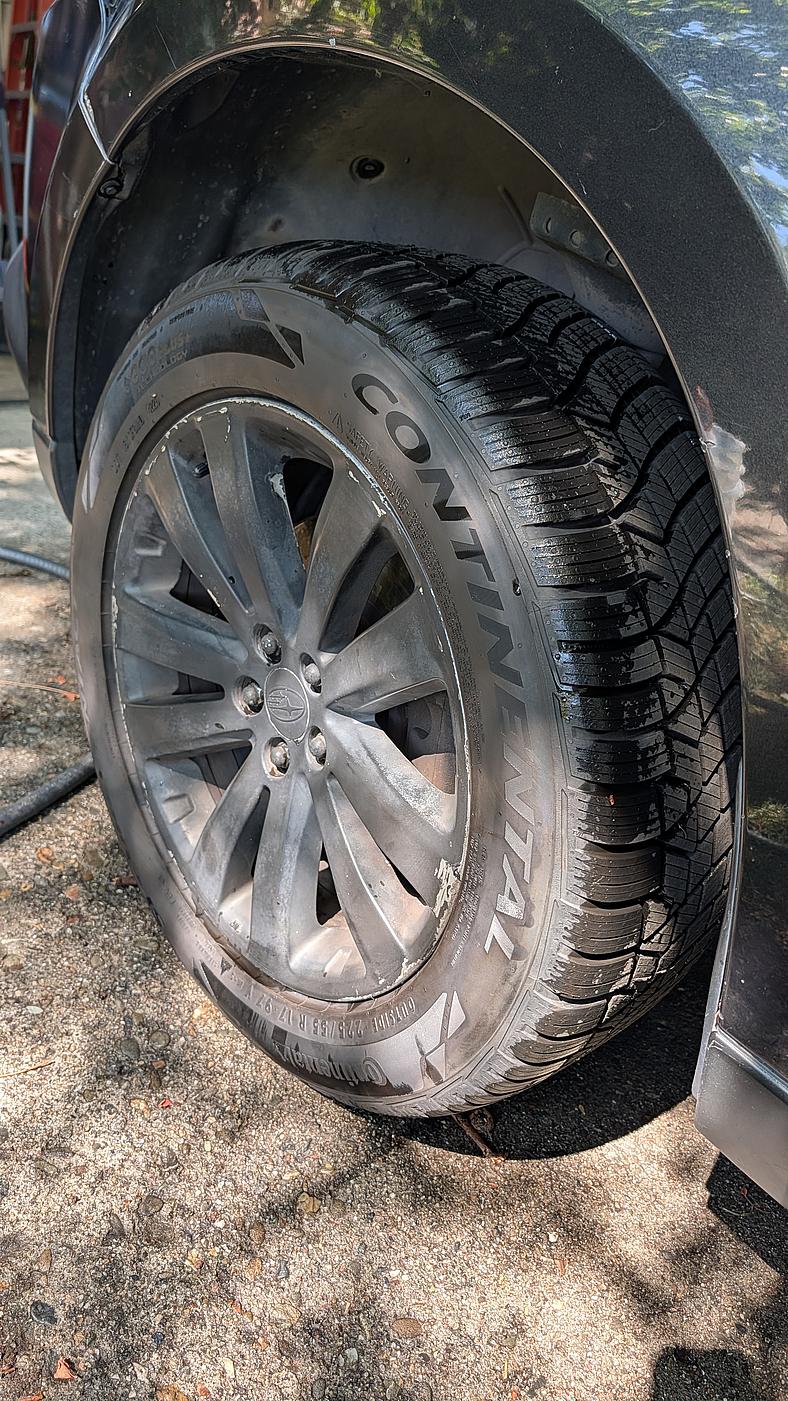
Exact pricing always depends on where you shop and what your tire size is. On my Subaru Forester, which has a tire size of 225/55/R17, and on TireRack (which is my all-time favorite) they run about $203.99 per tire. But if we looked at the pricing of its competitors, like the Michelin CrossClimate 2 ($229.99 per tire), the Pirelli Cinturato Weatheractive ($218.93 per tire), the Bridgestone Ultraweather ($212.99 per tire), or the Goodyear Assurance Weatherready2 ($215.99 per tire), the Continentals are the most cost-effective option.
While that positions them as a premium investment upfront compared to some budget all-seasons, they also come backed by an impressive 60,000 to 70,000-mile limited treadwear warranty. When you factor in the exceptional build quality and the fact that you won’t need to purchase or swap out a dedicated set of winter tires, the long-term value is undeniable. Especially when tire swap appointments can range anywhere from $40 to $150, and you have to do that twice per year.
Don’t Feel Shy About Making the Switch to All-Weather
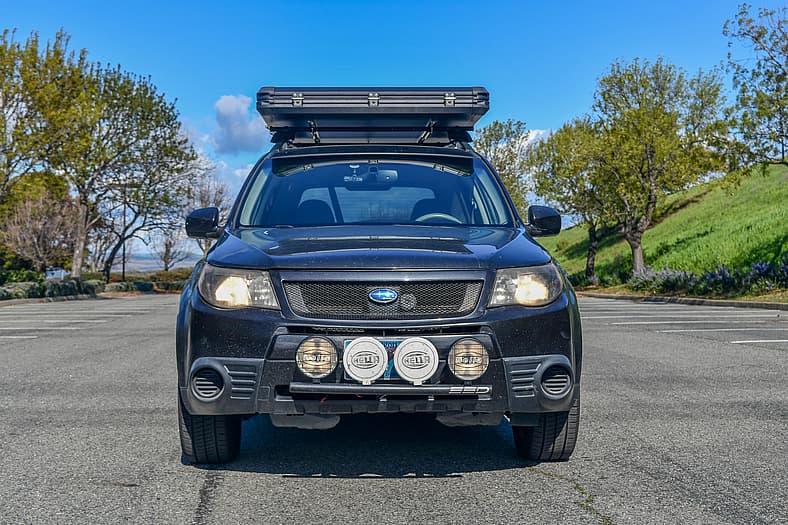
Moving away from the standard all-season category felt like a gamble at first, but the Continental Tire SecureContact AW proved that you don’t have to give up a quiet, smooth ride or long tread life just to get severe-weather capability. If you’re tired of playing guessing games with regional weather shifts and want a tire that gives you absolute confidence from the freeway to the mountains, it’s time to make the switch.
I mentioned it before, but I’ll reiterate: nearly missing that Tahoe snowstorm made me realize that all-weather tires aren’t just for the mountains. They’re engineered to be the Swiss Army Knife of tires, ready, willing, and actually able to handle everything.

More About:Car Maintenance