
Which SUV is Best: The Chevy Equinox EV Or Its Gas-Powered Sister?
The two Chevy Equinox SUVs may share a name, but that’s where the similarities end. Here’s a deeper look at both.

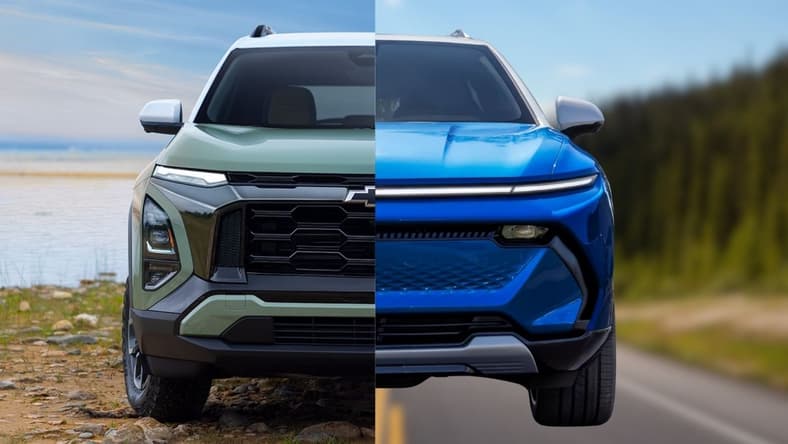
A lot of car makers have decided to make electric versions of their most popular models so buyers can have their pick of gas or electric. And while this is true of the Chevy Equinox, the gas-powered and electric SUV are not twins with different powertrains.
They are alike in that they both sell for a fair price, deliver plenty of power when you need it and offer plenty of trims to choose from. Plus, it’s a pretty car with enough room for the family.
This story is 100% human-researched and written based on actual first-person knowledge, extensive experience, and expertise on the subject of cars and trucks.
The Basics: How the Chevy Equinox EV and Gas-Only Vary in Pricing, Range and MPG
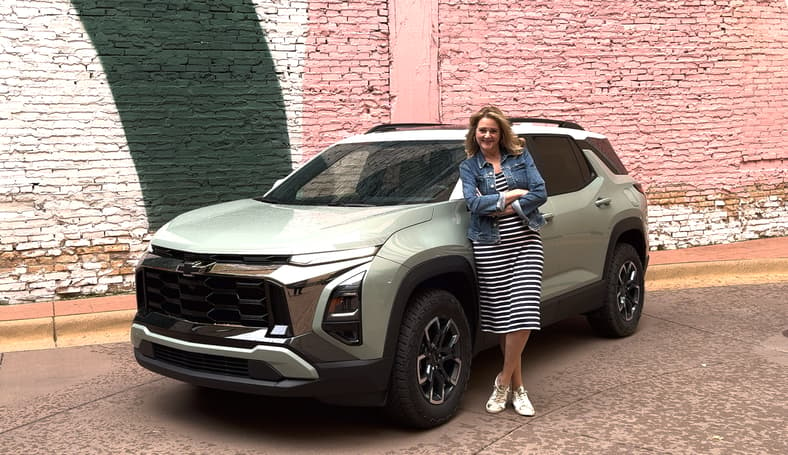
The gas-only Chevy Equinox starts at $28,600 and ranges up to $34,395, depending on the trim level and options. It ggets about 28 MPG in the front wheel drive version and about 26 MPG in the AWD model.
The Chevy Equinox EV starts at $34,995 and reaches a maximum of $44,795. The EV with front-wheel drive has a range of about 319 miles, while the AWD range is about 285 miles (the base model can get up to 309 miles).
So, which one is the better buy? That depends. Here are the pros and cons of both to help you decide which is best for you.
How the Gas-Powered Chevy Equinox Trims Line Up

The Chevy Equinox offers two power options: gas-only or a fully-electric. There’s no hybrid Equinox–at least not yet. And maybe that’s because the gas-only Equinox averages nearly 30 miles per gallon and owners typically go over 400 miles on a full tank. Adding to efficiency is the fact that the AWD system in the gas-powered Equinox is on demand, meaning you can push a button for AWD so when you’re not using it you’re getting better MPG.
The gas-only version has three trims: the LT, RS, and ACTIV. The LT, or luxury touring, is the entry-level trim, and the RS, or Rally Sport, offers a bit more of a sporty look. Both can be ordered with AWD, though front wheel drive is standard. ACTIV is the top-of-the-line with a few more off-roader capable features, a nicer interior, a larger multimedia screen, LED daytime running lights, and nicer technology. We loved it, as it’s a solid option for first-time car buyers, recent college grads, or even for new drivers since it’s safe, efficient, and affordable. It’s powered by a 1.5-liter turbocharged four-cylinder engine with a max horsepower rating of 175.
Here’s How the Chevy Equinox EV Power and Trims Stack Up
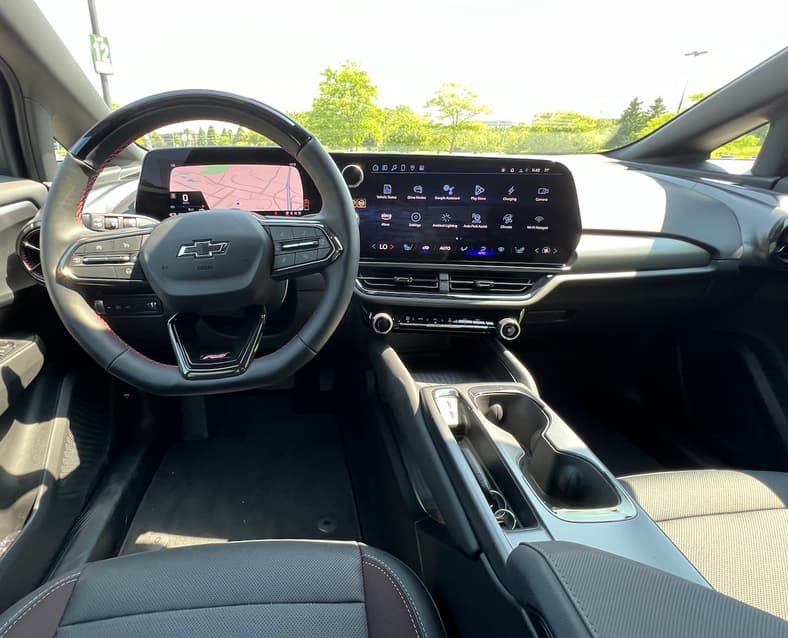
The Chevy Equinox EV is also offered in three trims: the LT1, LT2, and the RS. All three boast about 319 miles of range with front-wheel drive, and if AWD is optioned range drops a mere 12 miles to 307.
The AWD versions have two motors, one for the front and one for the rear axle (hence AWD) and in total, deliver more HP: about 220 in the front wheel drive dual motor option and about 300 HP in the dual motor AWD version. Each is powered by an 85-kWh battery that helps reduce weight, and therefore, increase range and can add 70 miles of range in just 10 minutes at a DC fast charger.
How Much It Costs To Power Each Chevy Equinox?
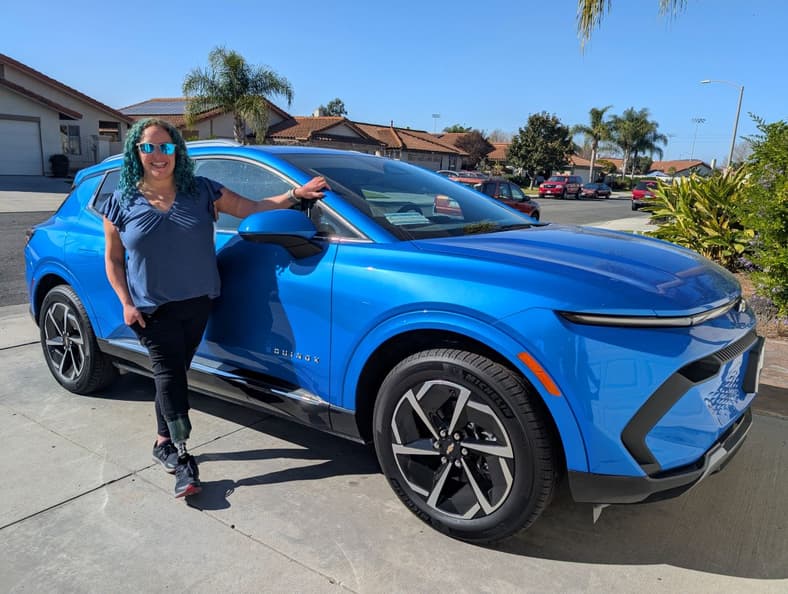
To put it simply: the battery needs to be charged, and the gas tank needs to be filled. The gas-only engine gets more miles on a full tank than the EV, so unless you’re buying the EV to commute and charge at home overnight, the gas-only version will elbow the electric model as far as convenience is concerned. Public charging is certainly improving in terms of availability and reliability, but it’s not yet as quick and reliable as filling up at a gas station. At home or in public, Level 2 chargers deliver around 34 miles of range per hour of charging at 11.5 kW or 51 miles per hour with 19.2 kW of charging. Generally, it’ll take 6 to 8 hours to fully recharge at a level 2 home charger and it’ll take several days to fully recharge using a standard household outlet.
Even though filling up at a gas station is faster than charging, it is still cheaper to charge an EV at home in your garage with a Level 2 charger than it is to fuel up (and here’s what it cost our founder to install a charger). According to Kelley Blue Book, on average, it costs a little more than $56 per month to recharge an EV, or about $672 a year. The average Chevy Equinox owner will spend about $1,400 a year on fuel. So, it may take longer to recharge, but it is still more affordable than fueling up–especially if you commute to work and back regularly. And when you have a charger at home, most people don’t notice how long it takes, as it’s usually done overnight every week or so.
Relying on public charging is where it can end up being as or more expensive than fueling up. Here are some caveats that can end up taking the savings out of driving an EV:
- Prices at public chargers can vary by charger; prices should be listed on the EV charge app you’re using, as well as on the terminal
- Prices for electricity at home can vary by time of day or tiered based on usage
- Public EV chargers typically charge users a premium once the charge has reached 80% since it takes longer go get from 80% to 100% than it does to get from 10% to 80%
- Public chargers may charge an idle fee if you leave the car on the charger after the charge is complete. Idle fees are typically $1 a minute.
- Even expensive public charge stations may end up costing less to power a car than paying for gas in some states
Weirdly Enough, the EV Has Less Cargo Space Than the Gas-Powered Version

Most of the time, electric SUVs and cars tend to have more cargo space than their gas-powered counterparts because of their lack of bulky, heavy, traditional drive and powertrain parts. No differentials or typical transmission means more floorspace from the lack of tunnels, but for the Equinox EV, that’s not the case. The gas-only version has 29.8 cubic feet of space behind the second row, while the EV has just 26.4. With the second row folded, the dino-fueled version still has more, with 63.5 cubic feet compared to the EV’s 57.2 cubic feet. Unlike most EVs, the Equinox EV does not have a frunk, so the lack of space can’t be made up there.
The gas-powered version also has hidden storage compartments in the floor, while the EV has a dual-level cargo area, which makes it a little more flexible for smaller items. So, if cargo space is a top priority, the gas-only version offers more. But the EV still comes with a fairly good amount. And remember, most of that can be made up with a cargo box or basket with roof rails, too.
The EV Doesn’t Have an Off-Roady Trim, But the Gas-Powered Version Does
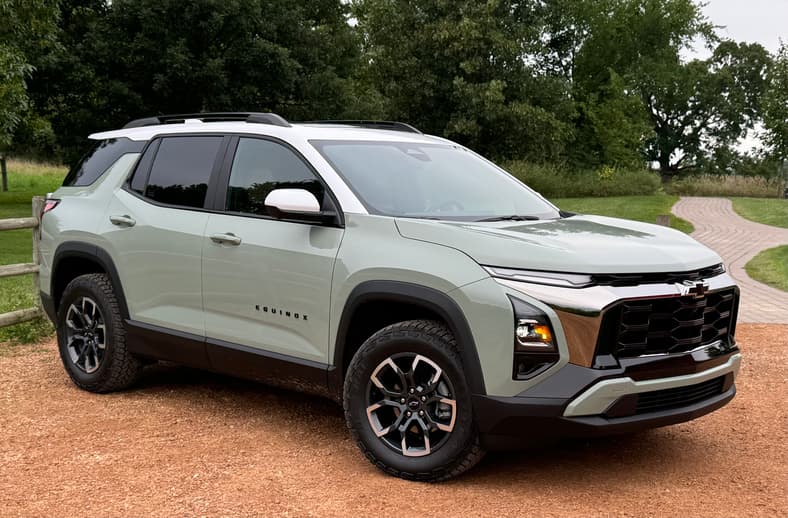
The ACTIV version of the gas-only is the Chevy Equinox’s “off-road-ready” and top-shelf trim. It comes standard with all-wheel drive, and exterior updates like updated body cladding, all-terrain tires, and off-road-tuned suspension, a dedicated “off-road mode” that tunes the engine and transmission response to better handle gravel and dirt roads. Even though the Equinox EV has all the instant torque it would need to be a softroader, it doesn’t have an ACTIV trim. Instead, the focus is on a more defined riding style and a more luxurious feel in the LT2 and RS models.
The RS, which stands for “Rally Sport,” is the EV’s cream-of-the-crop model, leaning into a sporty experience, with larger wheels, blacked-out badges and interior accenting, a flat-bottom steering wheel, a unique grille, and a baby rear spoiler in the back. There aren’t any changes to the horsepower or torque specs, but it does come with a nicer interior and dual-zone climate control with a heated steering wheel, to make all four seasons a tad more comfortable. And, unlike the gas-only ACTIV trim, the RS trim can still be built with front-wheel drive. So, unless you were looking to compete with the Hyundai IONIQ 5 XRT or the Mustang Mach-E Rally edition, you’ll have to stick with the sporty version.
The Chevy Equinox EV Offers SuperCruise But the Gas-Powered Doesn’t

Here’s where the separation starts to become more apparent. The gas-only version, no matter the trim or how much you’re willing to pay, doesn’t come with Chevy’s Super Cruise hands-free highway driving system. We loved the technology, as it’s a hands-free highway driving assistant that will make lane changes for you, slow down, speed up, and even sit through traffic for you without needing driver input, though you have to pay attention, look at the road and it can only be used on previously mapped highways. It’s available as an add-on for the RS and LT trim of the EV. If you’re a commuter in a large, busy city like Seattle, Los Angeles, San Francisco, Los Angeles, Houston, Austin, or others, we can assure you–this technology is a game changer.
The compromise, though, is that all gas-powered models of the Chevy Equinox come with adaptive cruise control as standard equipment. It just means you have to hold onto the steering wheel, and the little SUV won’t make lane changes for you. The adaptive cruise control in the standard Equinox works perfectly fine.
The Gas-Powered Version Has Android Auto and Apple CarPlay, While the EV Doesn’t
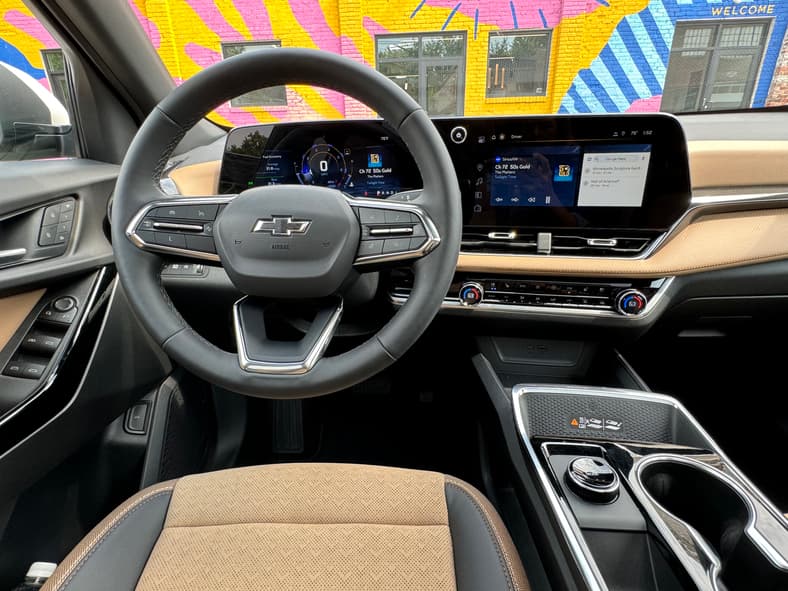
Now it’s the gas-only version’s turn to one-up the EV: the electric Equinox doesn’t come with either Apple CarPlay or Android Auto, while the gas-only version does. The lower trim levels offer a wired connection to either phone-mirroring software, while it’s wireless in the higher trims. The EV, no matter the trim, forces buyers to use GM’s own software and user interface, which uses Google’s OS and features its built-in apps like Maps, so Android users won’t notice much of a difference. For Apple users, though, the difference takes some adjustment.
GM’s software is good, but when drivers get used to things working a certain way and enjoy having all the contacts, favorite radio stations, audiobooks, albums, or music apps ready to pick up where they left off, because that’s what Apple CarPlay does, it becomes disappointing for some folks. Especially since you’re paying a premium for the all-electric version.
So, Which is the Better Buy?
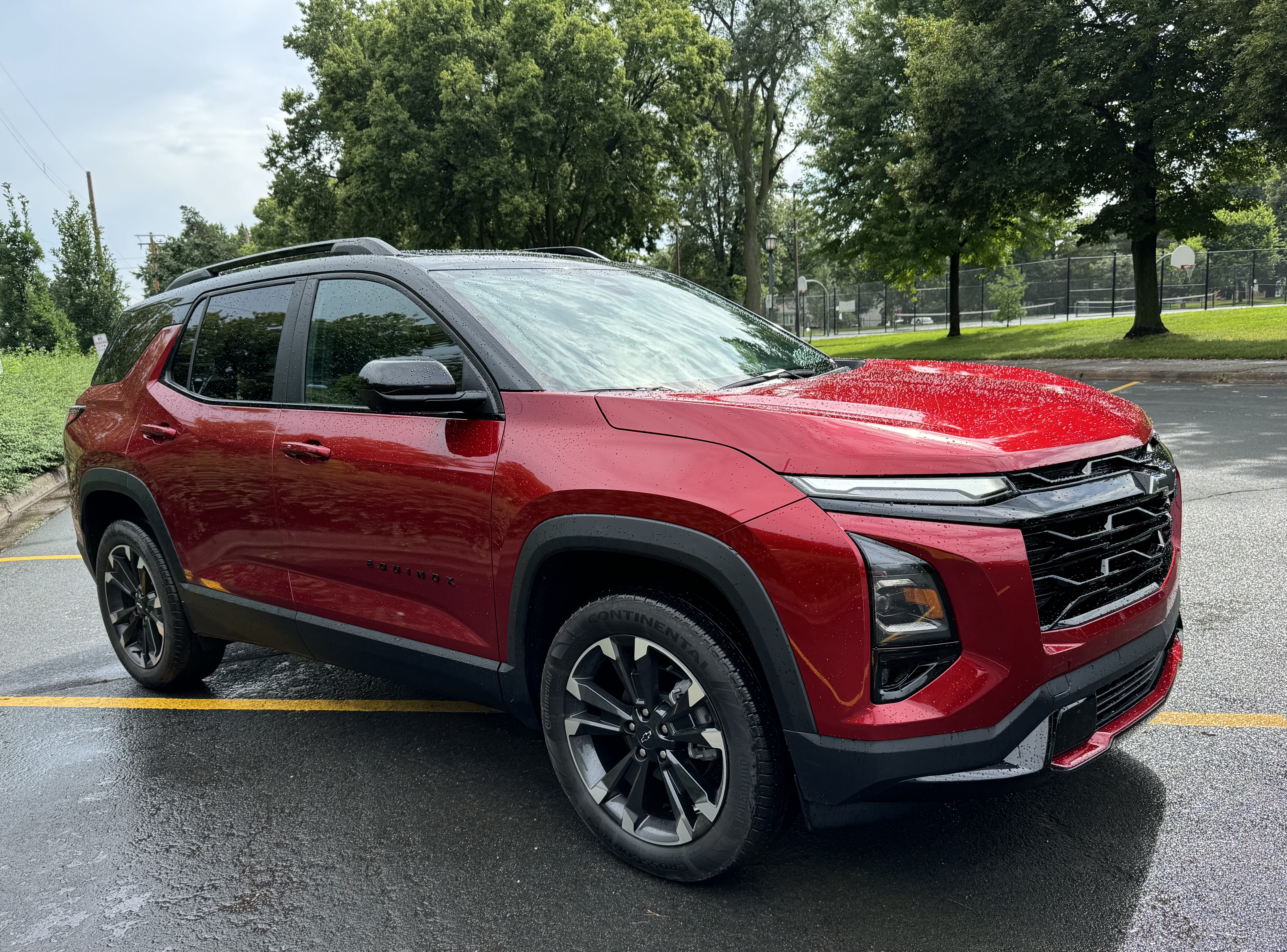
This is one of those “it depends” situations. The Chevy Equinox EV could be a better buy if you can charge at home or work, don’t need the extra cargo space, and want to enjoy the Super Cruise hands-free highway driving system. The gas-only Equinox is a better buy for those who can buy the less-expensive entry model, who don’t drive a lot or who live someplace with low gas prices. It might also be better for those who need the extra interior space.
The real tell is that if you want to go electric, your cost of ownership in the Chevy Equinox EV could actually be lower than the gas model thanks to the lower cost of fuel and maintenance, and if you have solar panels or free charging at work, perhaps the cost will be even less. Kelley Blue Book estimates the true 5-year cost of ownership of the Equinox Activ to be about $34,500, while the 5-year cost of ownership of the Equinox EV LT1 is about $32,500.
Either way, we love both the gas-only and the EV version of the Chevy Equinox. They are fun to drive, a pleasure to be in and deliver a lot for the price, gas or electric.

More About:Car Buying