
Buy This, Not That: Real Off-Road SUVs vs. Appearance Packages
When you want a real rough-and-tumble off-road SUV, don’t be fooled by appearance packages. Here’s what we’d recommend for when the going gets tough (and muddy).

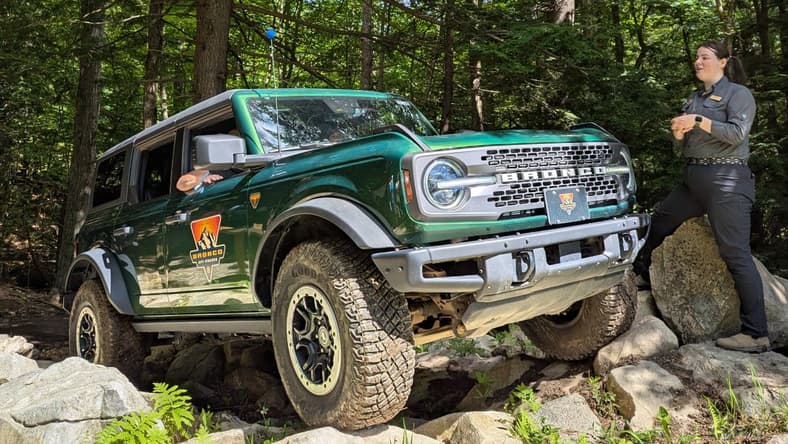
Don’t get it twisted: there’s nothing fundamentally wrong with wanting an SUV that appeals to the off-road-lite aesthetic. Bright tow hooks, all-terrain tires, black exterior cladding, and a roof rack make any car look tougher. However, if you’re buying an “off-road-ready” trim that has those things but no changes to the drivetrain, powertrain, or suspension, it’s just as capable as the trim below or above it.
But, if you want a real off-roader, one that’s designed, engineered, and manufactured to be more capable than other trims in the lineup, you have to know what to look for. A clever salesman will know exactly what to say to sway you into spending more for a car that looks capable, but actually isn’t.
That’s where this list comes in. We’ll teach you how to tell the difference between an appearance package and real, upgraded hardware, and then recommend some of our favorite legitimate off-roaders.
This story is 100% human-researched and written based on actual first-person knowledge, extensive experience, and expertise on the subject of cars and trucks.
How Do I Know If the Car I Want is a “Real” Off-Road SUV?
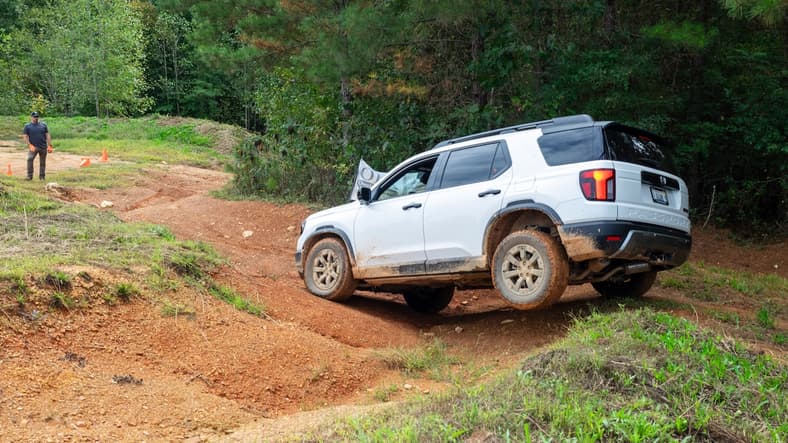
Unless you’re a nerd for what’s under the hood (or underneath the car in general) like I am, it can be hard to tell. Especially if your dream car is looking shiny with all-terrain tires, a roof rack, and donning a trim-exclusive green, blue, or brown color that screams, “I’m ready to romp through the mud and splash in puddles.” What you need to look for, or at least ask about, is what kind of hardware it comes with. I’ve said it a million times before, but putting all-terrain tires on something doesn’t make it as capable as a Jeep Wrangler.
You need to ask: What kind of changes were made to the all-wheel drive system? Does it come with a lift kit or any suspension changes to handle rougher, uneven roads? Does it have underbody protection for the gas tank, oil pan, or transmission? Does it have any off-road-specific drive modes or software that other trims don’t have?
If the answer to any of those questions is anything other than a confident “yes,” you’ll be sucked into paying extra to look capable. If what you want is a true, undisputed off-roader, read on.
We Recommend the Subaru Forester Wilderness over the Honda CR-V TrailSport
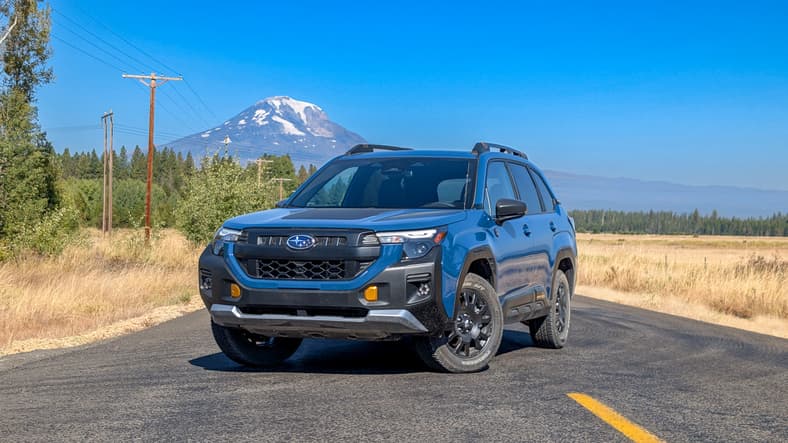
Every TrailSport model we’ve tested—namely the Passport, Ridgeline, and Pilot—has truly separated itself from the rest of the group. They not only look cool but also come with critical changes to the all-wheel drive and hill descent function, plus incredible terrain modes and off-road-specific software that help make them more effective. The CR-V TrailSport is the exception to that rule. It’s handsome, and it has all-terrain tires, but as far as being off-road-ready, it doesn’t have nearly the same upgrades that come with the Subaru Forester Wilderness.
The Subaru Forester Wilderness comes with a notable factory lift—going from 8.6 inches of ground clearance to 9.2 inches—larger, all-terrain tires, water-resistant upholstery, a shorter final drive on the CVT to make it more effective, a refined and effective X-MODE, several terrain modes, underbody protection, and a cool decal on the hood to reduce glare. The CR-V’s only one-up on the Wilderness is that it’s a hybrid, so you get better MPGs, but… That’s about it. For the money, the Forester Wilderness is what we recommend.
The Jeep Compass Trailhawk May Be a Jeep, But We Prefer the Ford Bronco Sport Badlands
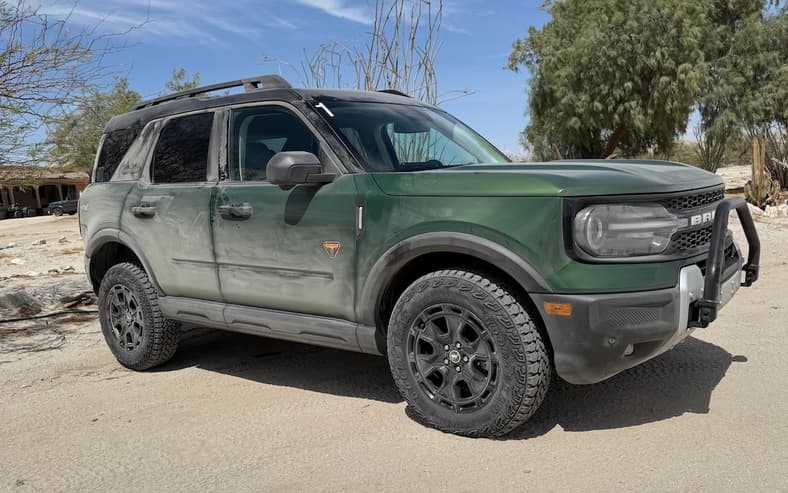
As a Jeep owner myself, it’s hard to watch Ford win in this segment, but… When it’s true, it’s true. The Jeep Compass isn’t four-wheel drive; it’s all-wheel drive, and there aren’t any serious upgrades that make the Trailhawk trim any more capable than the base model trim, other than slightly more ground clearance. It’s attractive, with the decals, tougher look, and roof rails, but that’s where the upgrades end.
The Ford Badlands, on the other hand, comes with some seriously cool upgrades, like a more powerful 2.0L EcoBoost engine, and the advanced twin-clutch rear drive unit that can act as a virtual locker, plus the HOSS suspension with hydraulic rebound stops. It doesn’t just look the part; it plays the part and plays it beautifully. The Jeep Compass is a fantastic softroader for those on a budget, but for those who truly want to wander, the Compass lacks the sophisticated torque vectoring and high-performance dampers that make the Ford stand out.
Come For the Mazda CX-50 Meridian Edition’s Looks, Stay for the Subaru Outback Wilderness
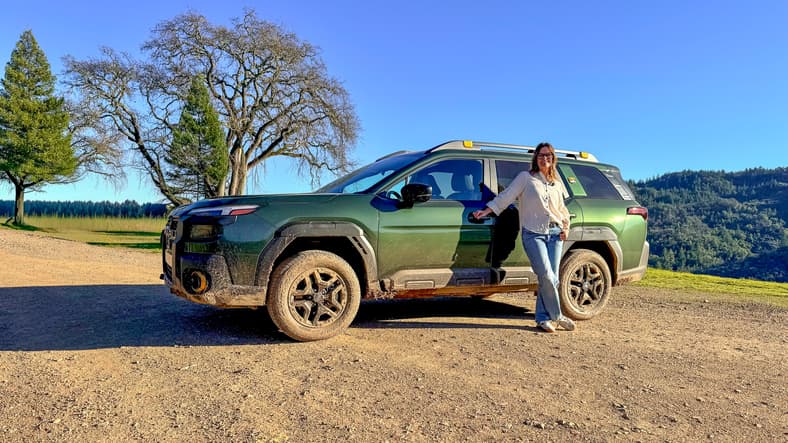
The Mazda CX-50 Meridian Edition is a stunner. It has a matte black hood graphic (to reduce glare, like Subaru’s Wilderness models), black wheel arch molding, side rocker molding, and upgraded headlight trim. The Apex Package includes a roof platform for gear, black roof rails and crossbars, with front and rear splash guards. It also comes with beefy all-terrain tires and Mazda’s excellent turbocharged engine. Not unlike the Subaru Outback Wilderness. So far, so good.
However, the Subaru Outback Wilderness, not unlike its siblings, packs the better upgrades for the price. It also has a turbocharged engine and all the goodies that come with the Mazda—but it also has a factory lift, going from 8.6 inches to 9.3 inches, larger AT tires, underbody protection, a stronger transmission than other models, and X-MODE. So, for those who want to truly go beyond the campsite’s parking spot, the Outback Wilderness is the easy choice to make.
We Loved the Honda Passport TrailSport, But the Honda Pilot TrailSport Just Makes More Sense (For Most)
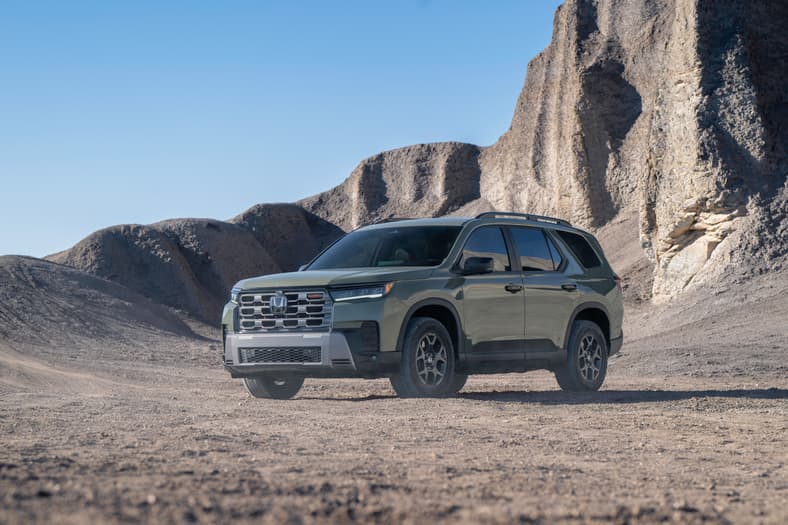
I might catch some heat for this one, but I’m on Team Pilot for this round, and here’s why: the Pilot was the first SUV to take on the TrailSport name, and therefore, was the first to come with those upgrades. Upgrades that included suspension upgrades that coincide with a 1-inch lift, thicker stabilizer bars, and specialized damper tuning. Most importantly, it includes robust steel skid plates protecting the oil pan and fuel tank, specialized off-road software, and more. The Passport now has all that, but for some trims, the Passport is remarkably more expensive than the Pilot, despite the same V6, same-tuned AWD system, same suspension upgrades, underbody protection, towing capacity (5,000 lbs), and so on.
And that’s where it gets tricky for me. The Passport has four TrailSport trims: the standard TrailSport, TrailSport Blackout, TrailSport Elite, and TrailSport Elite Blackout, ranging from $48,650 to $53,850. The Pilot TrailSport is a mid-level trim that costs $50,395. But the Pilot has three rows with a removable seat in the second row, and if you use it, you can seat 8 on the trail. The Passport can only seat up to 5. So, with the Pilot, you can fit more people and you have more cargo space for less, depending on the trim. Seems like an easy win to me. I wouldn’t fault anyone for choosing the Passport over the Pilot if you don’t need the extra seats and space, though.
The Toyota 4Runner TRD Pro is Better Equipped Compared to the Land Cruiser
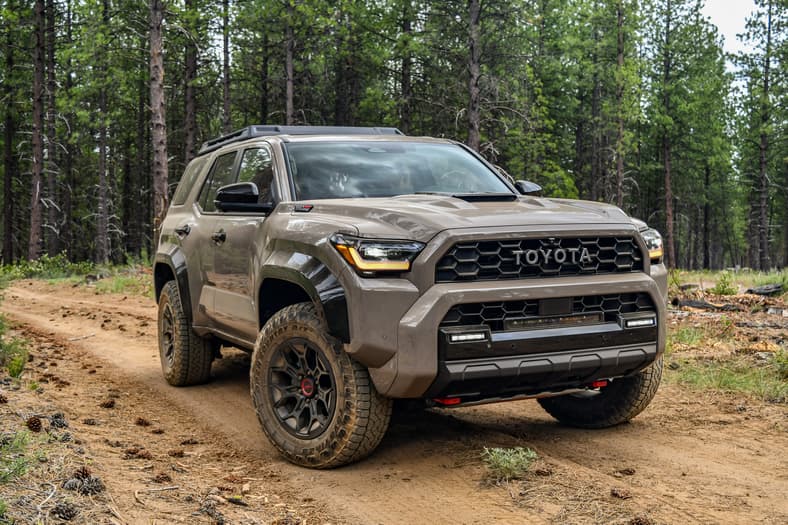
I’m probably going to catch some heat for this, but for serious off-roading, the 4Runner TRD Pro is in a completely different league than the Land Cruiser in terms of hardware and capabilities. The Land Cruiser only comes with off-road upgrades like a rear locking differential, terrain modes, Toyota’s off-road-centric software features, and more if you buy the more expensive trim. But unlike the 4Runner TRD Pro, it doesn’t come with metal underbody protection, a factory lift, tougher all-terrain tires, updated FOX suspension, and a built-in air compressor in the trunk.
What’s nice about the 4Runner is that there are multiple TRD trims to choose from, ranging from $50,290 to $68,200, depending on whether or not you buy it with Toyota’s i-FORCEMAX hybrid system (which is specifically designed for off-road and towing). No matter which trim you pick, though, it comes standard with more equipment than the Land Cruiser. There are only two trims of the Cruiser, ranging from $57,600 to $63,675, and neither comes with anything close to the TRD trims of the 4Runner. So, keep that in mind.
We’d Pick the Lexus GX 550 Over the Toyota Land Cruiser, Too
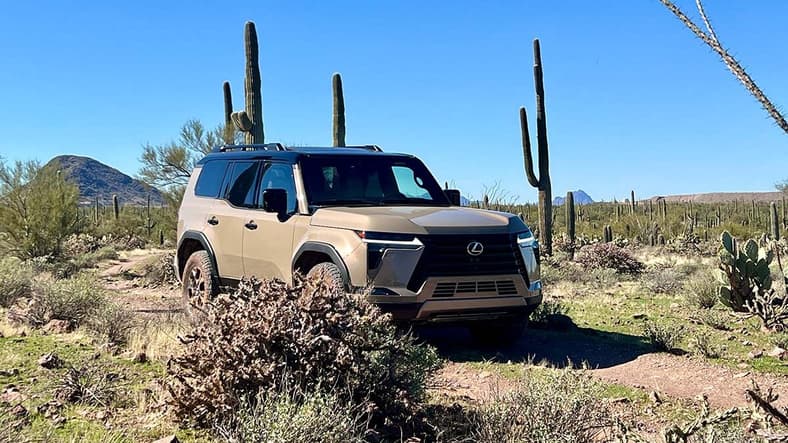
The Land Cruiser is a gorgeous four-wheeler, but when it comes to features for the money, the Lexus version of the Cruiser, the GX 550, is the clear winner. It’s built on the same platform, and therefore it has the same four-wheel drive system, but instead of Toyota’s i-FORCEMAX hybrid system, all six trims (four more than the Toyota, so more options), ranging from $66,935 to $82,045, come with a twin-turbo V6 that produces 349 horsepower.
So, even if you bought the base model trim of the GX 550, you’d be getting more for the money. A higher towing capacity (9,063 lbs compared to 6,000 lbs), room for seven passengers, a nice leather interior, and bolder, sleeker styling. All without giving up what makes the Land Cruiser so capable off-road. When you can get all that for almost $2,000 less, who can say no?
If You’re Shopping Land Rover, Choose the Beefy Defender Over the Land Rover Discovery
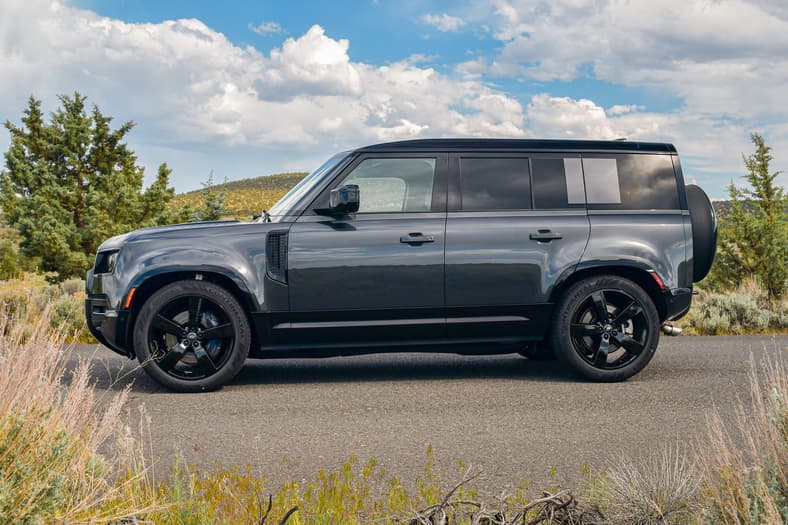
While both vehicles share the legendary Land Rover badge, Terrain Response 2 systems, four-wheel drive and locking differentials, the Defender 110 is the clear winner for anyone intending to actually leave the pavement. Engineered on the D7x “Extreme” architecture—the stiffest body structure Land Rover has ever produced—the Defender offers a massive 11.5 inches of ground clearance and a staggering 38-degree approach angle. It is built with a “wash-out” interior mentality, featuring durable rubber flooring and exposed structural powder-coated accents that can withstand the grit of the trail. The Defender also offers mechanical flexibility that the Discovery lacks, including three distinct body styles (90, 110, 130) and an optional front jump seat, so you can choose between a shorter wheelbase for technical crawling or massive interior volume for overlanding gear.
The Land Rover Discovery, by contrast, has evolved into more of a practical luxury family hauler than the true mountain-conqueror it used to be (ask me how I know—I own a 1996 model). While it is highly capable in its own right, its geometry is its downfall; the sleek, aerodynamic front end and long rear overhang limit its approach and departure angles, making it far more likely to scrape on technical terrain where the Defender would simply sail through. The Discovery trades the Defender’s rugged, repairable spirit for a “Range Rover Lite” aesthetic that prioritizes highway isolation over trail-rated durability.
For Serious Rock Crawling With a Dash of Family-Hauling, We Like the Ford Bronco Over the Jeep Wrangler
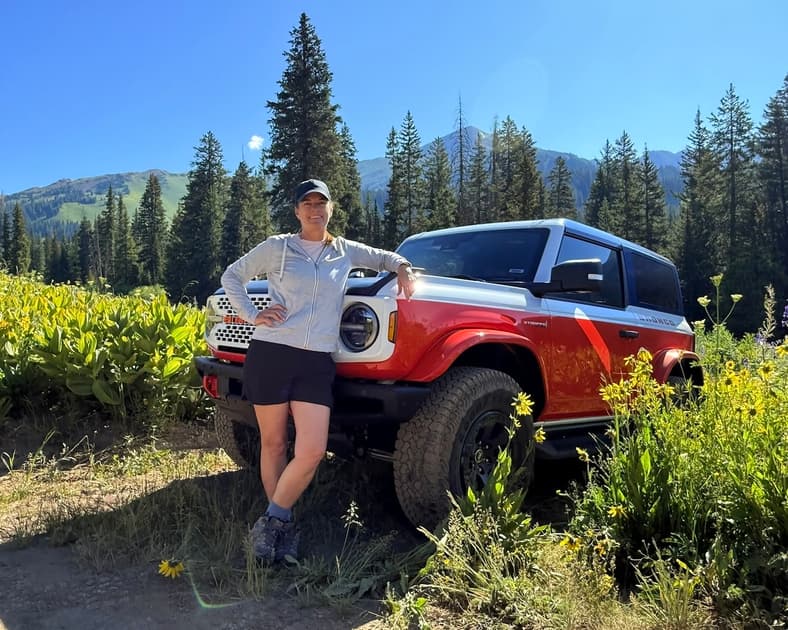
As a Jeep Wrangler owner, I had to really be objective about this one. I love my 2006 Wrangler Unlimited. It’s currently my phone’s wallpaper, I’m that obsessed. I’ve driven it on Moab’s toughest trails with dizzying ease. However, it is not something I’d drive every day, especially not with my kids in it. I wouldn’t recommend even a 2026 as a daily driver or a replacement for something safer to haul the kids (though the Wrangler’s come a long way in that regard).
You can daily drive a Ford Bronco, even the higher-up trims; you have multiple engines to choose from, you’d get better mileage, and you have more cargo space, a quieter, more stable, and more comfortable ride, without giving up all the off-road hardware that makes the Bronco such a heavy hitter. I will say, though, that if you’re in my situation where you do have another car to haul the kids in and drive every day, I’d pick the Wrangler, no contest. But if I were choosing between the two for a daily driver or something with more practicality to replace my “normal” SUV, the Bronco’s the easy winner.
My Wrangler is the dedicated off-roader. I drive it to get groceries now and again to keep everything charged and lubricated, but otherwise it’s parked in a garage. With the Bronco, I could have it both ways.
When It Comes to Hyundai’s XRT Trims, We Like the Santa Fe Over the Palisade
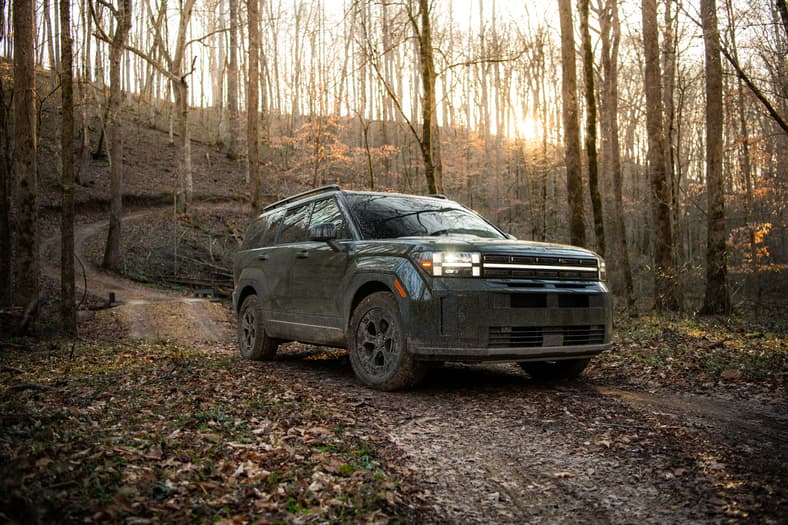
Following its recent redesign, the Hyundai Santa Fe XRT has been transformed into a legitimate soft-roader. It features a 1.3-inch factory suspension lift that raises ground clearance to 8.3 inches, paired with 30-inch all-terrain tires that provide real grip and extra sidewall for trail duty. Beyond just clearance, Hyundai upgraded the internals, equipping the Santa Fe XRT with a heavy-duty cooling system and a reinforced hitch that increases its towing capacity to 4,500 lbs. It’s a vehicle built for the strain of hauling gear to a remote campsite, not just looking the part in the driveway.
Despite the aggressive name, the Palisade XRT is almost entirely an appearance package. It lacks the suspension lift of its smaller sibling, maintaining the standard 7.9 inches of ground clearance, which leaves its underbelly vulnerable to rocks and ruts (neither has underbody protection, but… Every bit of space helps). While it sports blacked-out trim and rugged bumpers, it typically rides on 20-inch alloy wheels with standard street tires—a combination that offers little traction in the mud and is prone to expensive damage on technical trails. Unless you specifically need the eighth seat, the Palisade XRT is essentially a Black Editionmasquerading as an adventurer, whereas the Santa Fe XRT is legitimately built for the job. Plus, you can get the Santa Fe as a hybrid right now. The Hyundai Palisade XRT hybrid is still pending.
BONUS: If the Rivian R1S Quad Were Fighting With a Mercedes G-Wagen, We’d Bet on the Rivian
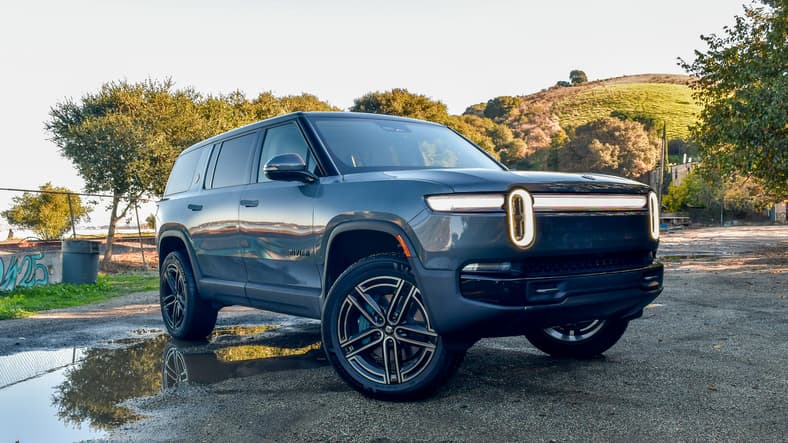
When the G-Wagen EV is brought up, a common topic is its off-road heritage. However, I’d argue that the 2026 R1S Quad-Motor simply outmuscles it on nearly every technical metric (and price). With its adjustable air suspension, the Rivian can reach a staggering 14.9 inches of ground clearance—over five inches more than the electric G-Wagen’s 9.8 inches. Its four-motor setup delivers a massive 1,025 horsepower, allowing for surgical torque vectoring that makes traditional lockers feel antiquated. Furthermore, the R1S introduces the “Kick Turn” (a refined version of the tank turn), can be used at speeds up to 15 mph to pivot the vehicle on tight switchbacks, making the massive SUV feel as nimble as a much smaller scout vehicle.
The Mercedes-Benz G 580 with EQ Technology is an incredible achievement, to say the least. Despite its quad-motor “G-Turn” party trick, the electric G-Wagen remains a heavy ladder-frame SUV with a solid rear axle that, while durable, cannot match the independent wheel travel and extreme clearance of the Rivian. Its side-exit-style packaging (even in the EV) and lower belly height mean you’ll be scraping skid plates on obstacles the Rivian would clear without a second thought.
Additionally, with an EPA-estimated range of roughly 240 miles, it falls significantly short of the Rivian’s 370+ mile range, making the G 580 a master of the “off-road park” but a riskier choice for long-distance, deep-wilderness overlanding where every kilowatt-hour counts. Plus, it’s sad for me to say, but the G-Wagen is more of a status symbol for celebrities and the affluent, while the R1S is actually usable and engineered to be used. The R1S Quad is expensive, with a max MSRP of around $121,000, but the G-Wagen EV is substantially more expensive, with a price range of $161,500 to $164,350, though loaded Edition One models can approach $200,000 to $250,000. With the price-to-feature ratio (and the plaid carpeting), we recommend the R1S with enthusiasm.

More About:Car Buying