
The New 2027 VW Atlas is Still a Unicorn—With Magic and Charm Galore
The delight is in the details in the first redesign of this classic family SUV

It’s not unfair to see the VW Atlas as a unicorn. When the VW Atlas was introduced in 2017 it was a breath of fresh air. The iconic German carmaker finally entered the full-size SUV market with a family-focused 3-row SUV that gave us what we wanted: Elegant and elevated design, great engineering and performance and the space and features we need in our cars.
The open cabin, light interior color options and sculpted shape swayed a lot of buyers away from other 3-row SUVs. The Atlas was the company’s unicorn, leading sales and setting the strategy for the future.
In the decade since, VW has updated and improved the VW Atlas within the framework of the original model; it looked mostly the same on the outside and had small finesses on the inside, from voice-activated assistance to tech upgrades to adventure and performance models.
But a full-scale renovation is on deck and as much as the original wowed us, the new model takes on the full unicorn feel with lights, magical tech and even Joy mode.
This story is 100% human-researched and written based on actual first-person knowledge, extensive experience and expertise on the subject of cars and trucks.
The New Design Advances the Atlas Look
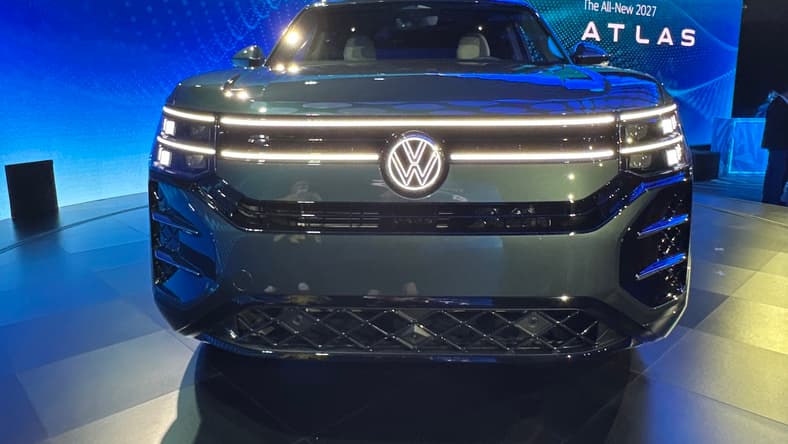
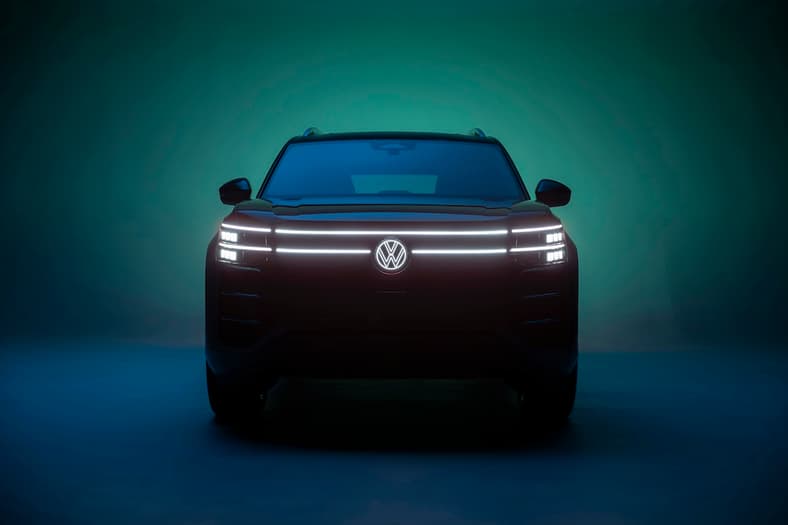
Playing on the cross-body light bars that Atlas added in the last few years, the 2027 model incorporates a dual bar on the front end to connect digital pixel-inspired headlights; a single light bar on the rear has the same function, as do the tail lights. Lighted VW badges are also a feature front and back, giving the Atlas a distinct look at night.
Still tall and boxy, the 2027 VW Atlas is 1” longer but retains its height and width. It also retains its sculpted look with a vertical front and rear end and an upright posture. Within its proportions, though, its lines are a bit faster and sleeker, less sharp; the effect lends a look of motion and modernity.
The overall look also hints at the tech inside the Atlas.
Modern Technology Defines the VW Atlas
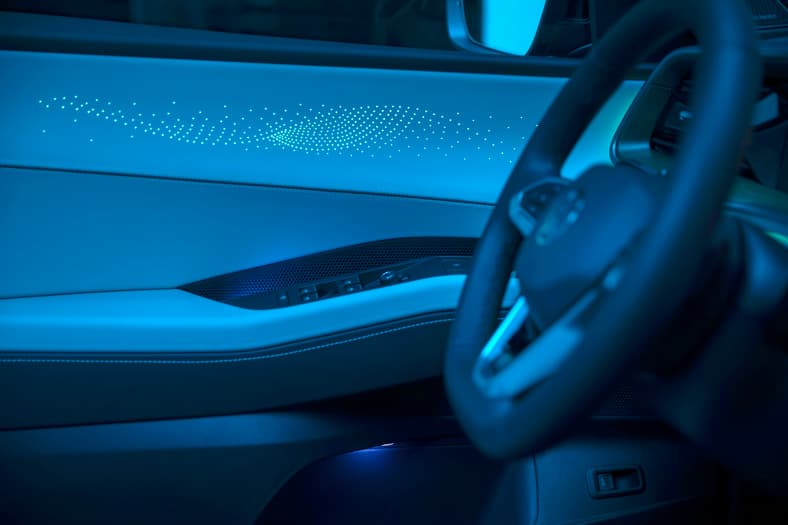
Tech might be the singular function that defines the 2027 Atlas, from the multi-color ambient lighting that outlines and backlights the spaces and functions inside the car, from front cupholders to the dashboard and footwells, to a new operating system that is is AI enabled for a more conversational function (though it requires a subscription after the first year).
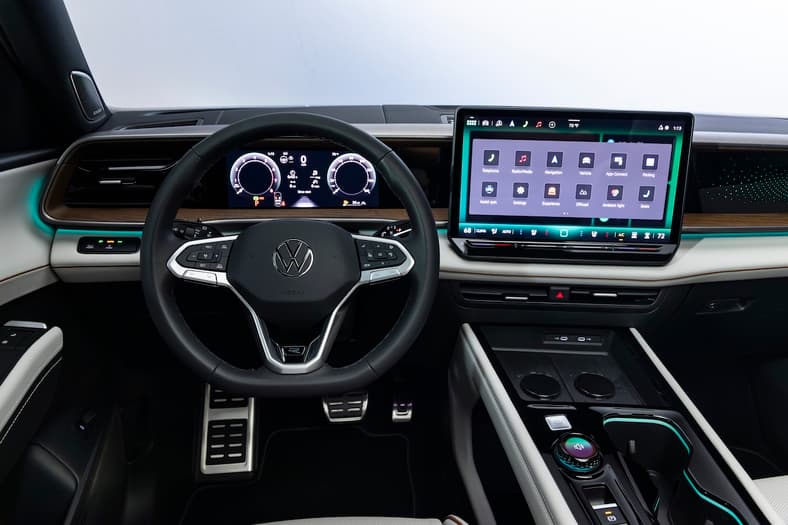
Most of the tech is found on the new 15” multimedia screen, a feature on all but the base model which comes with a 12.3” screen. This is also where Atlas drivers will find the updated the IQ Drive suite of driver assist and safety features that include adaptive cruise control, lane keep assist and emergency braking.
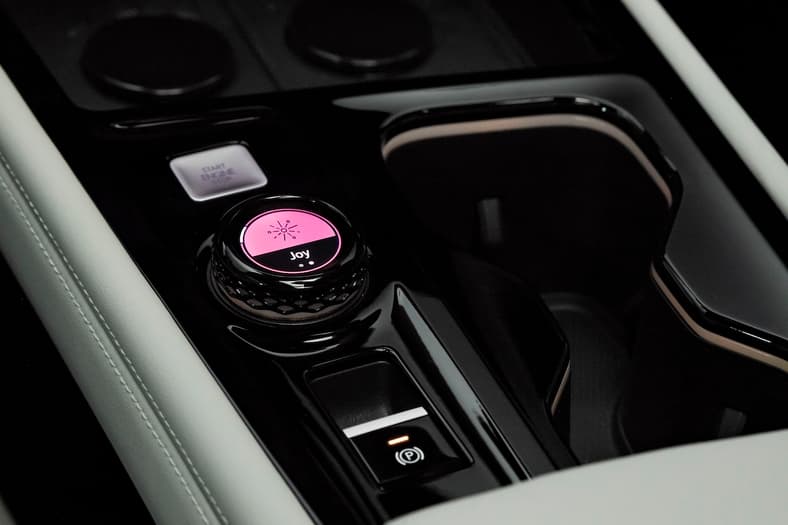
A multifunction dial on the center console can be used to dial through drive modes or to set the one of the cabin; one of the modes is Joy—I can’t wait to sample that, as well as Minimal, Energetic and Lounge modes.
A New Open Design in the 2027 VW Atlas Cabin Lends a Relaxed Feel
VW opened up the front cabin in the 2027 Atlas even more with a flat vertical dashboard that spans the front of the cabin and is anchored by the touch screen. A driver’s display is embedded on the left and a light show plays across the panel in front of the passenger.
The dash is rounded at the corners and ambient lighting glows softly behind it. The effect is modern and feels very premium—we see a similar approach, for instance, in Rivian and new Mercedes-Benz models, as well as Hyundai’s Palisade and Ioniq 9.
Adding more function is a new flat center console with a dual phone charge pad designed to charge faster and reduce heat; dual cup holders and underneath there’s a small storage space. The gear shifter is now on the steering column to open up the center console.
A New Engine Delivers More Power and Better MPG
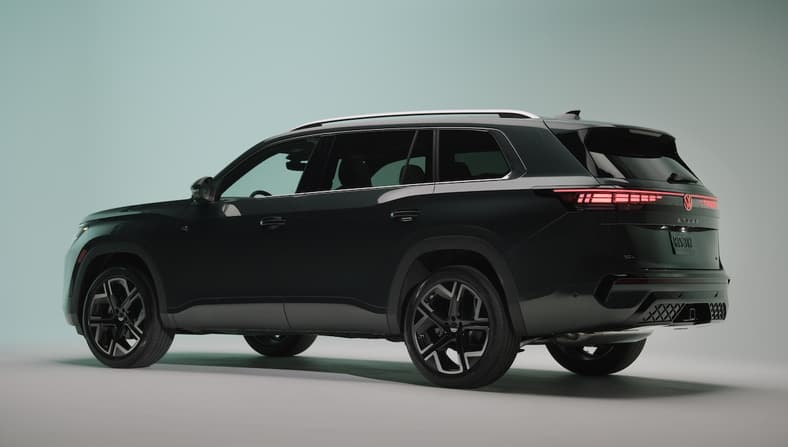
The 2027 VW Atlas is powered by the company’s new EVO platform featuring a 4-cylinder turbo engine that generates 282 HP and 258 pound-feet of torque, 13 more HP than the first generation models. Buyers who opt for a factory installed tow hitch will be able to tow up to 5,000 lbs.
Front wheel drive is standard, though AWD is available and VW reports that there will be a hybrid option in the near future something we applaud.
While VW has been quick to the EV market, the company has stayed out of the hybrid fray and that hurts; if you’re the one doing the car pools and school runs, you know the pain at the pump: It’s time as much as money, so more miles per tank is a meaningful metric.
A hybrid option can’t get here soon enough (and, we’re hoping it has more power, not less. A 3-row SUV with less power is never a good thing for highway merges and road trips).
Passengers Get More Spoilers
Studying how families use their SUVs was what formed the foundation of the original Atlas and it’s good to see that VW is still asking a lot of questions.
Center and 3rd row seats remain comfortable and roomy with a tiny bit more space thanks to the longer length. VW added standard rear window sunshades, leatherette seating, air vents in the door pillars, a power rear tailgate, seven USB-C ports and maintained the 3 full sets of LATCHes in the center row for families who need to install 3 car seats on the bench.
There are also cup holders in the 3rd row, a premium Harman Kardon sound option and leather seating is available on the top two trims.
Front seat passengers may feel the most pampered, with heated and vented massage seats in the top trims. We’ve seen VW lean into massaging seats in other models (hello ID.Buzz) and it’s nice that it’s come to the 2027 VW Atlas.
It’s also nice to see VW continue to lean into the Atlas as a flagship, to incorporate advanced tech and lighting that we see in VW’s premium sister brand Audi and to continue to think about how American families ride and drive. We’ll take all the charm and magic this unicorn can deliver.

More About:Car Reviews