
Assemble Your Own Emergency Kit With These 100 Household Items
No matter who is driving, you need to be prepared with an emergency kit. Here's everything we recommend keeping in your car—just in case.

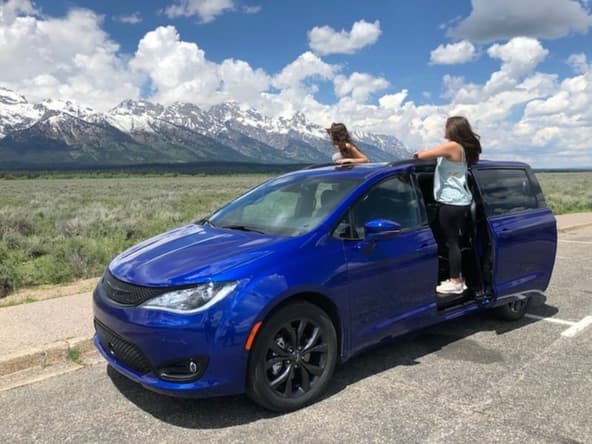
We all know who will be madder than a hornet on a humid August afternoon if the family gets stranded without a proper emergency kit. I’ve logged enough miles across North America to know that it is far better to have a tool and not need it than to need one and not have it.
That nagging anxiety when you pull out of the driveway? That’s your intuition telling you to be prepared. Silence the ‘what-ifs’ on your next trip with this definitive list of roadside must-haves.
This story is 100% human-researched and written based on actual first-person knowledge, extensive experience, and expertise on the subject of cars and trucks.
A Rough List of Must-Haves For Your Emergency Kit—You Probably Already Have These Things!
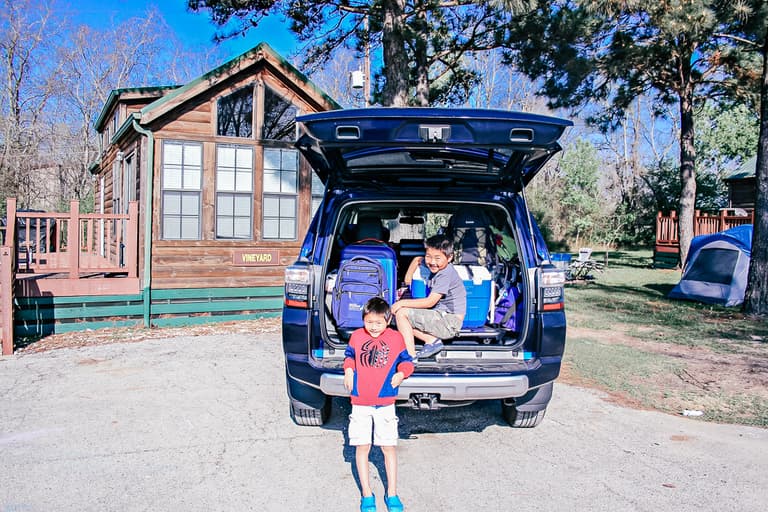
You want to stay on schedule to arrive at your destination safely and comfortably. Keeping your car in good working order with an emergency kit helps prevent roadside emergencies.
After giving your car a good look-over to check the fluids, make sure the battery’s okay, and looking at the tires, here’s what you should pack for those just-in-case moments:
- Spare tire or tire plug kit—If your car has a spare tire, make sure it’s inflated properly and in good condition. If your car doesn’t have one (most new cars don’t), make sure it has a tire plug kit.
- Jack–Most cars have one to lift the car up to remove a damaged tire. Make sure yours is in good condition, and that you have all the parts (handle, base, etc.).
- Tire pressure gauge—These are super cheap. It’s a must-have to make sure the spare tire is inflated, or to check if a tire is losing air if you run over a nail.
- If your car has wheel locks, make sure you know where the lug key is. You won’t be able to remove a damaged tire without one, and most tire shops will not remove it because they can’t prove it isn’t stolen.
- Owner’s manual–What’s that mysterious light that just popped on your dash? It also provides key information like fluid capacities and types.
- Jumper cables, or a rechargeable jumper pack (fully charged, of course!).
- Extra quart of oil + funnel. It’s also smart to have extra pre-diluted coolant or transmission fluid. Especially if your car is older.
- A Leatherman tool or, at minimum, a flat head and Phillips head screwdriver, along with adjustable pliers
- Duct tape
- WD-40
- Flares
- Paper Maps–Grab them for free at a state’s welcome center.
- A flashlight, extra batteries, first-aid items, extra clothes, and blankets.
What’s in your Glove Compartment?
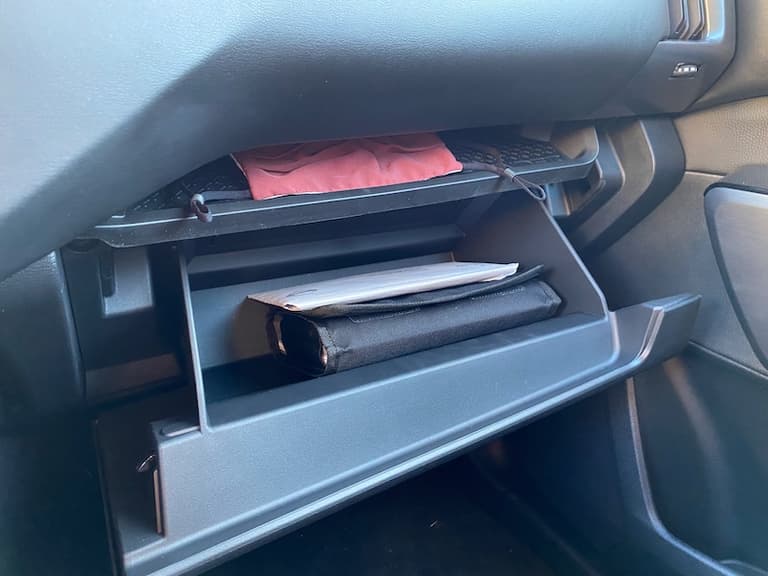
Stock your glove compartment with items you need to keep within arm’s reach in case of any things don’t go as planned. It’s a great place to store key emergency kit items like:
- AAA membership card, or other travel insurance card
- Copies of your registration and car insurance card
- Owner’s manual
- Flashlight with fresh batteries
- Window breaker and seat belt cutter, especially if you have small children in car seats
- Matches or a lighter
- Car maintenance log
- Multi-Purpose Tool, like Leatherman
- Tire Gauge
- A portable air inflator
- A portable battery charger
Must-have First Aid Supplies

Life with kids is unpredictable. Scrapes and falls happen frequently, so be prepared. Essential to any car emergency kit, I keep my first aid kit under the driver’s seat.
Our own Scotty Reiss explains, “Every car should have an emergency preparedness kit with batteries, a flashlight, jumper cables, bandages, wipes, a reflective vest, a rain poncho, matches, and work gloves in the trunk or cargo area. You can buy a nicely packed kit that doesn’t take up a lot of space, so it’s easy to just leave it in the car.”
If you don’t want to buy a pre-assembled kit, here’s what we recommend you pack:
- Assorted bandages
- Antibiotic cream
- Anti-itch cream
- Anti-bacterial gel
- Pain relievers for adults and kids
- Allergy medication, like Benadryl
- Antacids
- Eye Wash
- Lip balm
- Extra required medication
- Tweezers
What To Keep In the Center Console or Arm Rest
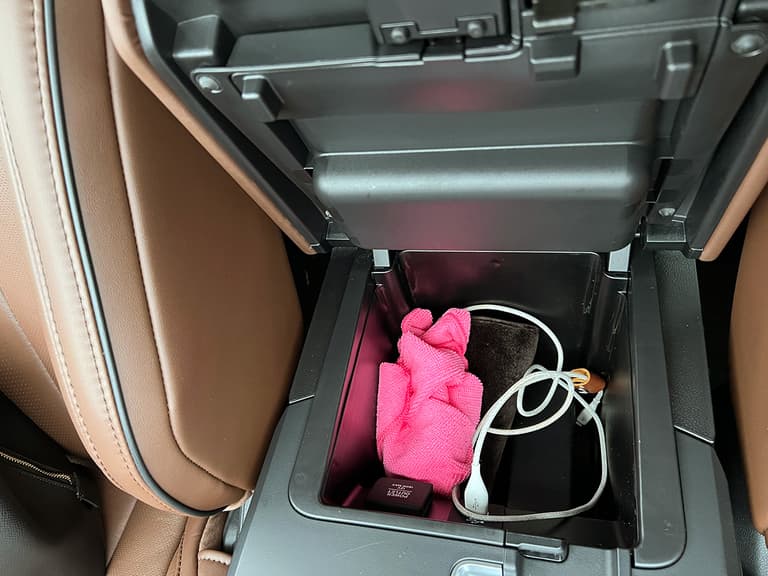
Every car has a center console. Load it up with these roadside essentials that will help you look after passengers or clean simple messes, like:
- Wipes
- Extra money, especially change for old-school parking meters.
- Extra napkins or paper towels
- Facial tissue
- Extra sunglasses
- Paper to write on, and a pen
- List of phone numbers to friends or family. Just in case the phone goes missing.
- Hand sanitizer, anti-bacterial wipes, tissues, and charging cords.
In the Trunk or Back of the SUV
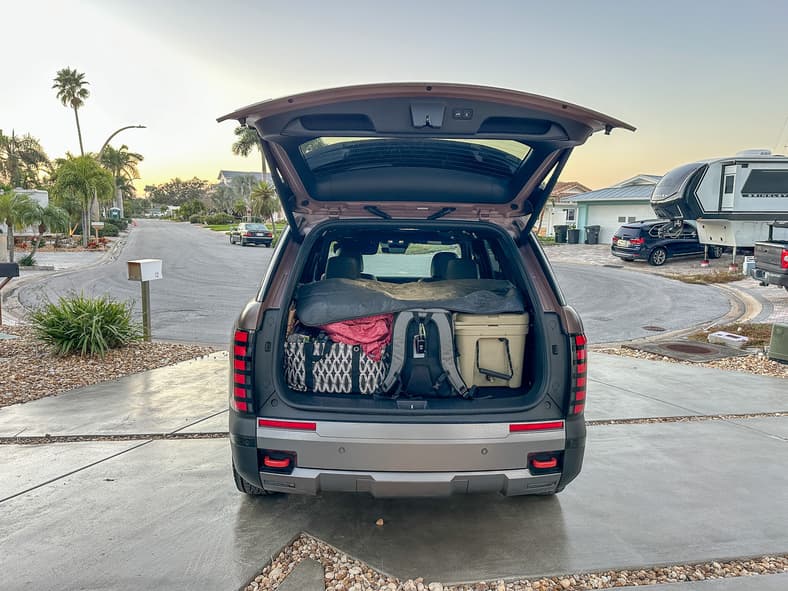
Grab a tote and pull together more supplies for an unexpected stop alongside the road, no matter the season.
Here’s what to bring with you:
- Old towel or blanket—On a cold day or night on the side of the road, you’ll be glad you have the extra layer of warmth.
- Extra cords and a cube for technology. In addition to the ones in use.
- Extra shoes, and ideally boots, if you have to tackle a flat in adverse weather conditions or at the campsite.
- Disposable rain ponchos, a jacket, or even an umbrella.
- Extra set of keys.
Personal Products You Should Never Be Without
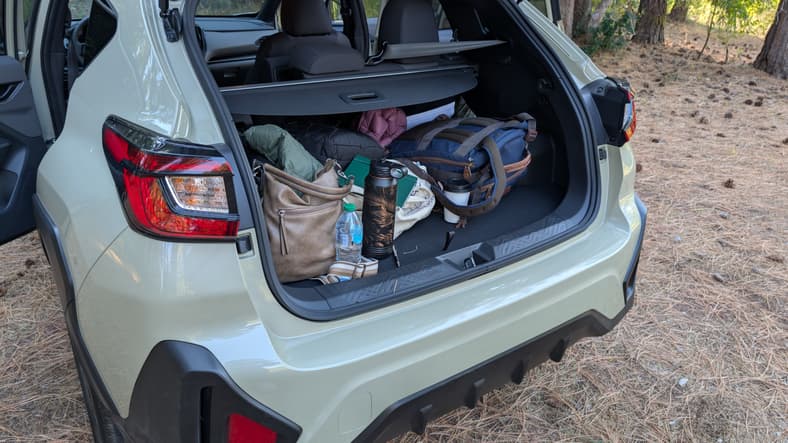
I grab a small zip-top bag and pack it with personal care products. Just in case I get stranded overnight unexpectedly. Staying fresh and clean always makes things a little better.
- Deodorant
- Extra pair of underwear
- Basic makeup, like mascara, powder, and lipgloss
- Travel roll of toilet paper
- Wet wipes
- Sunscreen
- Bug spray
- Contact holder + contact solution
- *Lady* products
- Travel toothbrush + paste
- Dental floss or pics
Extra Food and Water
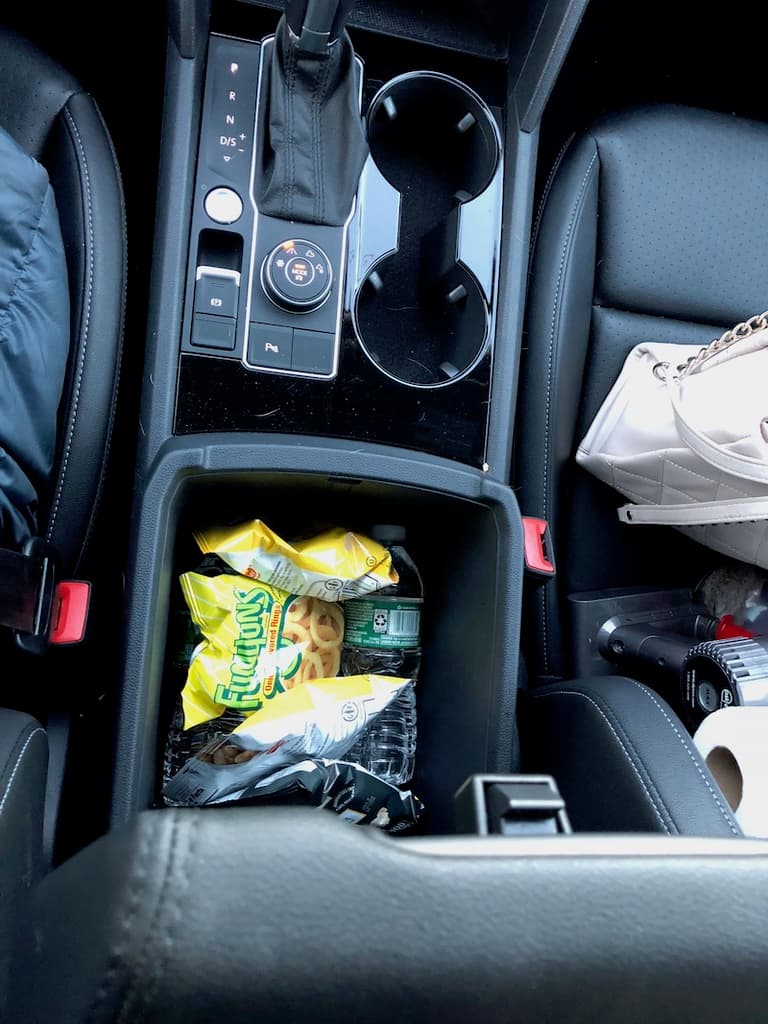
Pack a few essentials for every day. Add some road trip snacks when headed out for a family trip.
- A gallon jug of water; can be used for radiator too
- Protein bars
- Dried fruit bars
- Dried nuts
- Canned foods
- Packaged crackers
Just For the Kids

Keeping kids clean and comfortable makes emergency situations much easier.
- Extra outfits, plus socks and underwear
- Extra jackets or hoodies
- Stroller for kids under 6
- Sun hat for warmer weather
- Beanie for cooler weather
- Extra gloves – cheap ones ok
- Cooling wipes
Babies and Toddlers Need Their Supplies
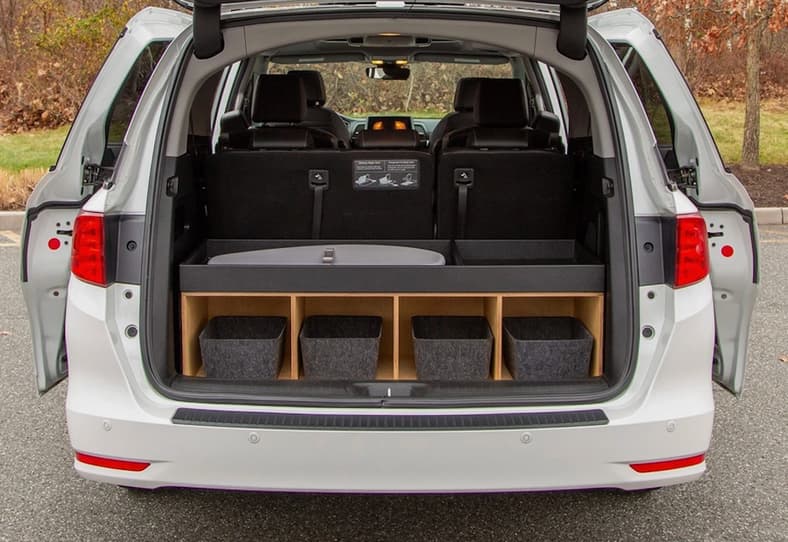
When my kids were little, I used my SUV like a giant diaper bag. Keep these items stored where you change your baby in the car.
- Baby food and/or formula
- Baby wipes
- Extra diapers
- Changing Pad
- Baby wipes
- Extra clothes including shoes and socks
- Disposable grocery bags for the dirties
- Extra soothing object, like a pacifier
- Extra toys
Keeping the Family Car Clean
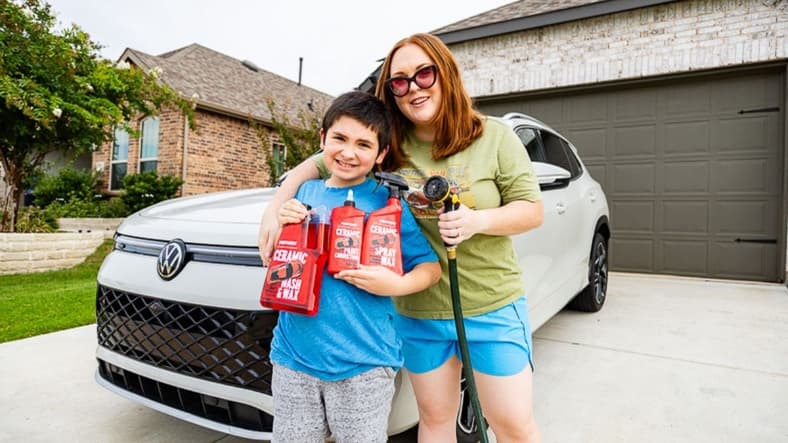
We all know that life and kids are messy so take a few minutes to wash the car regularly. Kids can help too.
- Windex wipes
- Armor All wipes
- Microfiber cloths—Dry the outside and wipe down the inside.
- A portable vacuum
- Anti-bacterial spray
Winter Car Emergency Kit Must-Haves

Winter travel requires its own products if you live or travel in snow-prone areas. Your car’s roadside emergency kit might need to include things like:
- State Website App for road closures and chain requirements
- Ice scraper with brush
- Can of de-icer
- Chains or cables plus extra cash to have someone install them
- Emergency blanket for heat retention
- Extra food and water
- Rubber gloves to protect hands when installing chains or removing snow and ice
- Small packable shovel for snow removal
- Extra layers and clothes to change into incase you get wet
With all this in your car, you’ll be prepared for anything. Don’t be afraid to shop for a pre-assembled kit to save time and peace of mind, but make sure it’s got everything we’ve mentioned.

More About:Car Maintenance